Craft
Designing the Master Closet
The closet is one of the last rooms to receive serious design attention — and one of the first to transform how a home feels.
The closet is one of the last rooms to receive serious design attention — and one of the first to transform how a home feels.
For decades, the master closet was treated as residual space: whatever was left over after the bedroom was drawn. A pole, a shelf, a door that closed on the result. The room that begins and ends every day was given less thought than the hallway leading to it.
That is changing — and the closets being built now are not closets at all. They are rooms in their own right, with the same rigour of proportion, lighting, and material as any other interior in the home.
The closet is a room, not a cabinet
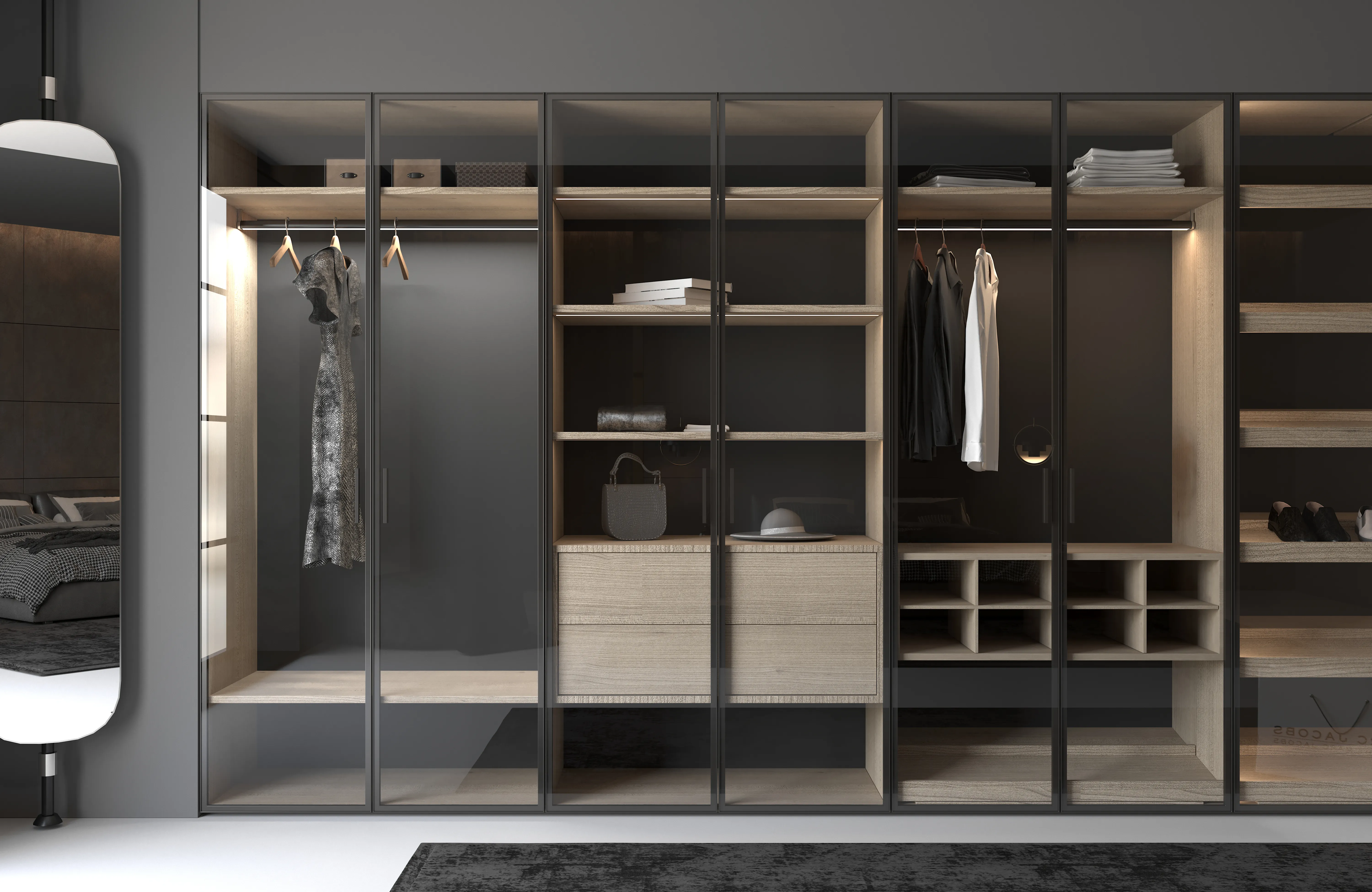
A great master closet starts with the recognition that what happens inside it — dressing, choosing, presenting — deserves a room, not a piece of casework. That changes everything that follows. Ceilings finished rather than left raw. Lighting designed for fabric and skin tone, not for storage. Flooring continuous with the bedroom or distinguished from it deliberately. A bench, a mirror, a sense of arrival.
This is the shift from storage to environment. The clothes are still organized, but they are organized within a space that feels considered — a space the household actually wants to be in.
A closet you enjoy entering changes the rhythm of the day. The choices made there set the tone for everything after.
Glass, light, and the discipline of display
The most considered closets borrow from retail and from museums — not in extravagance, but in discipline. Glass-fronted cabinetry turns a wardrobe into a curated wall. Backlit shelving lifts handbags and shoes out of shadow and into focus. Hanging is organized by length, by season, by colour, with the kind of intention given to a gallery hang.
The discipline is what makes it work. A closet packed to capacity reads as storage. A closet given breathing room — visible space between pieces, light around them — reads as architecture. Less, displayed well, looks like more.
Engineered interiors, hidden where they belong
The visible closet is what photographs. The engineered closet is what works. Soft-close drawers with felt-lined interiors and dovetailed dividers. Pull-out valet rods that bring tomorrow's outfit forward at eye level. Concealed hampers vented to prevent moisture. Jewellery drawers wired for low-voltage lighting that switches on when opened.
None of this is visible from across the room. All of it is the reason the closet functions effortlessly for fifteen years instead of three.
The room that sets the tone
The master closet is the first room of the day. It is where decisions are made before any other decision is made. Designing it as a room — with proportion, light, materials, and engineered interiors — changes the way the morning feels. And the way the morning feels tends to shape the day.
That is reason enough to give it the same attention given to the kitchen and the bath.
See the system up close.
The way a closet is engineered is best understood with hands on the runners and eyes on the joinery. Book a private studio tour for an unhurried conversation with a BauTeam design consultant.