Craft
The Professional Range Is Mostly for Show
The professional range is the status object at the heart of every luxury kitchen — and mostly theater. Why induction cooks faster, cleaner, and costs less.
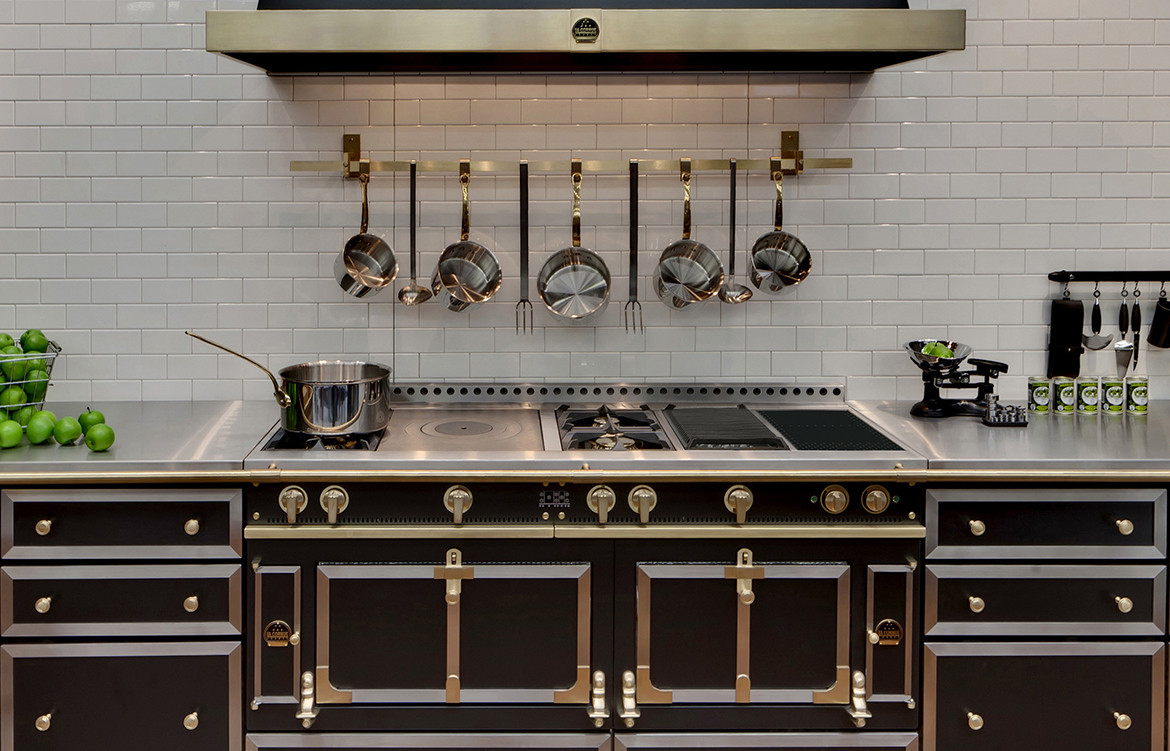
Walk into almost any kitchen built to impress and the eye lands in the same place: the range. Stainless, knurled knobs, a row of burners rated for heat measured in the tens of thousands. The professional range has become the trophy of the luxury kitchen — the object that announces, before a single meal is cooked, that someone here is serious.
It is also the most oversold thing in the room.
The burner you bought for its 25,000 BTUs runs at full output maybe twice a year. The rest of the time it is a billboard — a restaurant's worth of firepower idling under a pan of softening onions. The kitchens that actually cook well have quietly stopped treating the professional range as the centerpiece and started treating it as a question worth answering honestly.
A professional range is restaurant equipment
That is not a metaphor. The high-output burner is engineered for a commercial line — for searing forty covers a night and holding stockpots that never come off the heat. Pro-style ranges built for the home now run from roughly 15,000 to 25,000 BTUs a burner, where a decade ago 12,000 was the intimidating top of the range. The number went up. The way you cook did not.
The design press has been blunt about the mismatch. As Remodelista put it in its primer on cooking power, the super-high BTUs in professional kitchens are built for high-speed and high-volume cooking, not typically the situation at home, even when entertaining. For most cooks, a single power burner of 12,000 BTUs or more handles nearly everything; the rest is flexibility. The trophy range sells you four restaurant burners to do the work of one.
A wall of blue flame is not proof of skill. It is proof of purchase.
The horsepower you brag about is the heat you fight
Big burners arrive with bills attached, and not only the price tag. More BTUs mean more gas burned, and far more air to move: the working rule for ventilation is 100 cubic feet per minute of exhaust for every 10,000 BTUs of output, so a fully loaded gas range can demand a hood pulling several hundred CFM just to keep the room livable. The firepower you paid for sets the size of the machinery you need to survive it.
And the thing a great cook actually reaches for — a true, steady low simmer — is precisely what the high-BTU burner does worst. The chef Marcus Samuelsson, no enemy of a powerful stove, has made the point for years: flexibility matters more than maximum heat, because you can create a high-heat effect but you cannot fabricate a low one. The trophy burner is loud where cooking is easy and clumsy where cooking is hard.
.jpg)
Induction quietly won the argument
While the gas range was busy being photographed, the induction cooktop got good — then got better than the thing it was imitating. Because it heats the pan directly instead of throwing a flame around it, induction is, by the U.S. Department of Energy's accounting, up to three times as efficient as gas, and it boils water 20 to 40 percent faster than the gas and electric cooktops Consumer Reports tested. Control is instant and exact, down to a simmer the best gas burner can only approximate.
Then there is the air. Burning gas indoors releases nitrogen dioxide, carbon monoxide and formaldehyde into the room you cook and gather in; the Department of Energy, citing peer-reviewed research, attributes 12.7 percent of current childhood asthma in the United States to gas stove use. For a house designed around how its owners actually want to live, the cleanest cooking surface in the room is no longer the compromise. It is the considered choice — and nearly seven in ten Americans now say they would consider induction for their next cooktop.
This is why the performance gap that once justified the gas range has effectively closed. Induction is not the budget option pretending to be serious. It is the serious option that stopped needing to look the part.
What to buy instead of horsepower
Start from the cooking you actually do, not the cooking you imagine doing. If you genuinely sear in cast iron or cook in a wok over real fire, keep one honest high-output gas burner and spend the rest elsewhere. If you do not — and most people, even excellent cooks, do not — make induction the primary surface and put the saved budget where it changes daily life: precise low-heat control, a generous run of prep counter beside the heat, and ventilation sized to the cooking rather than to the showroom.
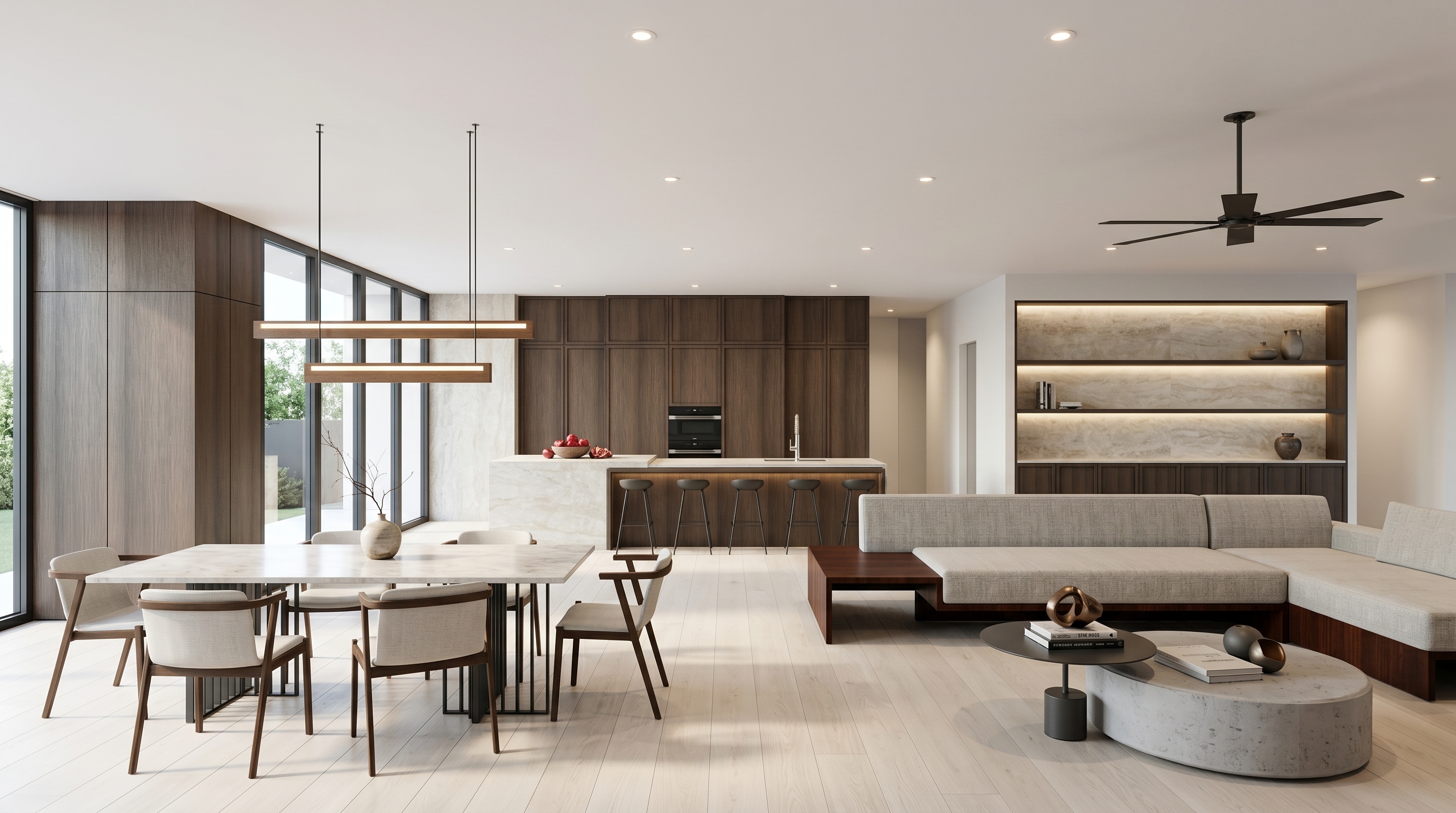
Then stop letting the appliance be the centerpiece. A kitchen earns its keep through workflow, not wattage — the path from cold storage to prep to heat to plate, engineered around the cook. That is the case we make in why a kitchen is a system, not a room, and it is the difference between a kitchen that performs and one that merely poses. The range should disappear into that system, not dominate it. Look closely at the kitchens we build and the flame is rarely the loudest thing in the photograph.
The serious kitchen is not the one with the biggest flame. It is the one where the cook never thinks about the stove — where heat arrives the instant it is asked for, leaves the moment it is not, and never once competes with the meal for attention.
Book a private showroom tour
If this changed how you are thinking about your range, the next step is not another article. Book a private showroom tour and spend an unhurried hour, one on one, with a BauTeam design consultant — at the studio nearest you, from Atlanta and Boston to Chicago, Dallas, Los Angeles and New York. Bring the way you actually cook. We will design the kitchen around it.