Craft
The Butler's Pantry Is Hiding a Worse Kitchen
The butler's pantry is the most desired luxury kitchen feature of 2026. It is also a quiet admission that the main kitchen wasn't designed to be cooked in.
There is one feature on nearly every luxury kitchen brief this year, and it goes by half a dozen names — butler's pantry, scullery, prep kitchen, back kitchen, "messy kitchen." The label changes; the brief does not. A second room, hidden behind a panel-fronted door, where the real cooking happens — sinks full of dishes, the steam from a sauce reducing, the small ugly machines no one wants on the counter — while the main kitchen stays composed for the people in the dining room.
The American Institute of Architects has tracked the appetite climbing for several years. The 2026 Houzz Kitchen Trends Study, drawn from a survey of nearly 1,800 renovating homeowners, found that seven percent now include a butler's pantry or prep kitchen — a quiet but unmistakable shift in what a serious kitchen is allowed to be. The reason given most often by those who add one is also the most revealing: thirty percent are building the second room to keep the first one's clutter out of sight.
That is not a luxury feature. It is a workaround for a kitchen that was not designed to be cooked in.
The most-asked-for room in the house is a confession
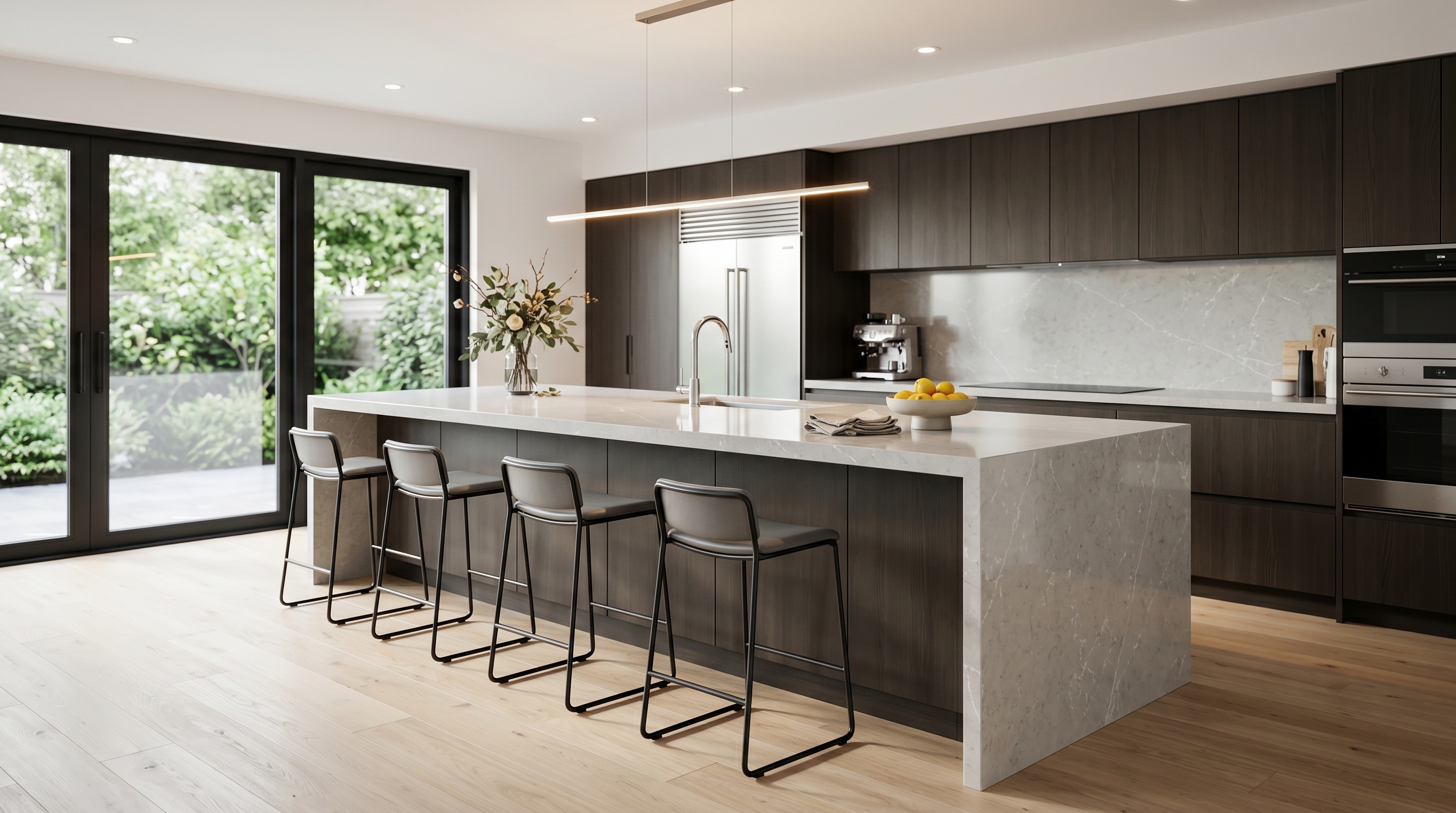
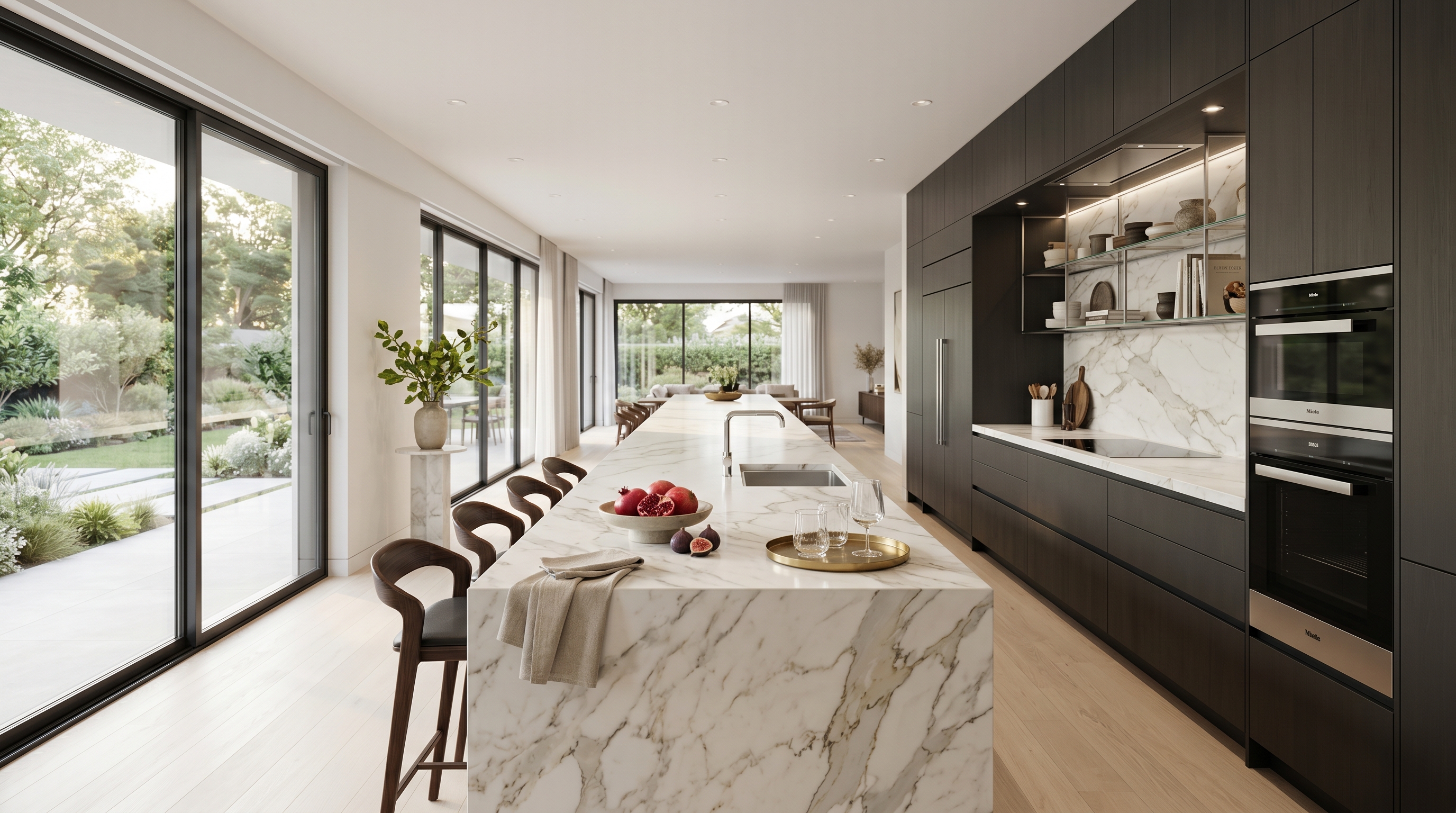
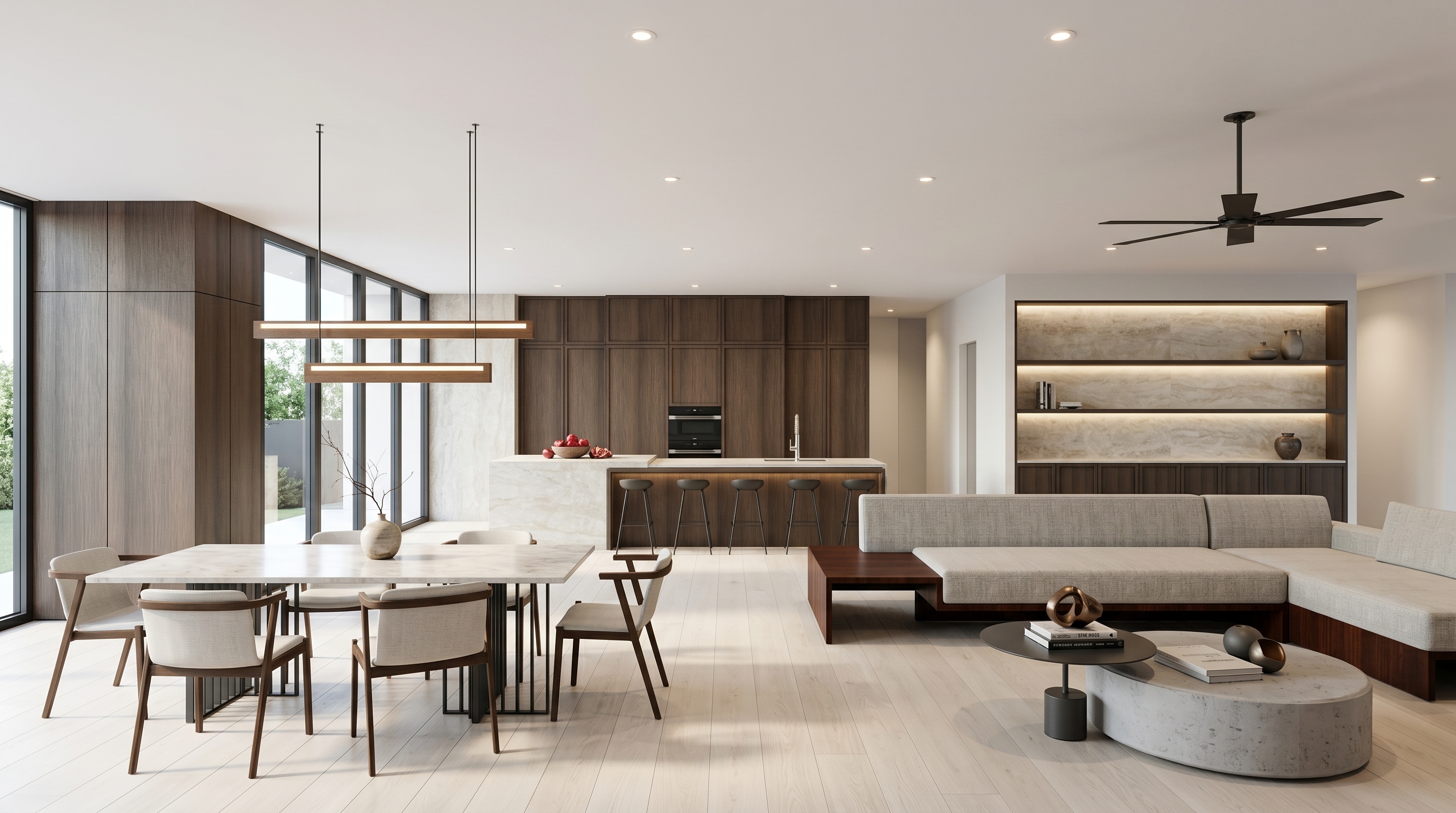
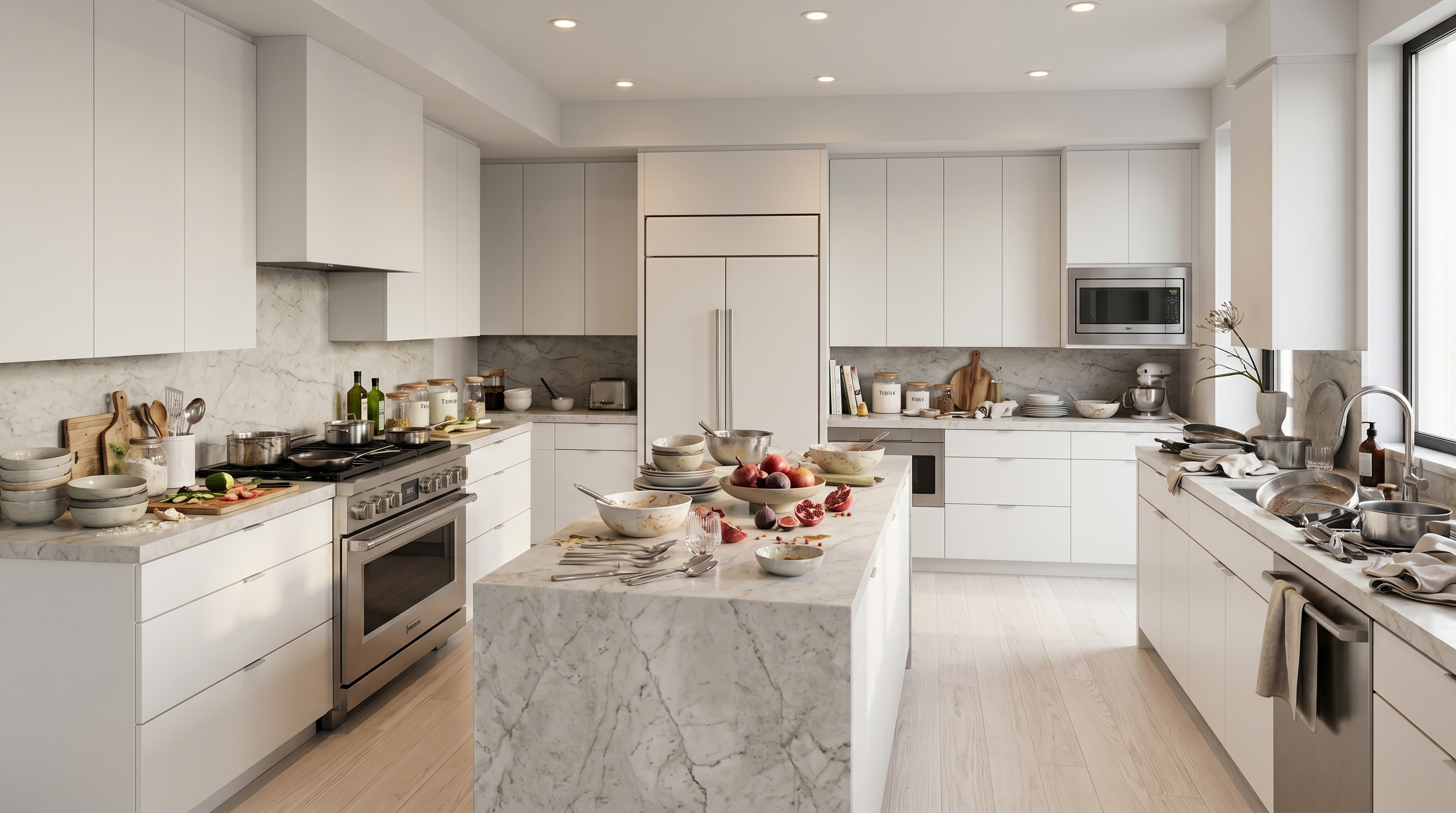
For a generation, the luxury kitchen has been an open-plan stage. Handleless cabinets, appliances paneled to disappear, a fifteen-foot island of unbroken stone, the whole room visible from the dining table and the sofa beyond. The aesthetic ambition is real, and so is the trap inside it. A kitchen permanently on display is a kitchen permanently being judged — and the moment a half-zested lemon and a sticky cutting board enter the frame, the design fails its own brief.
The butler's pantry is the trade-off most owners reach for to escape that trap. Push the toaster, the stand mixer, the second sink, the catering tray into a back room. Close the door. Let the front-of-house kitchen recover its photograph.
A second kitchen built to hide the first one is not generosity. It is editing.
What the scullery is actually solving for
Look at what gets specified in a typical second kitchen and the indictment of the first one becomes clear. A prep sink — because the main sink is too exposed for the day's mess. A second refrigerator or a bank of undercounter drawers — because the main fridge is panel-fronted and arranged for show, not for groceries. A run of uninterrupted counter — because the main island has been colonized by seating and a cooktop. A second dishwasher — because the dishes of a real meal would interrupt the silhouette of the show kitchen.
Every one of those line items is a thing the main kitchen ought to be doing well. Doubling the appliances and the plumbing across two rooms is not a luxury. It is the price of admitting that one of the two rooms is theatre.
A kitchen engineered properly does not need to hide
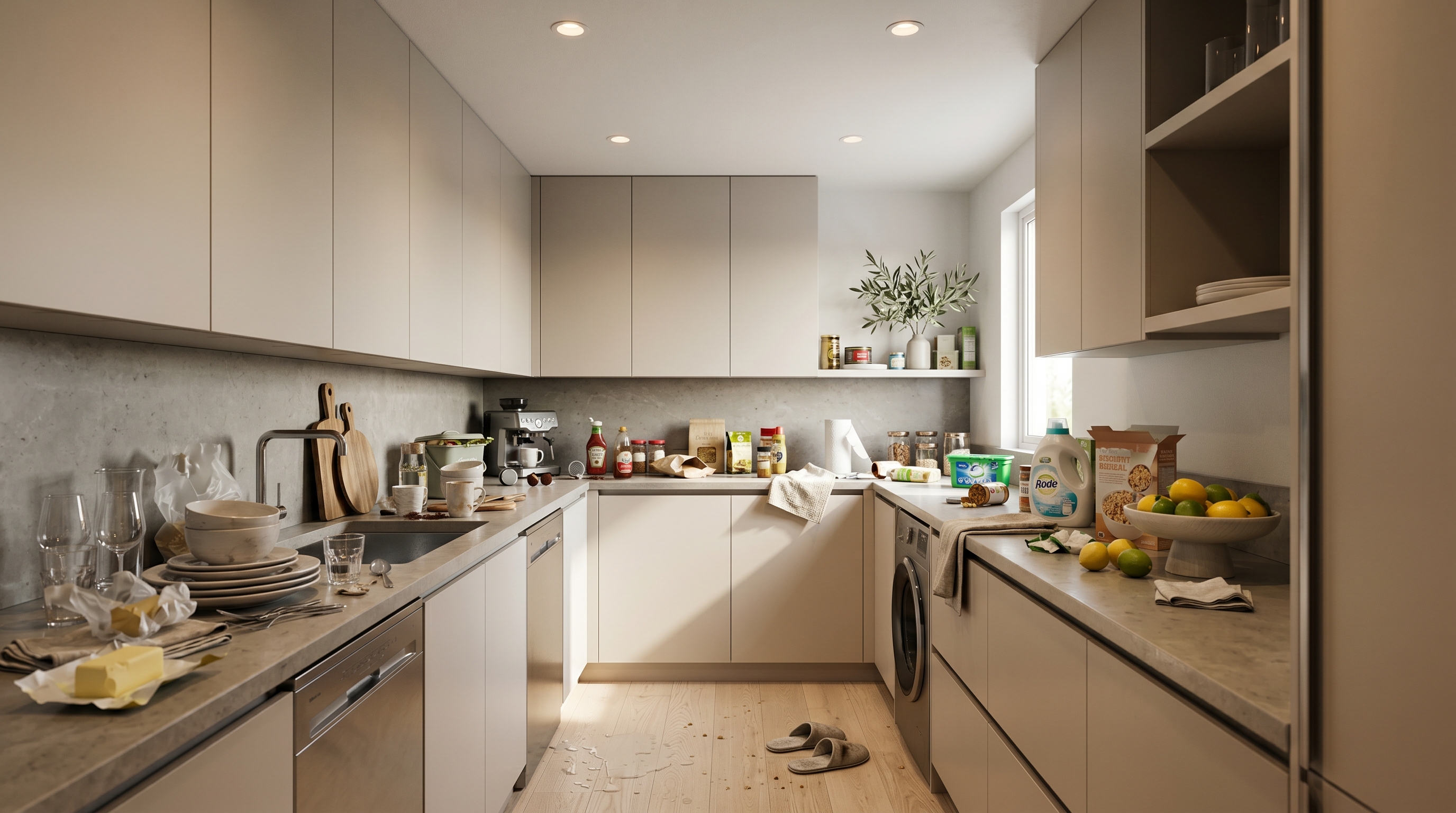
There is a different way to think about the brief. A kitchen built around the work — the path from cold storage to prep to heat to plate, the zones a cook moves through without thinking, the storage organized so the toaster lives a foot from the bread and not in a separate room — is a kitchen that handles its own mess. Drawers that swallow small appliances the moment the meal is over. Ventilation sized to the cooking and not to the showroom. A working sink that does not photograph badly with a colander sitting in it. The composure comes from the design, not from a wall.
This is the German discipline our practice was built on, and it is the reason a well-engineered kitchen earns its open plan. The back room's job has already been done — quietly, inside the millwork, before the first guest arrived. We have made this case before in why a kitchen is a system, not a room; the butler's pantry is the cleanest evidence in the market of what happens when that case is ignored.
How to know whether you actually need a butler's pantry
There are honest reasons for a second kitchen. Frequent catered entertaining where staff need their own back-of-house. A multigenerational household where two cooks really do work in parallel. A specialty function — a dedicated baking room, a wine room, a true serving station — that earns its own square footage. If any of those describe your life, build it; it will be used and loved.
But if the brief is "a place to hide the mess of normal cooking," do not build a second kitchen. Fix the first one. Specify enough concealed storage to disappear the small appliances. Size the ventilation to the meal you actually cook. Move the seating off the cooking island so the prep surface is free when it is needed. Choose a primary sink you do not mind seeing in use. The eighty to a hundred and fifty square feet you would have given the scullery buys more good kitchen than it does good hiding place.
The best luxury kitchens of the next decade will not be the ones with the most rooms. They will be the ones where one room is enough — designed with the rigour required to look as composed at the end of a meal as it does at the start of one.
Book a private showroom tour
If this changed how you are thinking about your kitchen, the next step is not another article. Book a private showroom tour and spend an unhurried hour, one on one, with a BauTeam design consultant — at the studio nearest you, from Atlanta and Boston to Chicago, Dallas, Las Vegas, Los Angeles and New York. Bring your floor plan. We will help you design a kitchen that does not need a second one.