
Craft
Fluted Cabinetry Is Already Dating Your Kitchen
Fluted cabinetry is sold as a shortcut to a bespoke kitchen. It is really the fastest way to date one — and the texture that lasts costs no more.
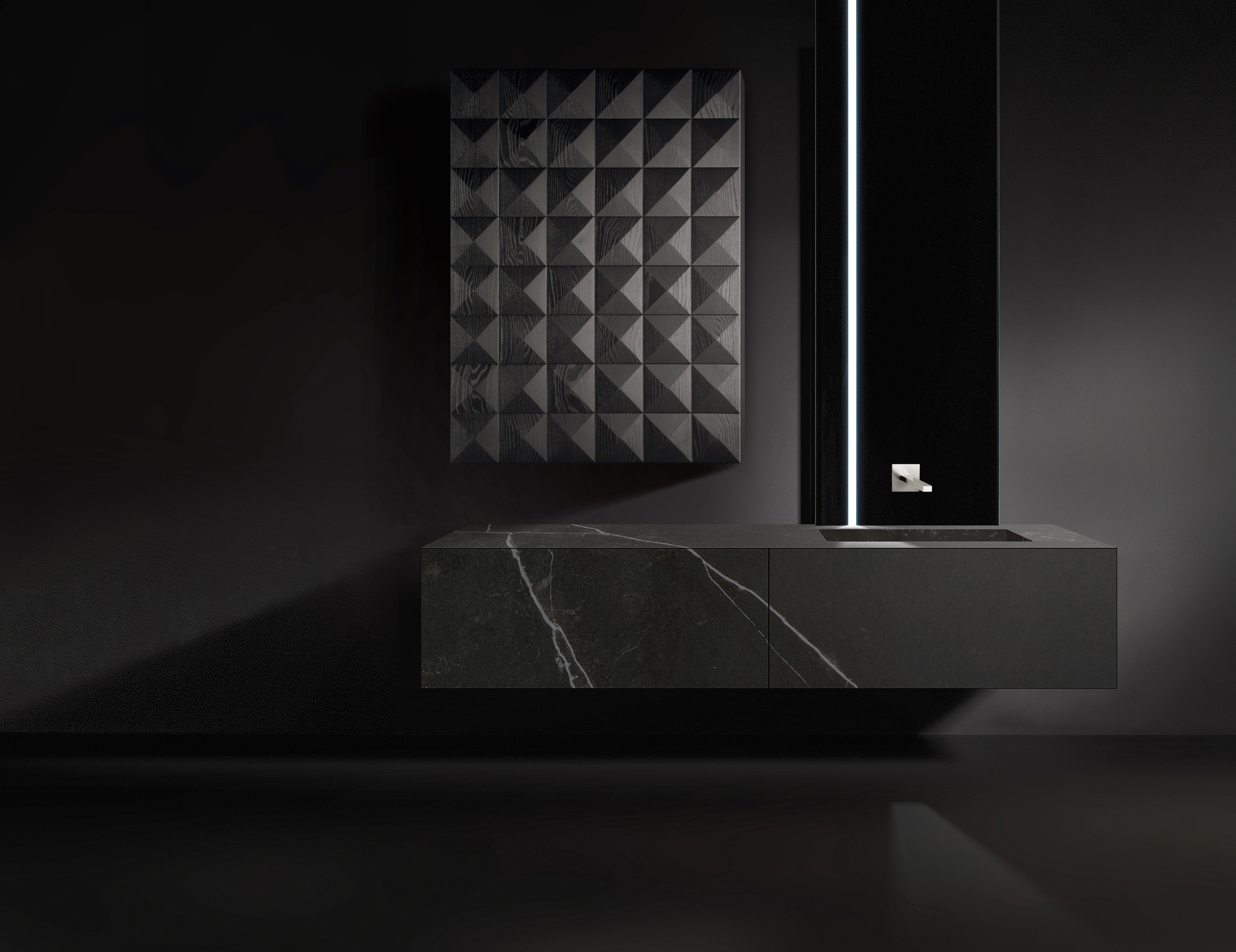
Fluted cabinetry has become the quickest way to make a kitchen photograph as though it cost more than it did. Run the narrow vertical grooves down an island, across a pantry front, along a wall of tall units, and a flat, ordinary kitchen suddenly reads as custom. That is exactly the problem.
A detail that announces "bespoke" the moment anyone can order it has stopped announcing anything. Fluted cabinetry now sits on the showroom floor of nearly every manufacturer, at nearly every price. It no longer marks craft. It marks a moment — the early 2020s — and moments date.
The conventional wisdom says fluting is a shortcut to a timeless, high-end kitchen. The truth is closer to the opposite. The reeded groove is the single detail most likely to pin your kitchen to the year it was installed.
A column detail, borrowed and worn thin
The groove itself is not the villain. Fluting began on the shaft of a Greek column, where shallow vertical channels caught the light and kept a mass of stone from reading as dead weight. "The Greeks understood that vertical grooves catch light in a way that makes a surface feel alive rather than flat," designer Lindsay Lucas told Homes & Gardens. The device carried through the Renaissance, Art Deco, and mid-century cabinetry. It has centuries of good behavior behind it.
What changed is the application. A detail that once had to be carved is now pressed into veneer by the linear foot and wrapped around every surface a manufacturer can reach — cabinets, islands, range hoods, appliance garages, coffee stations. When the reference is everywhere, it stops referring to anything.
Fluted cabinetry is the new shiplap
Designers who work in the high end have already watched this arc. "Fluted cabinetry began as a sophisticated architectural detail. The problem is that it quickly became a design shortcut," Mark Schubert of M2 Design Lab told the same publication, comparing its saturation to chevron tile and shiplap. His warning is the line worth screenshotting: "When a detail becomes the default rather than a deliberate design decision, it starts to feel dated much faster."
Others put a date on it. Designer Tanya Smith-Shiflett notes that fluting hit peak saturation roughly three years ago and "will always strongly reference this particular moment in design — very much the early-to-mid 2020s." Hillary Cohen of HCO Interiors has a sharper image for the fully fluted kitchen: "the design equivalent of wearing every accessory at once."
The grooves you will be cleaning in 2040
There is a practical bill attached, too. A kitchen collects grease, dust, and cooking film, and every channel in a fluted front is one more surface to work a cloth into. What looks effortless in a photograph is labor in a working kitchen. And because most fluted fronts are veneer, they are harder to refinish, repaint, or adapt than a simple door — so the look is not only specific to a moment, it is difficult to walk back once the moment passes.
What to specify instead
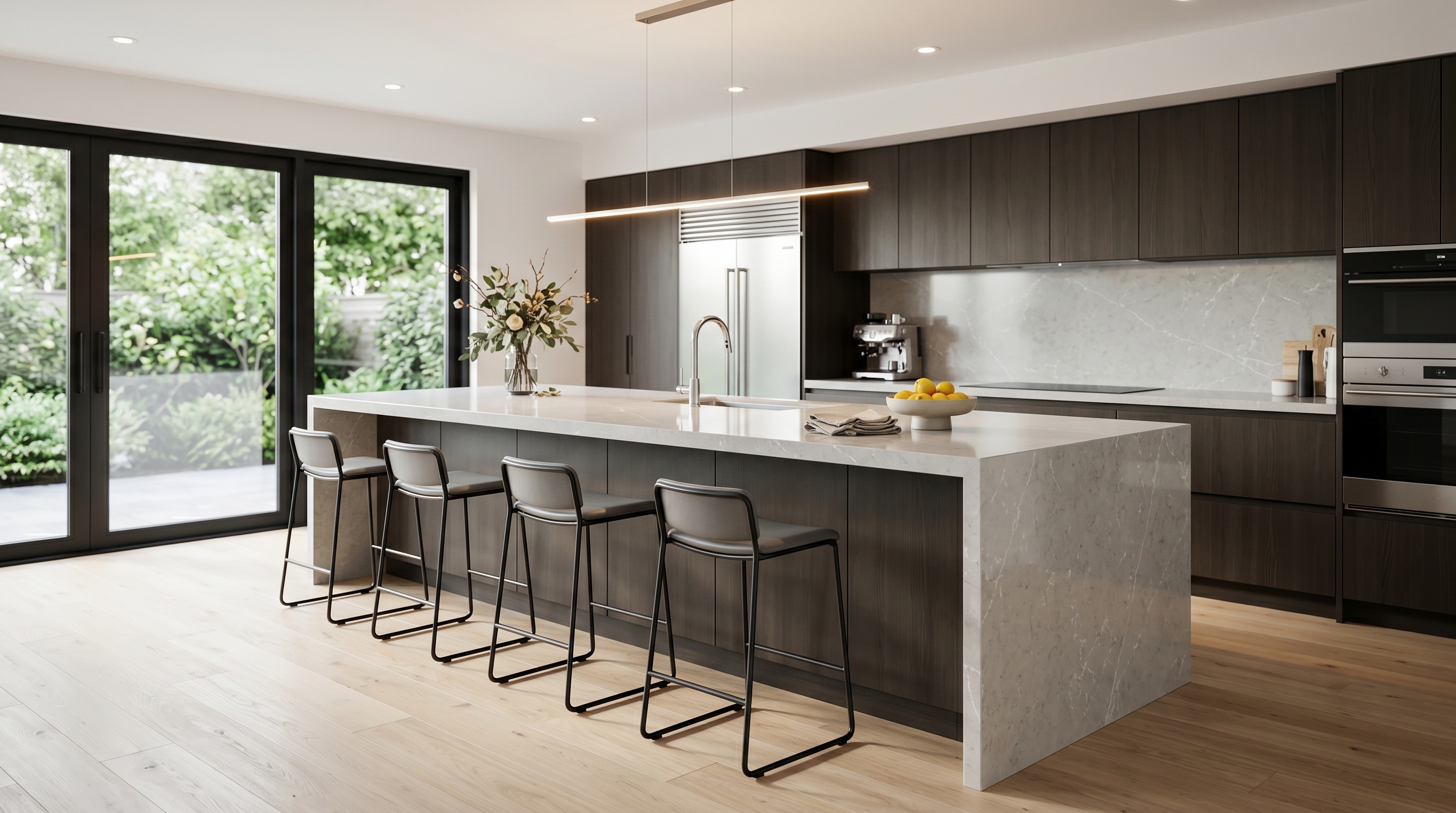
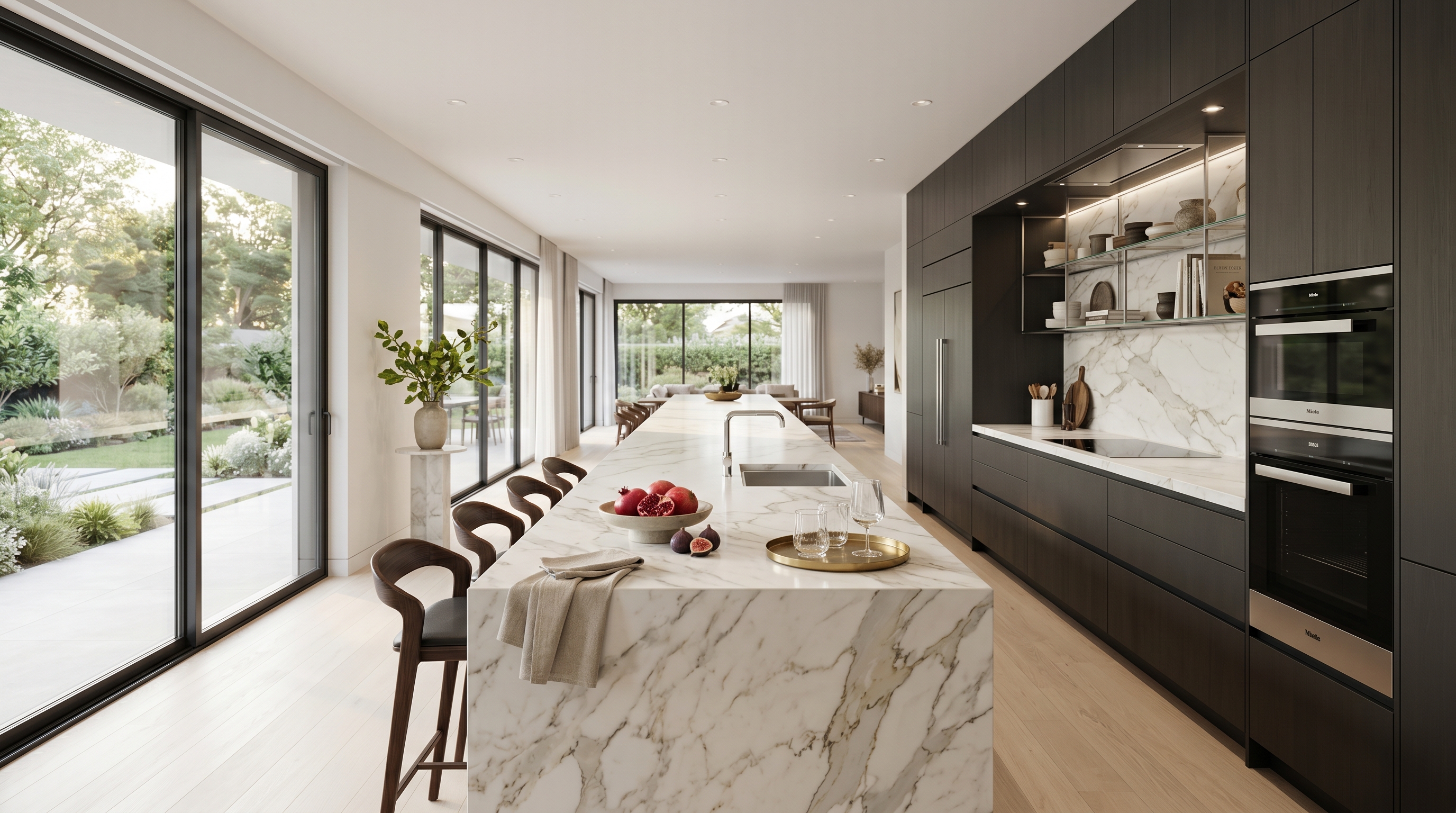
The more durable move is to stop treating texture as something you apply and start treating it as something a material already has. Depth that comes from real wood grain, from the vein of a natural stone, from an integrated pull rather than a decorative groove, does not belong to a trend cycle because it was never a trend to begin with. It is the difference between a kitchen wearing a detail and a kitchen being built from one — the logic behind why a kitchen is a system, not a room.
If you love the groove, use it the way a good designer uses any strong note: once. A single fluted island or a lone pantry door earns its place precisely because everything around it stays quiet. Wrap the whole room in it and the eye has nowhere to rest; use it as one considered accent against flat-panel cabinetry and honest materials, and it becomes architecture rather than a footnote. That restraint — texture from the material, ornament used sparingly — is the through-line of every BauTeam kitchen.
Trends age in public. The kitchens that still look composed in fifteen years are rarely the ones that chased the texture of the season; they are the ones that let good material and precise construction do the talking. Fluting will outlive its own hype — but only in the hands that treat it as a single line, not the whole page.
Book a private showroom tour
If this changed how you are thinking about your next kitchen, the next step is not another article. Book a private showroom tour and spend an hour, one on one, with our design team — from Buckhead to SoHo — walking the materials and construction in person, and deciding what will still look right long after this year's finish has moved on.