
Craft
Your Bathroom Exhaust Fan Is Too Small
You chose the stone, the tub, the fittings. The one part that decides whether they survive is the bathroom exhaust fan — and it is almost always too small.
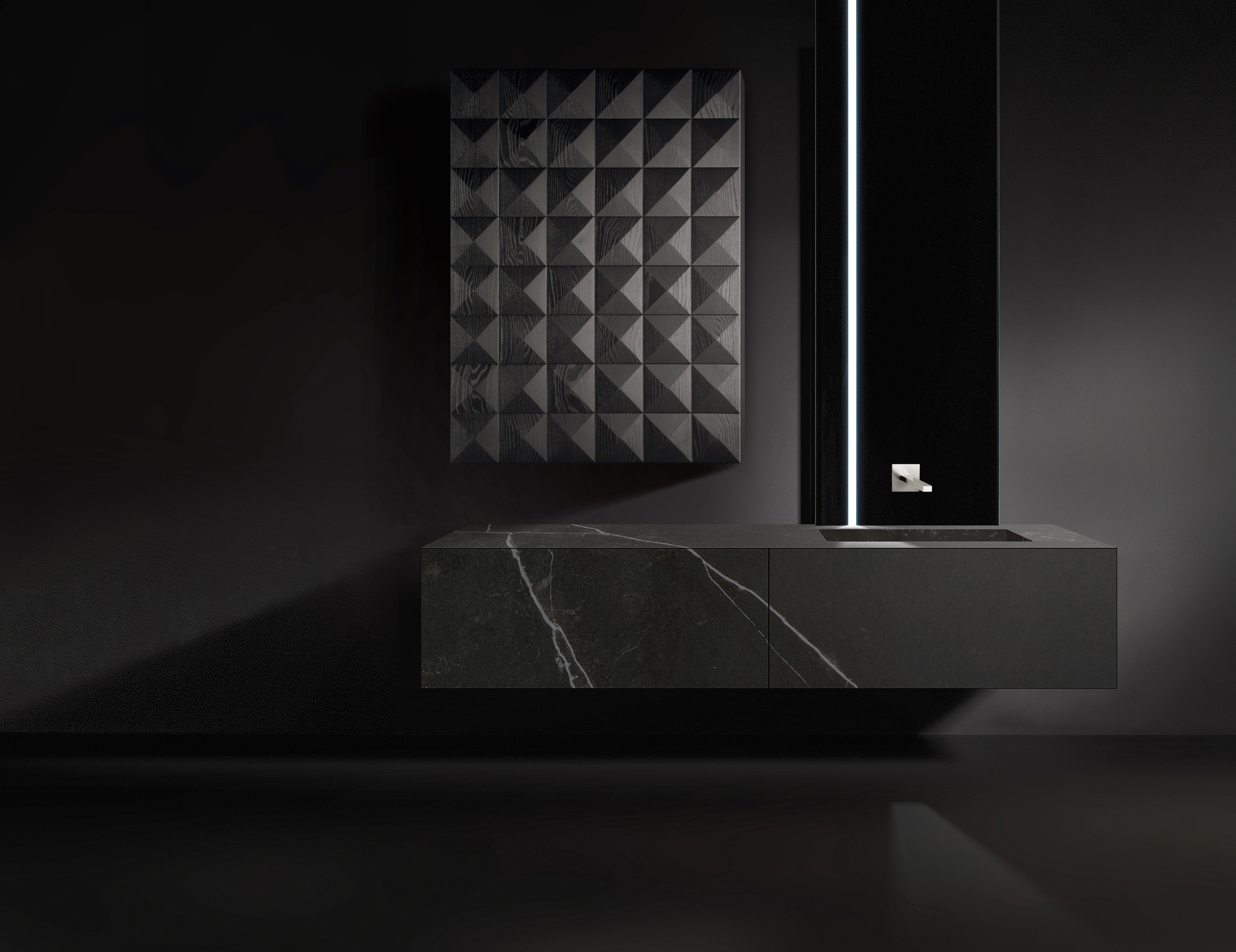
The luxury bathroom is sold as a collection of surfaces. The stone you chose after three showroom visits, the tub set like a piece of sculpture, the fittings in an unlacquered brass that will patina just so. Every decision, and most of the budget, goes to what the eye can see.
The one component that decides whether any of it survives is the part nobody photographs: the bathroom exhaust fan. And in most high-end bathrooms, it is too small.
Not broken. Not cheap. Just undersized — picked for its silence, sized to the code minimum, and asked to protect a six-figure room it was never rated to handle.
The code minimum was never a design target
Residential ventilation in the United States is governed by ASHRAE Standard 62.2, which asks for a bathroom fan of 50 CFM running on demand, or 20 CFM running continuously. That number is a floor, not a recommendation, and it is prescriptive — it does not scale with the size of the room. A builder satisfies the code with the same fan in a powder room and in a 140-square-foot primary bath. One of those rooms is protected. The other is not.
What a bathroom exhaust fan actually needs to move
The Home Ventilating Institute, which certifies airflow ratings for the industry, sizes fans to the space instead of to a legal minimum. For a bathroom under 100 square feet, it recommends 1 CFM per square foot — roughly eight full air changes an hour — with 50 CFM as the smallest fan worth installing. Above 100 square feet, the math shifts to the fixtures: add 50 CFM for each enclosed toilet, shower, and tub.
Run that on a serious bathroom. A tub, a separate shower, and a water closet call for around 150 CFM. The code-minimum fan delivers a third of it, then spends the next twenty years losing a slow argument with the steam.
Then the duct steals what is left
Here is the part that undoes even a well-chosen fan. Manufacturers rate airflow at zero static pressure — a fan on a test bench with nothing attached. The moment you connect it to real ductwork, every foot of run and every elbow takes a cut. A fan rated at 110 CFM, pushed through 25 feet of four-inch duct with a single 90-degree bend, has been measured delivering closer to 78. Widen that run to six-inch duct and it recovers most of the loss. The rating on the box is the best case you will never see.
Why undersizing shows up as damage
The EPA's guidance on moisture is unambiguous: keep indoor relative humidity below 60 percent, and ideally between 30 and 50. Mold can germinate in 24 to 48 hours once the air stays wet enough. An undersized fan lets a bathroom sit saturated after every shower, night after night, and the finishes begin to fail from the back — mold threading the grout, veneer lifting on the vanity doors, hardware etching, and eventually the smell that no candle fixes. The room does not wear out. It rots quietly while looking, for a while, perfect.
What to specify instead
Size to the fixtures, not to the code line. Use the HVI fixture method and treat 150 CFM as a normal number for a full primary bath, not an indulgence. Then oversize for the duct: choose a fan whose delivered airflow — not its bench rating — meets the target, run smooth six-inch duct, keep the elbows to a minimum, and vent it outside the house rather than into the attic, where the moisture you just removed comes straight back through the ceiling.
Automate the run time with a humidity-sensing switch or a simple twenty-minute timer, because the fan only works when it is on, and no one remembers to leave it running. A ten-dollar hygrometer on the counter will tell you within a week whether it is winning. You are aiming to hold the room between 30 and 50 percent. The same discipline applies to the cabinetry: a well-built vanity is engineered to shrug off humidity, but nothing survives a room that never dries out.
You can spend a year choosing stone and lose the room to the one part you picked because it was quiet. The exhaust fan is not a fixture. It is the warranty on everything else.
Book a private showroom tour
If this changed how you are thinking about your bathroom, the next step isn't another article. Book a private showroom tour and spend an hour with our design team, one on one, in one of our studios — from Boston to Dallas to Los Angeles — where we plan the parts you see and the ones you don't with the same care.