Craft
The Kitchen Island Is Usually Too Big
The kitchen island has become a reflex. But the oversized version most people build works against the room — and a smaller one almost always cooks better.
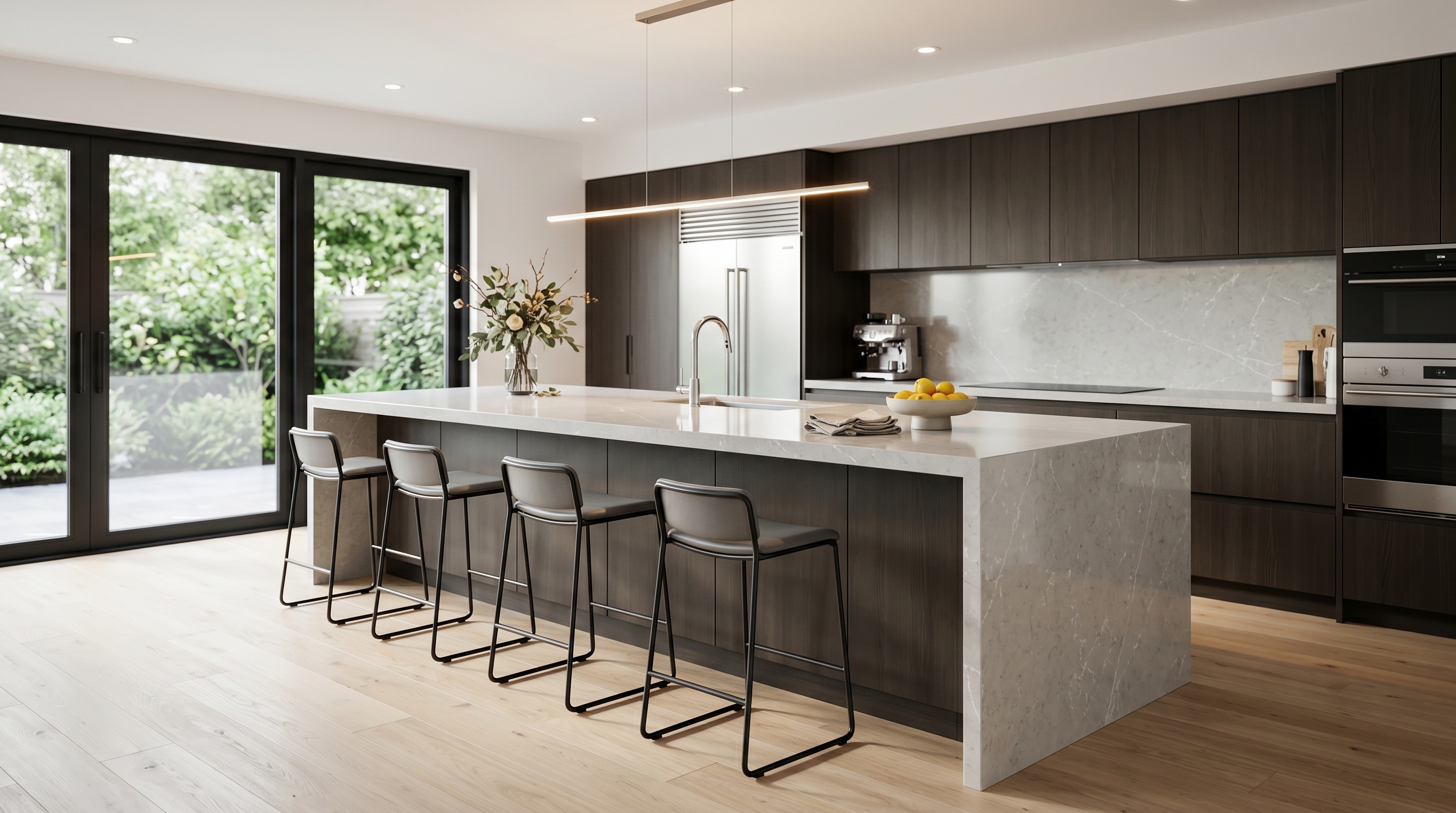
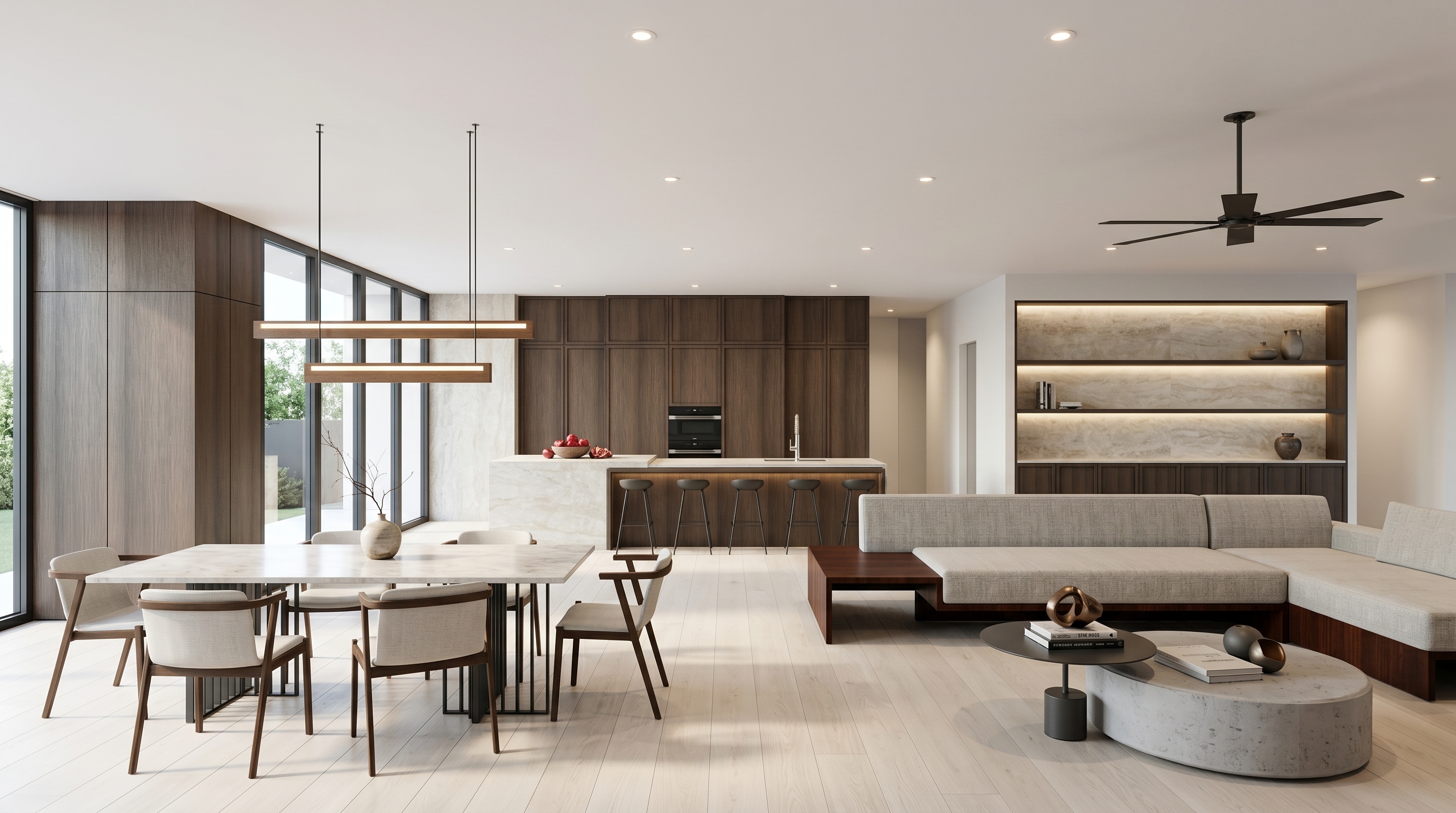
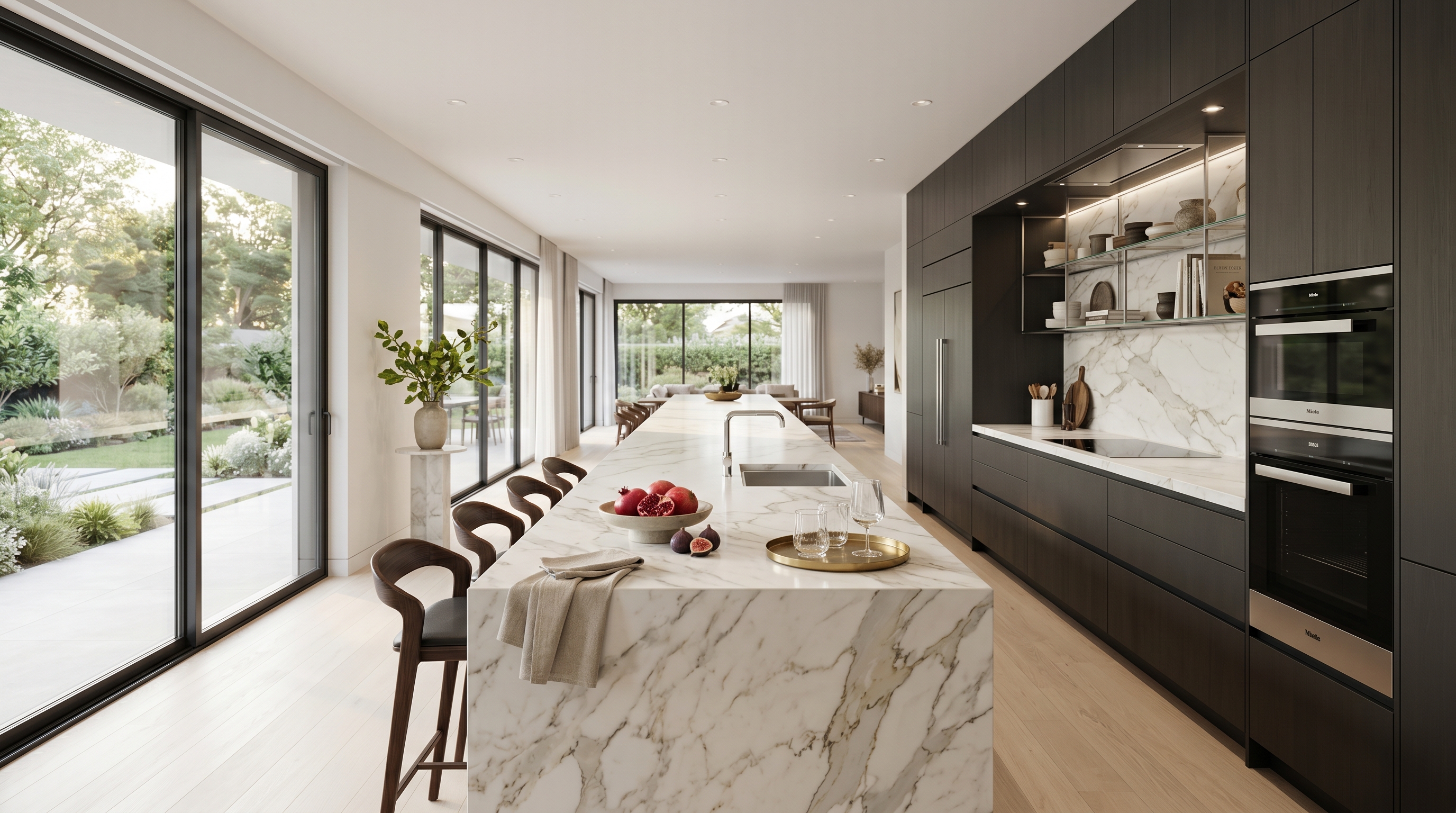
Ask anyone planning a renovation what the centerpiece will be, and the answer arrives before the question finishes: a kitchen island. It tops the wish list more reliably than any other feature, and the brief is almost always the same — make it big. A generous slab of stone, stools for four, a second sink, the cooktop, banks of drawers below. The island has become shorthand for a serious kitchen.
It is also the most oversized object in most of them.
The island worth having is usually smaller than the one people ask for — and in a fair number of homes, it should not be an island at all. The designers building the best kitchens right now have quietly stopped treating it as the default and started treating it as a decision.
The island became a reflex
It is easy to see how. Islands routinely top the homeowner's wish list when a kitchen is planned, and there has rarely been more money or square footage pointed at them. In the 2025 U.S. Houzz Kitchen Trends Study, a survey of 1,620 homeowners, the top tenth of spenders put USD 180,000 or more into a high-end kitchen — triple the median of USD 60,000. Kitchens are growing too: more than a third of renovators expand the footprint, often by annexing the old dining room. More room and more budget meet the same instinct, which is to spend both on a larger island.
The instinct is rarely examined. A bigger island reads as more generous, more luxurious, more kitchen. On the plan it looks like a gift. In use it often behaves like an obstacle.
A kitchen island is mostly the space around it
Here is the math no one runs before falling in love with a rendering. The National Kitchen and Bath Association recommends at least 42 inches of clear floor for one cook, and 48 inches where two people work, measured on every side an island is used from. An island does not occupy only its own footprint. It claims a moat of three and a half to four feet on every side.
Run the numbers and a room that looked spacious tightens fast. Push the island deeper or longer and one of two things gives: the aisles drop below what the work needs — the bumped hips and traffic jams designers hear about constantly — or the whole room has to grow to absorb it. Most of the time, "a bigger island" is a polite way of saying "a smaller kitchen around it."
An island earns its place by what it does, not by how much of the room it occupies.
The dead center
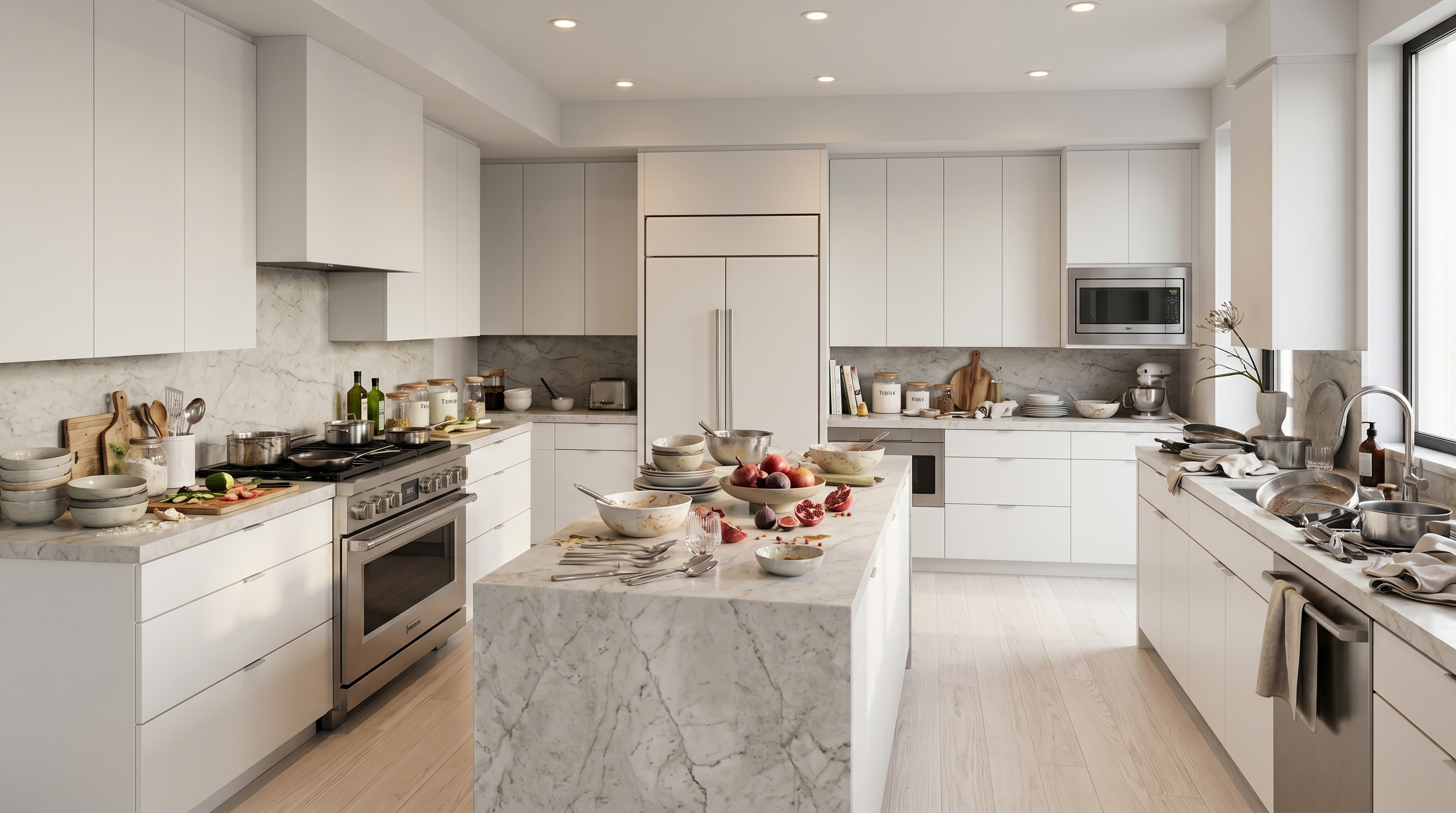
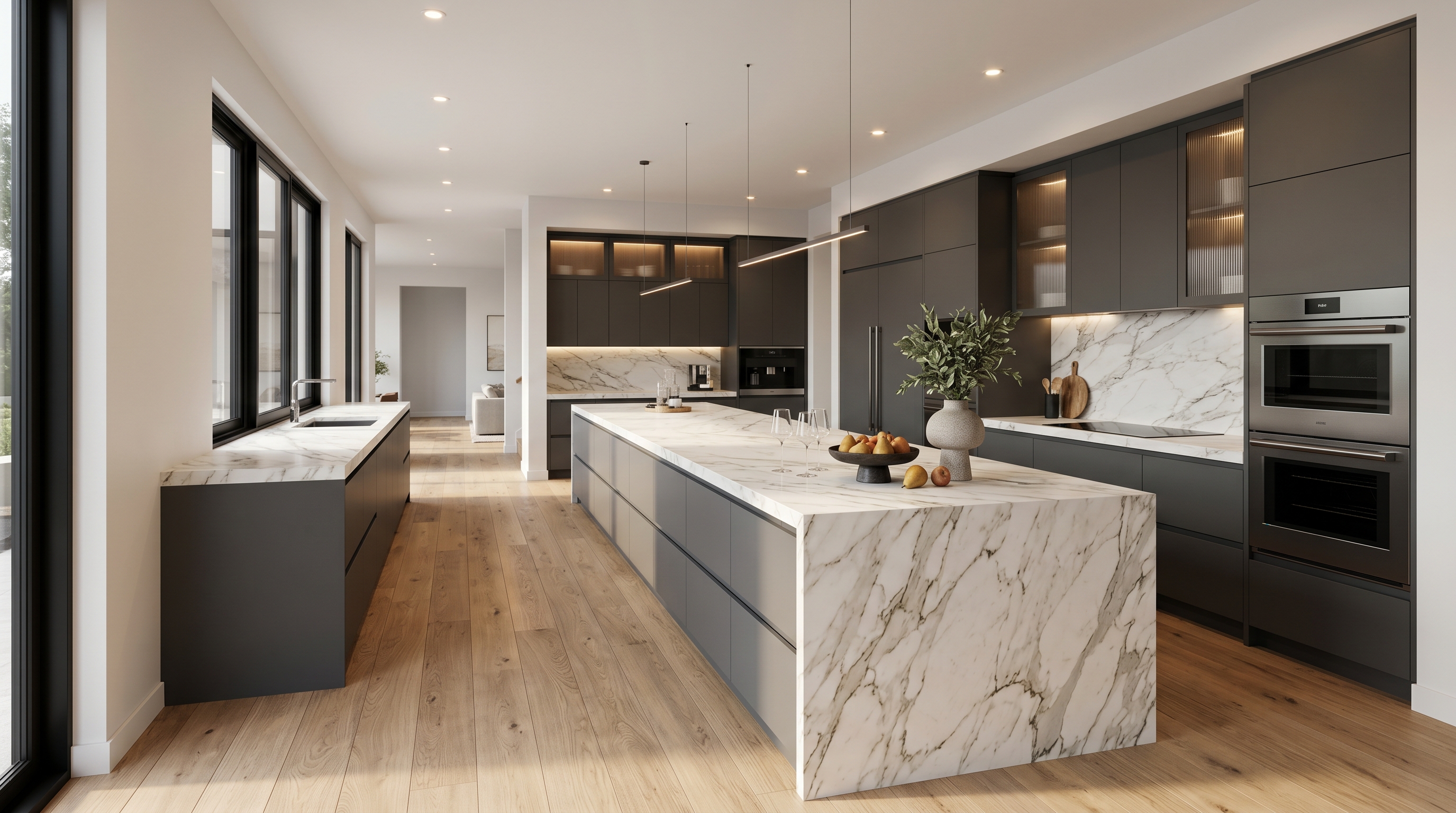
Width carries its own penalty. Past the reach of an arm, the middle of an island becomes a place you can fill but never use — a strip of stone that collects mail, keys, the fruit bowl, and the day's debris. The thing sold as extra surface quietly converts into storage you did not plan for.
The trade has noticed. An oversized island "can really date your room and dominate the entire kitchen," Livingetc reported this year, quoting designer Simon Ribchester of Beams: "A huge block of cabinetry in the middle of the kitchen used to feel luxurious and elegant. But it can feel heavy, take up too much space, and interrupt flow." The companion mistake is overload — forcing the sink, the cooktop, and the seating onto one slab until, in Ribchester's words, it "leaves little usable worktop space." An island asked to do everything tends to do none of it well.
How to size a kitchen island that actually works
Start with one job. Decide whether the island is for prep, for cooking, or for gathering, and build it around that single role. A prep island stays clear and close to the sink and refrigerator. A social island gives up the cooktop, so no one eats beside a hot pan. The island that knows what it is for is always smaller than the one trying to be everything.
Then protect the clearances first and let the island be whatever fits inside them. Lay out the 42-to-48-inch aisles, then size the island to the floor that remains — not the other way around. If the honest answer is "not much," that is useful information, not a failure of ambition. When a room cannot give an island its moat, a peninsula or a freestanding table delivers the same counter and the same gathering without the four-sided footprint. A table you can move will out-perform a block you cannot.
And keep it reachable. An island you can wipe clean from one side stays a work surface. One you cannot becomes a display shelf in the middle of the room.
A well-judged kitchen island looks almost modest on the plan and feels generous in use, because every inch of it is within reach and nothing around it is squeezed. The reflex says fill the middle of the room. The better instinct is to leave it enough air to work.
See where the island should go.
If this changed how you are picturing your kitchen island, the next step is not another article. Book a private studio tour and spend an unhurried hour with a BauTeam design consultant — at the studio nearest you in Atlanta, Boston, Los Angeles, or New York. Bring your floor plan. We will help you find the island that fits the room, not the one that fights it.