
Craft
Why the Best Kitchen Cabinets Aren't Handmade
The luxury market sells handmade kitchen cabinets as peak craft. In frameless cabinetry the hand is the weak link — and the machine quietly wins.
"Handmade" is the most expensive word in a kitchen showroom. It is meant to summon a single craftsman, a chisel, a joint cut by eye and feel — the romance of the human hand laid on wood. In the cabinetry that actually lasts, it is mostly the wrong thing to want.
The best kitchen cabinets are not handmade. They are machine-made, to tolerances no hand can hold, and the firms building the finest frameless kitchens in the world know it. The hand still matters — just not where the brochure says it does.
Where handmade kitchen cabinets fall short
Modern frameless cabinetry lives or dies on small numbers. A door floats roughly three millimeters from its neighbor on every side. Soft-close hardware, drawer boxes and hinge plates all reference each other within a fraction of a millimeter. The margin for error is tiny, and it is unforgiving.
A modern CNC machine holds a tolerance of about a tenth of a millimeter, and the better ones cut to within 0.025mm. More important than the figure is what comes after it: the machine repeats that exact cut across every panel in the kitchen, and every kitchen after that. A skilled woodworker, on a good day, cannot match it. Across forty doors and drawers, the hand accumulates error. The machine does not. If two adjacent panels disagree by half a millimeter, the eye reads the gap as a defect — not as character.
Craft moved upstream
Frameless cabinets are built on the 32mm system, the European standard that put a grid of five-millimeter holes on 32mm centers, set 37mm from the panel edge, so that hinges, slides and shelf pins all reference one coordinate system. It is the reason a German-engineered box and its hardware fit like a bolt into a chamber. That precision is not artisanal. It is industrial — and it is better. The 32mm cabinetmaking system is now the global norm for a reason.
None of this means the hand is obsolete. It means craft moved. It now lives in the decisions a machine cannot make: which leaf of oak goes on the run that catches the morning light, how grain wraps a corner, how a lacquer is built up and rubbed back, how the install is dialed in millimeter by millimeter on site. The judgment is human. The cut is not. Romanticizing the cut is how people end up paying more for less.
Ask better questions than "is it handmade?"
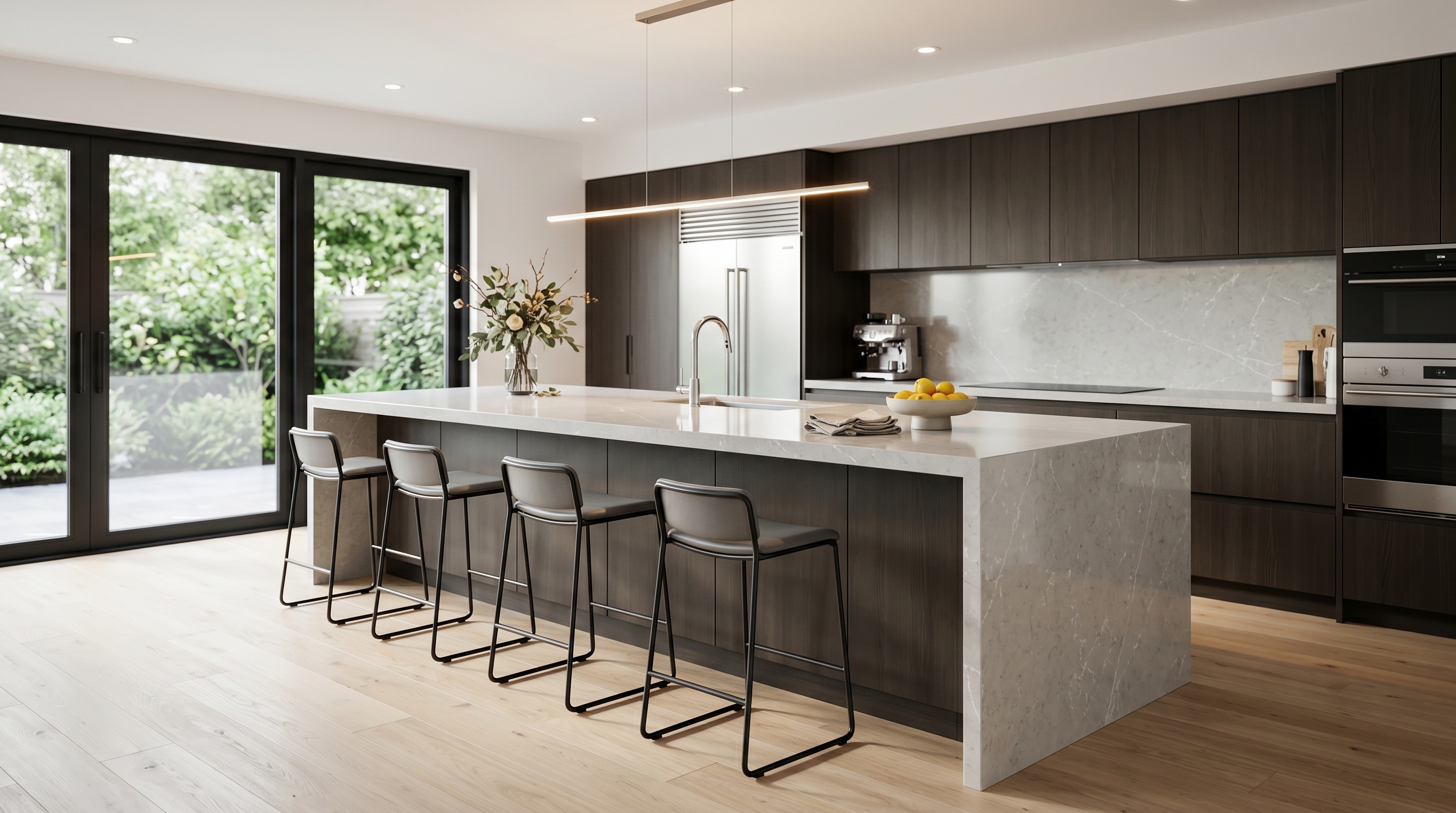
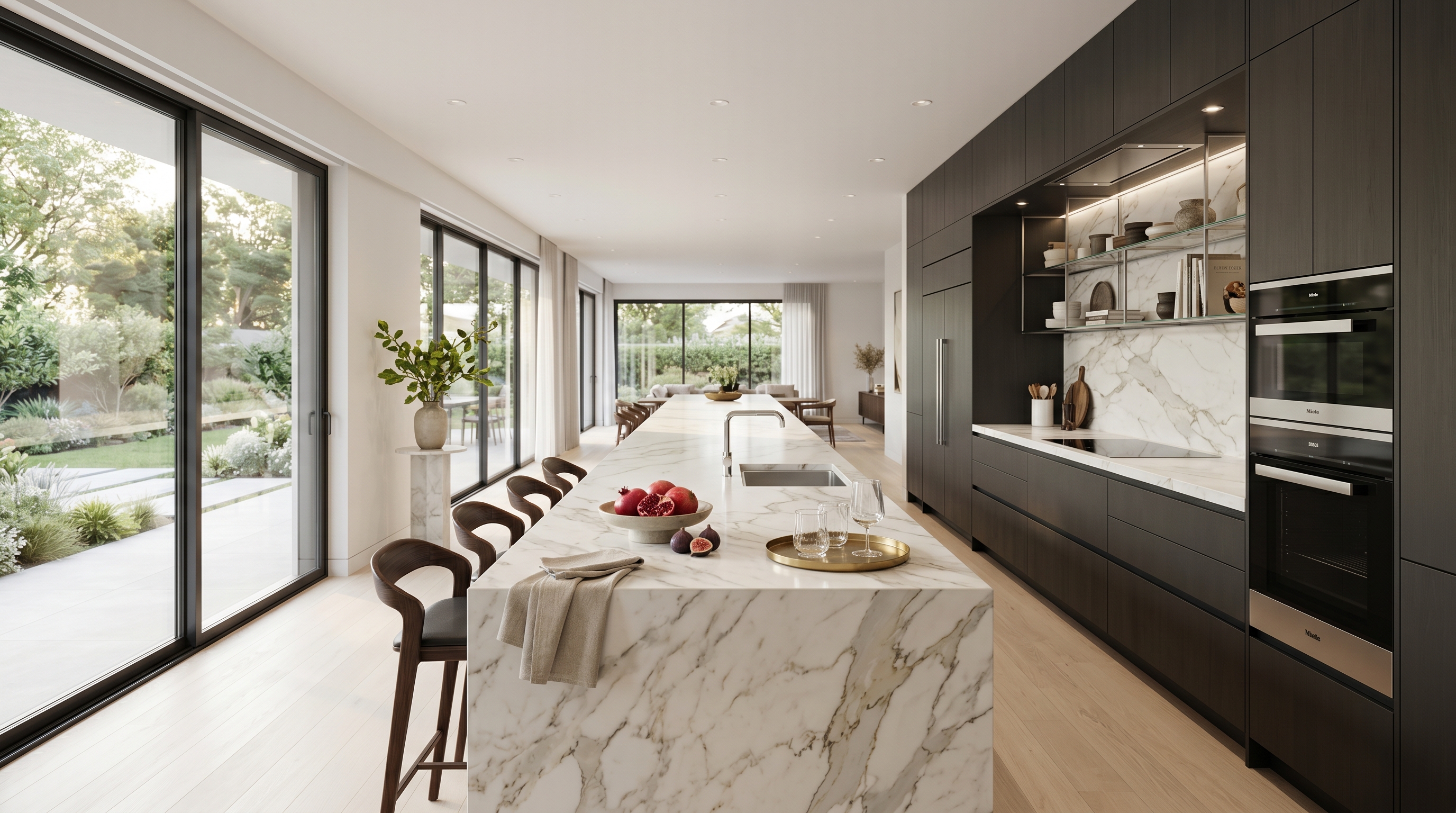
The next time a showroom leans on the word handmade, set it aside. Ask what tolerance the shop builds to. Ask whether the boxes are drilled on the 32mm system. Then run a hand down a row of closed drawers and feel for a single uneven reveal. Very often, "handmade" is a quiet admission that the shop cannot guarantee consistency — that variation is being sold to you as soul. Consistency is the luxury. You can see how that logic shapes our kitchens, where the visible craft is in the material and the fit, not in the rough edges left behind.
The chisel makes a better story. The machine makes a kitchen that still closes flush in twenty years. Choose the one you actually have to live with.
Book a private showroom tour
If this changed how you read the word "handmade," the next step isn't another article. Book a private showroom tour and spend an hour with our design team, one on one — in Atlanta, Boston, Chicago, Dallas, or one of our studios across the country. Bring the kitchen you think you want, and we will show you the tolerances behind it.