
Craft
The Double Island Kitchen Is Solving the Wrong Problem
The double island kitchen reads as the ultimate prep upgrade. But a second island fractures your work zones and eats the clearance a cook actually needs.
The double island has become the fastest way to announce that a kitchen is serious. Two slabs of stone, two runs of cabinetry — one for the cook, one for the crowd. It photographs like abundance, and it suggests a household with room to spare.
It is also, in most of the kitchens where it now turns up, the wrong answer to a question nobody asked.
The double island kitchen is pitched as a prep upgrade and a social upgrade at the same time. In practice it tends to deliver neither. A second island does not double your working space. It splits it — and it spends the one thing a working kitchen cannot spare, which is clearance.
The Double Island Kitchen Lives Mostly in Magazines
Walk through any 2026 design roundup and the second island is everywhere, usually described as the natural next step for the "social kitchen." Walk through actual finished kitchens and it nearly vanishes. In Houzz's 2026 kitchen report, staff economist Marine Sargsyan found that 96% of renovated kitchens have a single island, and 82% keep a standard one — with multilevel and rolling islands scraping single digits. The double island is a magazine fixture, not a lived reality.
That gap matters. A feature this heavily promoted and this rarely built is usually being sold on image rather than on use.
Two Islands, Four Aisles
The trouble is geometry. The National Kitchen & Bath Association sets a work aisle at a minimum of 42 inches for one cook and 48 inches for two, with walkways no less than 36 inches. Those figures are per gap — and every island you add creates gaps on all four sides.
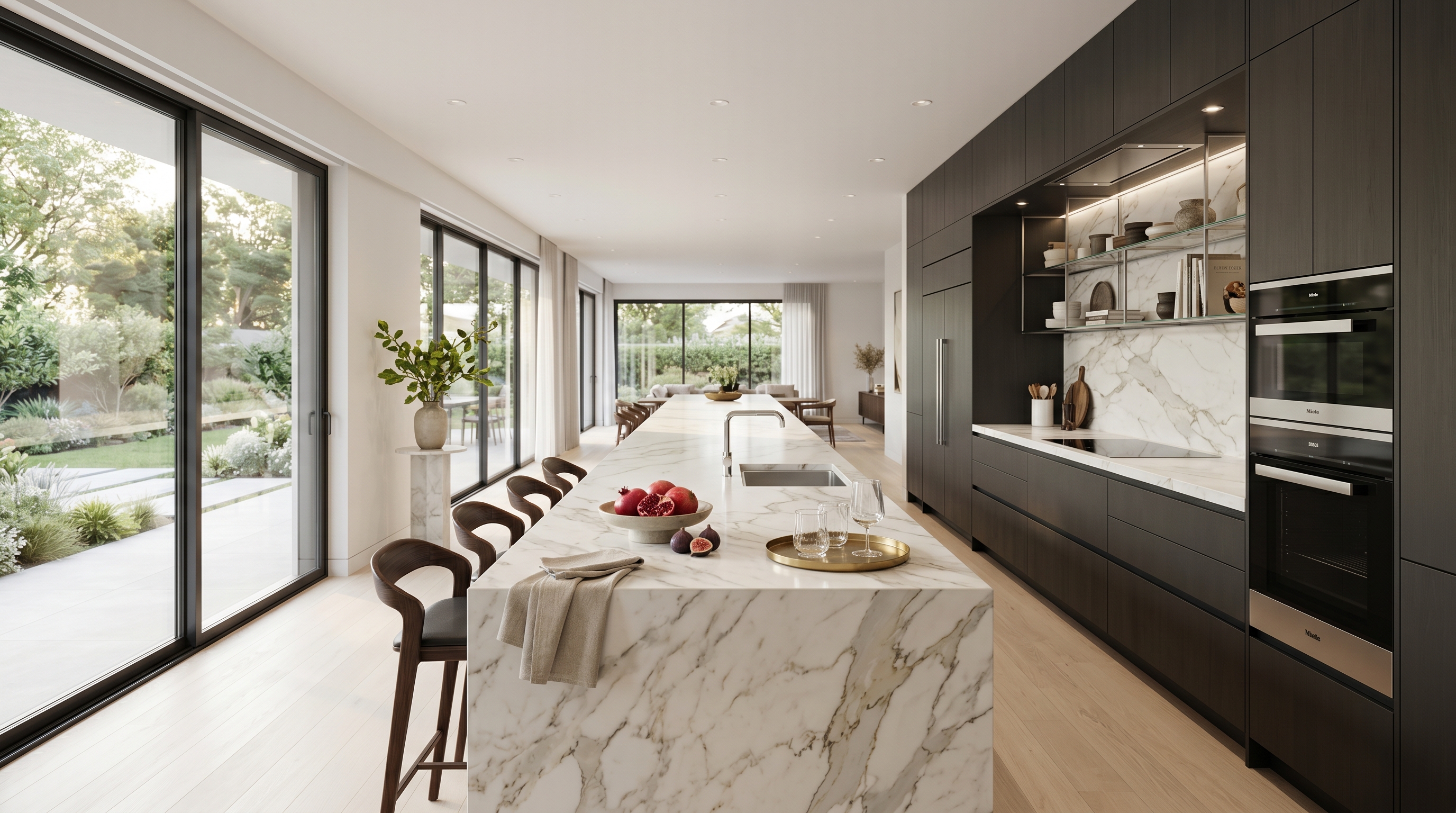
One island sits inside two working aisles. Two islands sit inside as many as four, plus the walkway between them. Add it up and a second island can swallow four to five feet of floor before it earns a single inch of counter. In a genuinely vast kitchen, that math works. In the merely large kitchen where the double island is now being specified as a status move, you do not get two workstations. You get one workstation and a very expensive corridor.
The Cook Pays for the Party
The case for two islands is that they separate cooking from entertaining — prep on one, seating on the other. That sounds efficient. It usually is not, because it optimizes for the guest rather than the person actually working.
A kitchen runs on short trips between a few fixed points: cold storage, sink, prep, heat. Pull those apart across two islands and you lengthen every one of those trips, all day, for years. The guest gets a comfortable perch. The cook gets more steps and a divided surface — which is precisely backwards, since the cook is the one who uses the room every day.
What to Build Instead
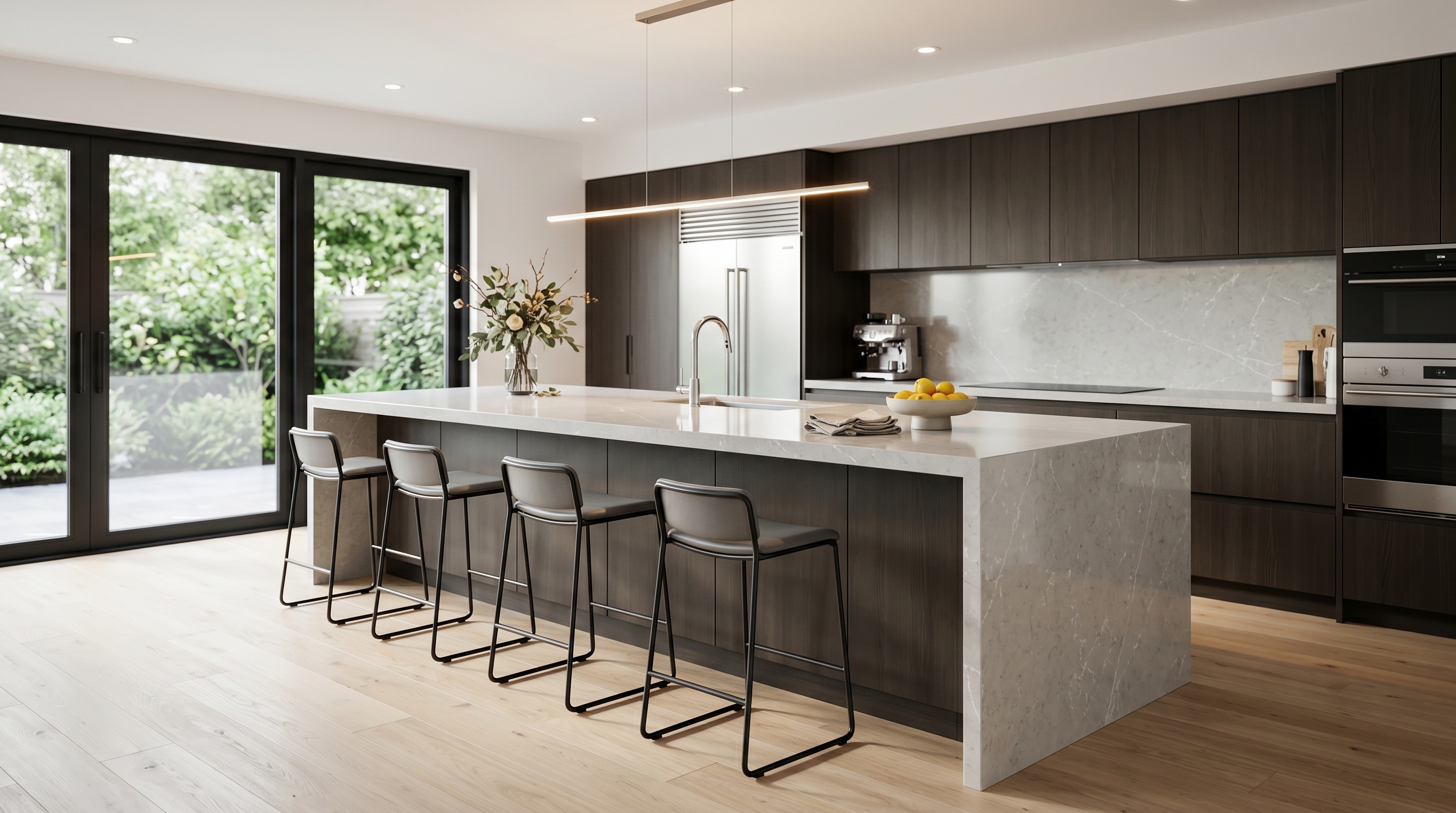
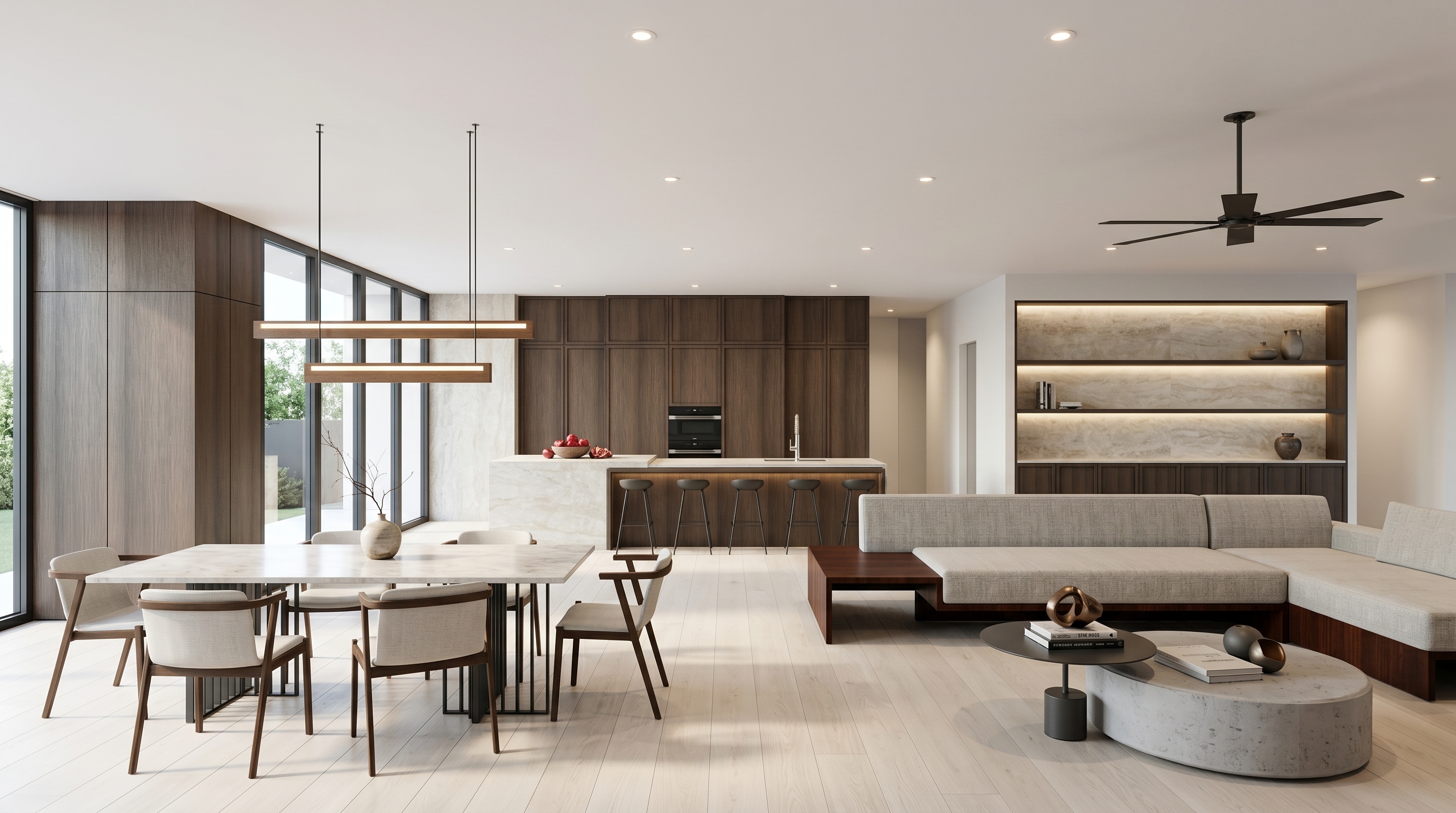
In almost every kitchen short of enormous, one well-proportioned island beats two. Size it to the work rather than to the room: enough uninterrupted counter to actually prep on, the sink or cooktop placed with the clearances the NKBA specifies, and no more. We have argued before that the single island is usually built too big — the fix is rarely a second one.
If you want a place for people to gather, extend the one island or add a separate table at a different height, which reads warmer than a second slab and costs a fraction as much. Spend what is left on the perimeter — the runs where the cooking really happens. That is where a considered kitchen is won or lost, not in the middle of the floor.
Reserve the true double island for the rooms that can genuinely hold it. There, the second island is a luxury. Everywhere else, it is a compromise wearing a luxury's clothes.
Book a Private Showroom Tour
If this changed how you are thinking about your island, the next step is not another article. Book a private showroom tour and spend an hour with our design team, one on one — measuring the room you actually have against the kitchen you actually cook in. Our studios, from Dallas to New York, are set up for exactly that conversation.