
Craft
Your Closet Lighting Has a Color Problem
Gallery-style closet lighting looks stunning and quietly misrepresents every color in it. Here is the two-zone lighting fix serious designers use.
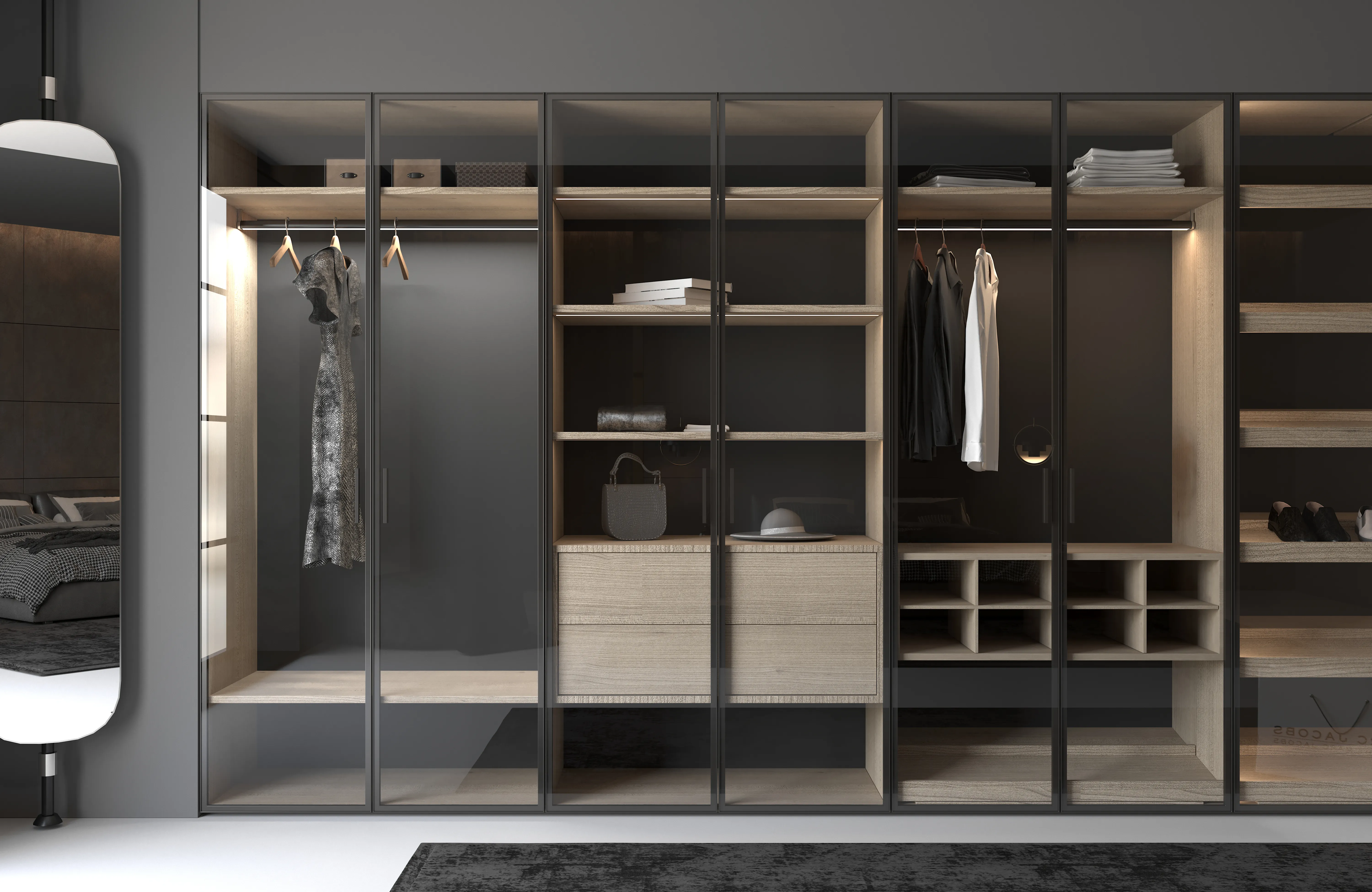
The reigning trend in closet lighting right now is what you might call gallery light: layered, warm, atmospheric, the kind of illumination a jewelry case gets rather than a utility room. It photographs beautifully. It also lies to you every morning of the week.
Here is the specific failure. You reach for what you are certain is a navy suit and a charcoal tie, dress in the soft amber glow of your closet, and step into the office elevator's fluorescent light to discover the suit is black and the tie is a different shade of navy entirely. Nothing was wrong with the suit. The light that sold it to you was wrong.
A closet is not a boutique and it is not a gallery, however much the design world has started treating it like one. Its actual job is narrower and more demanding: to tell you the truth about color before you leave the house. Most beautifully lit closets fail at exactly that, because they have been specified for mood rather than accuracy.
Why Closet Lighting Defaults to Warm and Moody
Closets inherited their lighting from the rooms next to them. As primary suites got warmer and moodier — 2700K to 3000K, the same range flattering to skin and used in living rooms and bedrooms — closets followed, treated as an extension of the retreat rather than a room with its own function. It is a reasonable design instinct. It is also the reason so many well-appointed closets get color rendering wrong: a fixture chosen to feel like candlelight was never chosen to tell fabric apart.
What Color Rendering Index Actually Tells You
Color Rendering Index, or CRI, scores a light source from 0 to 100 on how accurately it reveals color compared with natural daylight. The lighting manufacturer Waveform Lighting, which publishes some of the more rigorous consumer breakdowns of the metric, notes that at 80 CRI — a common baseline for inexpensive bulbs — "nuanced colors, especially those that have a deep red component, will appear unnatural." At 90 CRI, "most objects... will for the most part appear normal." At 95 CRI, objects "appear nearly identical to their appearance under natural light." The gap matters most exactly where closets live or die: deep reds, near-blacks, and the muddy zone between navy and charcoal.
The Kelvin Number Matters Just As Much
Color temperature, measured in Kelvin, is the second variable, and it is usually the one homeowners get backward. The lighting retailer Home Lighter, Inc. calls a CRI of 90 or higher "non-negotiable" for a closet and recommends a neutral 3000K to 4000K rather than the warmer 2700K common elsewhere in the house, specifically because a whiter light "prevents colors from looking too yellow or too blue." That is a notably cooler recommendation than most primary suites are lit to — and it is the opposite instinct from the gallery-light trend, which pushes closets warmer, not more neutral.
Light the Closet in Two Zones, Not One
The fix is not to abandon atmosphere. It is to stop asking one fixture to do two incompatible jobs. Ambient, layered light can still make a closet feel like the curated space it is meant to be — well-built closet systems are designed around exactly that kind of architectural lighting for depth and presence. What that ambient layer should not also be responsible for is the moment you actually check an outfit. That calls for one dedicated, unglamorous zone: a single high-CRI (90 or above), 3500K-to-4000K light source positioned near a mirror or a window, ideally on its own switch, doing nothing but telling the truth. Specify the two functions separately at the design stage, the way you would separate task lighting from ambient lighting in a kitchen, and the closet gets to keep its atmosphere without losing its accuracy.
A closet can still look like a gallery. It should simply also contain one honest window of light before you walk out into the real one.
Ready to See It in Person
If this changed how you are thinking about your own closet, the next step is not another article. Book a private showroom tour and spend an hour with our design team, one on one, working through lighting, materials, and layout for the space you actually have. Consultations are unhurried and available across our showrooms nationwide.