
Craft
Cabinet Quality Hides on the Edge You Can't See
The door sells the kitchen. But the carcass, the edge banding and the glue line beneath it decide whether it survives twenty years. A case for judging cabinet quality where the eye never goes.
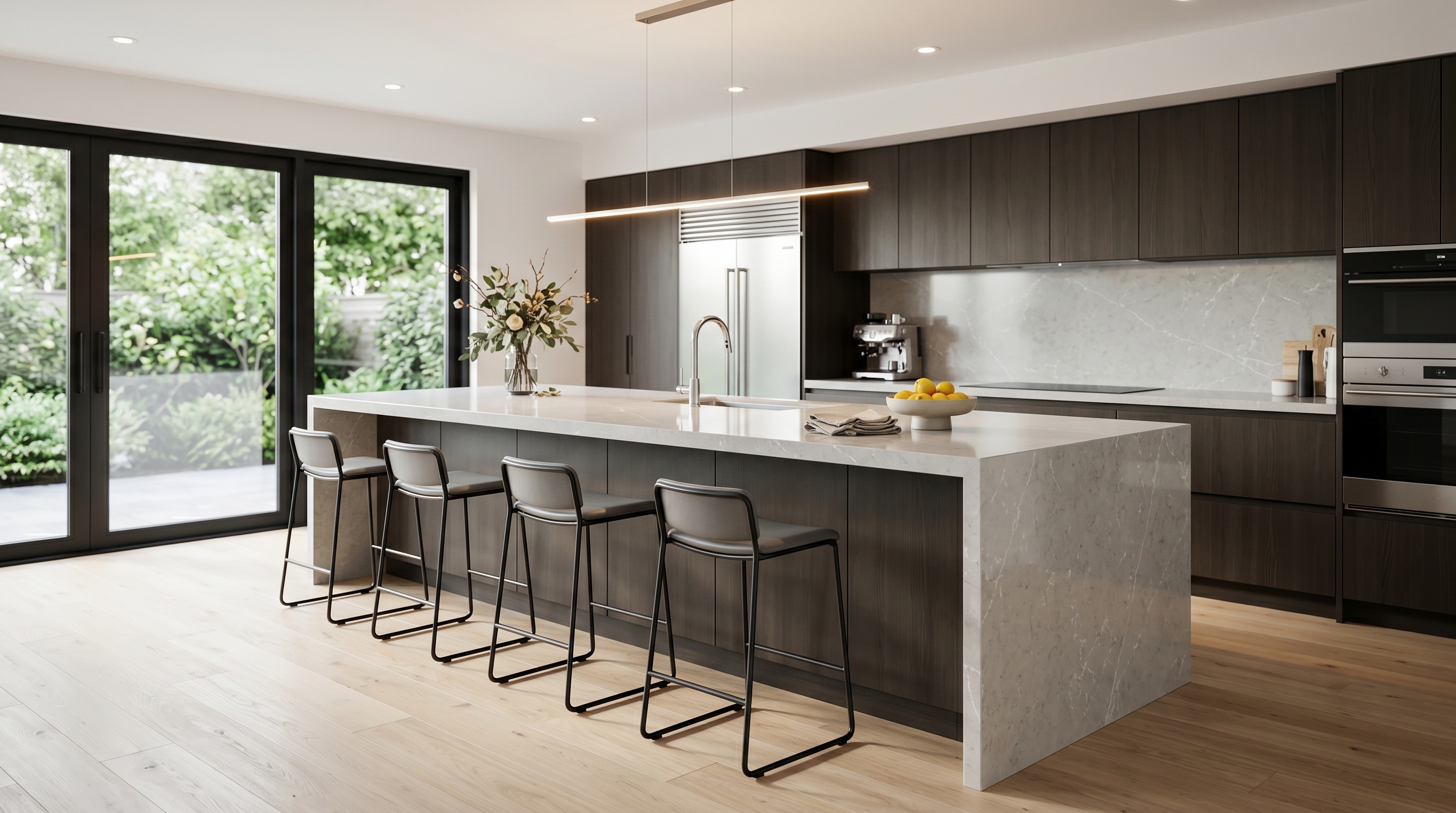
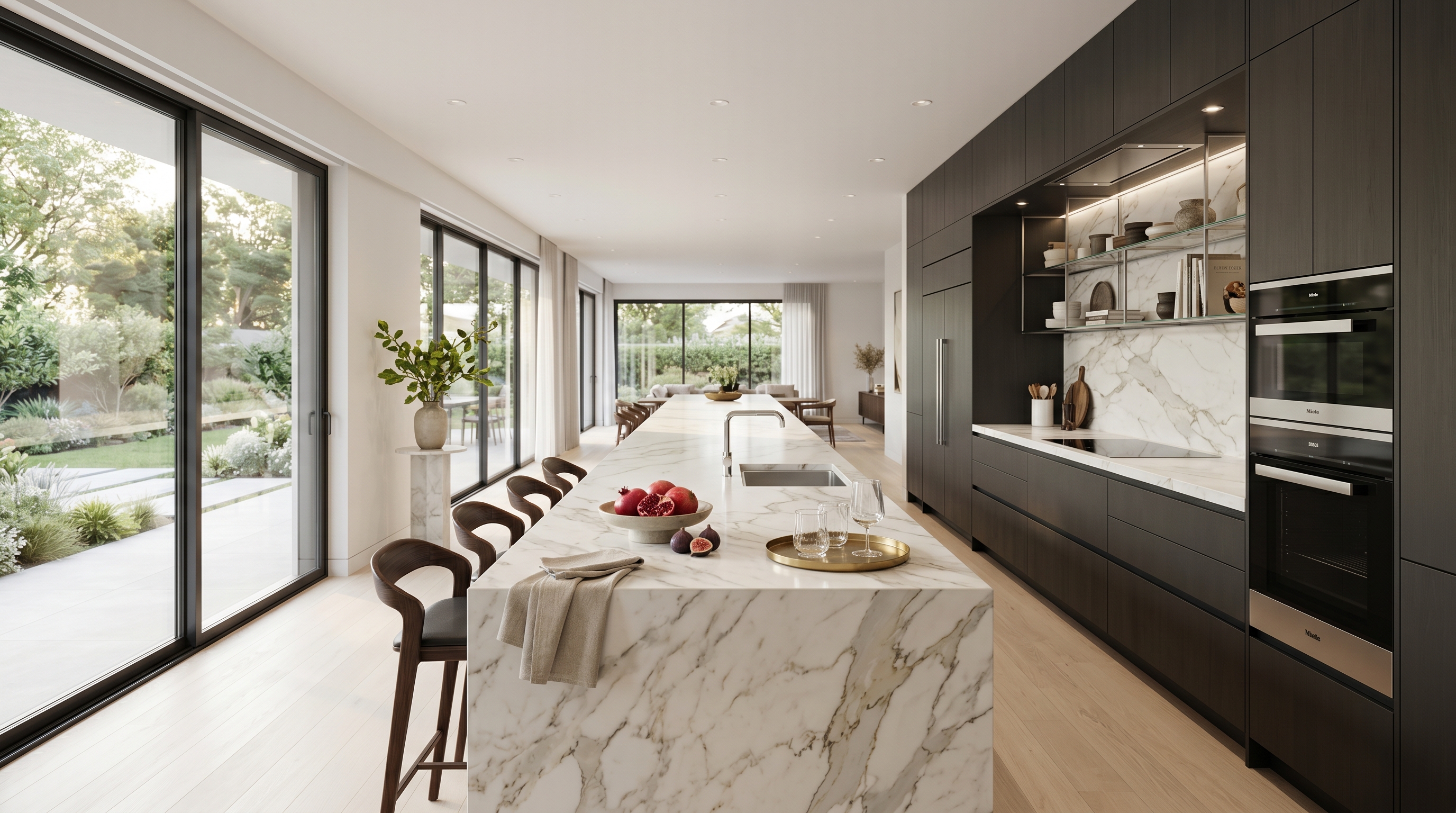
Walk into any showroom and you are invited to judge a kitchen the way you would judge a painting: by its face. The wood species. The finish. The grain running clean across a wall of doors. It is the part built to be admired, and admire it you will.
It is also the part least likely to fail.
Cabinet quality does not live on the door. It lives on the edge you can’t see — the banded rim of each panel, the glue line beneath it, and the box behind it. No one photographs these. Every serious maker obsesses over them, because they decide whether a kitchen still looks composed in twenty years or quietly comes apart at the seams.
Where Cabinet Quality Actually Lives
A cabinet is two things pretending to be one. There is the door — the visible, replaceable, style-driven layer. And there is the carcass: the box of panels that carries weight, holds square, and absorbs every spill, steam cloud and slammed drawer for decades. The door is fashion. The carcass is structure.
Most panels in a modern cabinet, even at the high end, are engineered cores — and that is not a compromise. A well-made engineered panel stays flatter and moves less with humidity than a wide plank of solid wood ever could. But an engineered core has one vulnerability: its edges. Cut a panel and you expose its interior to water and vapor. Seal that edge well and the panel is close to bulletproof. Seal it poorly and the kitchen has an expiration date.
The Glue Line Is the Whole Argument
This is where two cabinets that look identical in a showroom quietly diverge. The edge banding — the thin strip capping each cut edge — is only as good as the adhesive beneath it, and there are two camps.
The cheaper one is EVA, a hot-melt glue that bonds as it cools. It works, it is fast, and it softens under heat and loosens in humidity — which is to say it ages exactly where a kitchen runs hottest and wettest. The better one is PUR, a polyurethane adhesive that does not merely cool but chemically cures by reacting with moisture in the air, forming a bond that holds past 120 degrees Celsius and effectively seals vapor out of the panel. The strip looks the same to you on day one. The seam, ten years on, does not.
You will rarely be told which glue is in your cabinets. That silence is the tell.
The Test That Only Looks at the Edge
If this sounds like a designer’s superstition, the industry built a standard around it. In North America, the one recognized performance standard for kitchen and bath cabinets is ANSI/KCMA A161.1, administered by the Kitchen Cabinet Manufacturers Association for more than 45 years. Read its finish tests and notice what they fixate on.
One test soaks a cabinet door’s edge — not its face — in a standardized detergent solution for 24 hours, after which it must show no delamination and no swelling. The same standard requires that all wood be dried to a moisture content of 10 percent or less before fabrication, loads shelves at 15 pounds per square foot for seven straight days, drives drawers and doors through 25,000 open-and-close cycles, and bakes finishes in a hotbox at 120°F and 70 percent humidity for a full day. The cabinet that passes is not the prettiest one. It is the one built carefully where you cannot see.
What to Ask Before You Sign
The next time a kitchen is being quoted, spend your scrutiny on the parts that do not show. Ask which adhesive bonds the edge banding; if the answer is PUR, you are speaking with someone who builds for the long term, and if no one in the room knows, that is its own answer. Ask whether the carcass is rated for moisture, and whether the line is built to a recognized standard. Then run a fingernail along an edge in the showroom — a quality seam is continuous and cool, and you can barely feel it. Do all of that before you let yourself fall for a door.
A kitchen does not fail at its face. It fails at the seam — the glue that let go, the edge that drank a decade of steam. Choose the cabinet that was built where the eye never goes, and the face takes care of itself. See how our kitchens are built, edge first.
Book a Private Showroom Tour
If this changed how you are thinking about what you are actually paying for, the next step is not another article. Book a private showroom tour and spend an unhurried hour with our design team, one on one — in Chicago, Dallas, Atlanta or any BauTeam studio — where you can run your own fingernail along the edge. Reserve your private tour.