
Craft
Your Bathroom Vanity Lighting Is in the Wrong Place
The overhead fixture is the default for bathroom vanity lighting - and the reason your face looks tired. The fix is to light the face, not the ceiling.
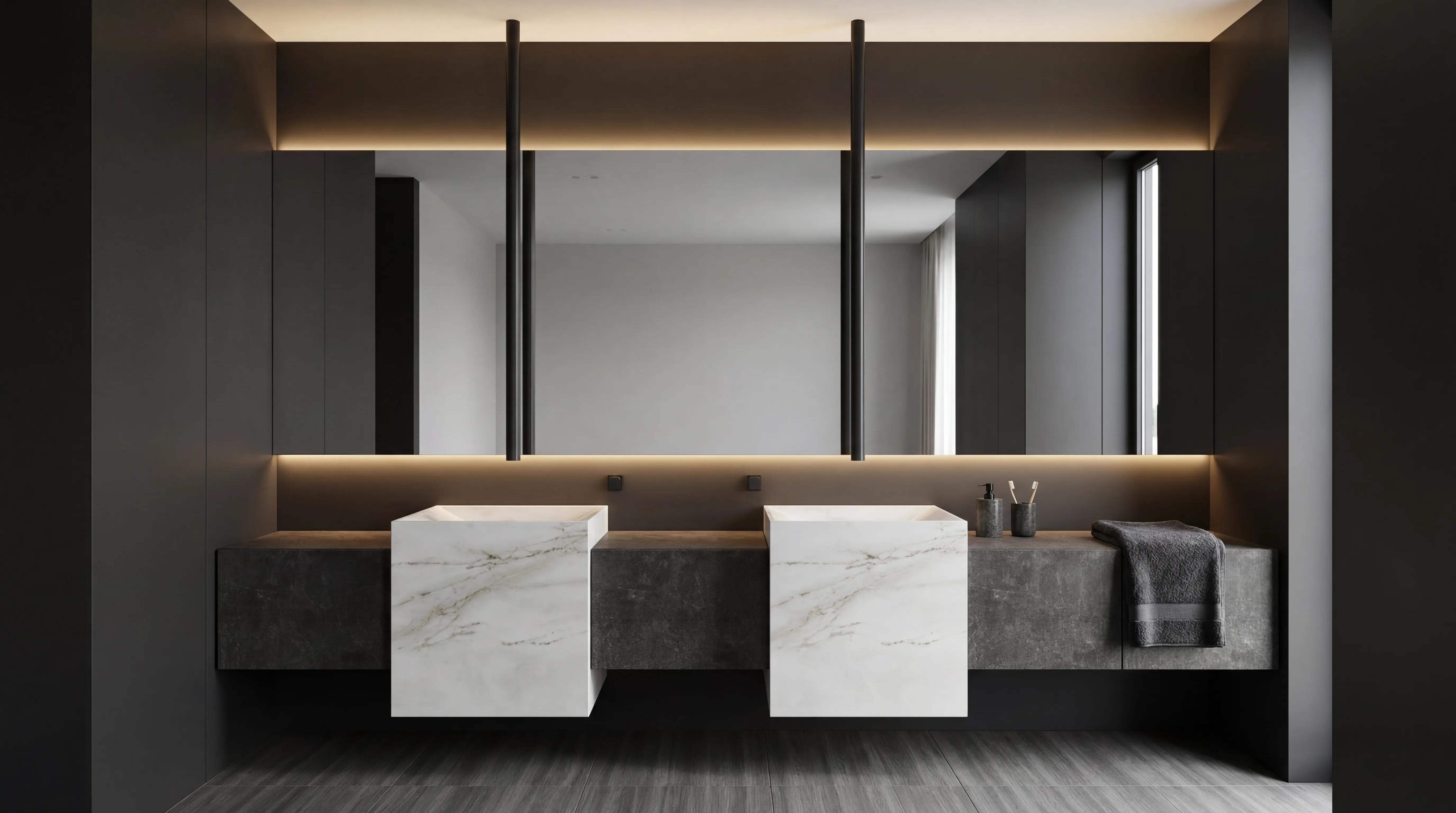
The most expensive bathroom on the block still gets one thing wrong, and it is hanging right over the mirror. Bathroom vanity lighting is almost always installed as a single fixture above the glass, or worse, left to a few recessed cans in the ceiling. Both are the wrong place for it.
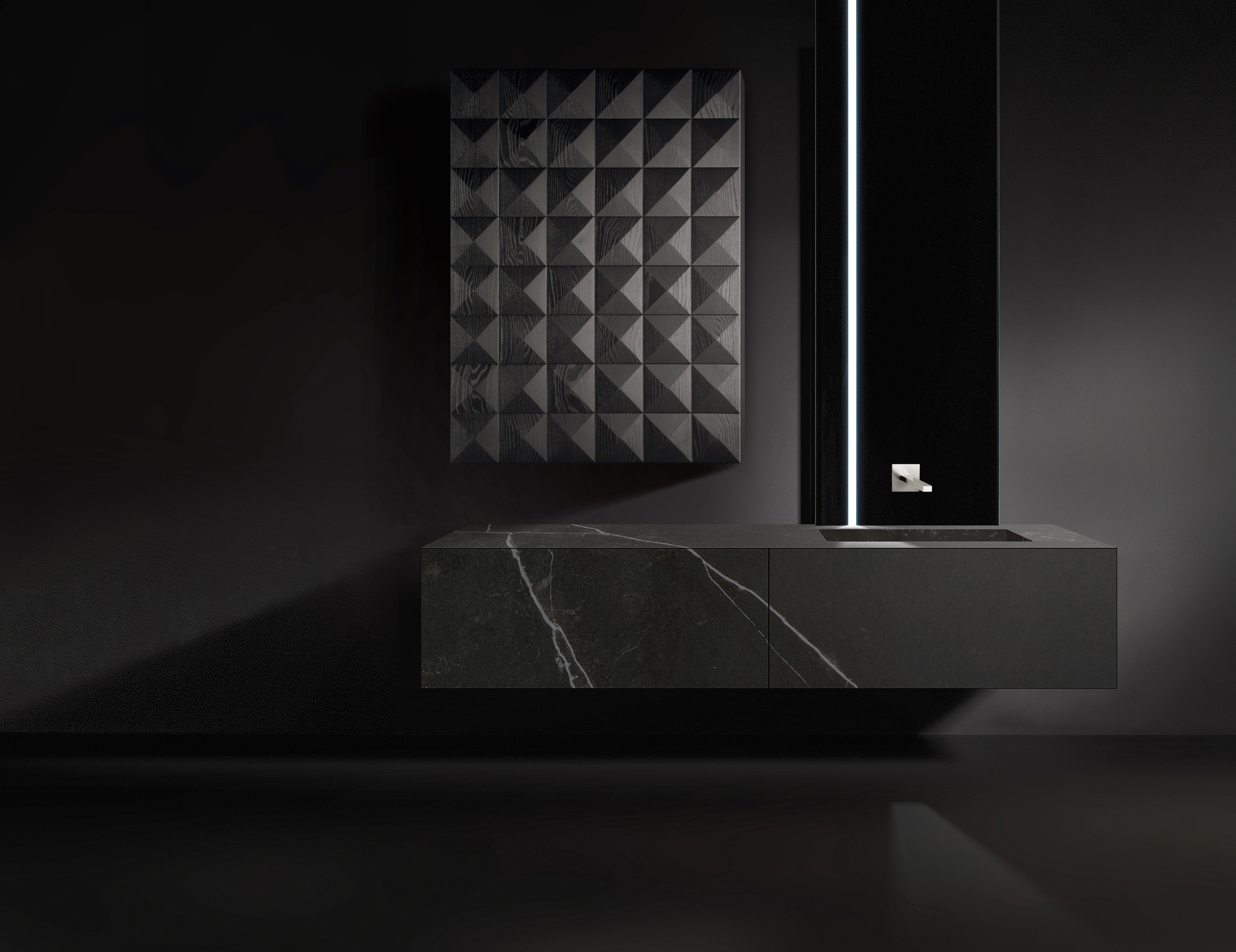
The stone was chosen carefully. The fittings were agonized over. Then the one element that decides whether any of it flatters you — the light on your face — was treated as an afterthought and pointed straight down at your scalp.
Here is the rule the best bathrooms follow: light the face, not the ceiling.
The problem is geometry, not the fixture
A light directly overhead sends every beam downward. Brow bones cast shadows into the eye sockets, the nose throws a line across the mouth, and the chin drops a dark band onto the neck. Makeup artists and photographers have a name for the result — raccoon eyes — and it comes from nothing more exotic than a single source placed above the subject.
No amount of wattage fixes it. Adding lumens to a top-down fixture only deepens the contrast, which is why a brightly lit hotel bathroom can still leave you looking exhausted. The direction of the light is the flaw, not its strength.
What the lighting trade already knows
Ask the people who specify light for a living and the answer is consistent: put it beside the mirror, not above it. The American Lighting Association recommends mounting vanity fixtures on both sides of the mirror, centered roughly 65 to 70 inches off the floor — about the eye level of the average adult — and spaced somewhere between 28 and 40 inches apart depending on the width of the glass.
The physics is the one a portrait photographer relies on. Two sources at face height, one on each side, wrap light around the features and fill the shadows the overhead fixture was carving in. Photographers call it cross-illumination and buy two softboxes to get it. In a bathroom it costs two sconces.
Color is the other half of the mistake
Placement decides where the shadows fall; color temperature decides whether the face under the light looks like itself. Lighting guides converge on a color rendering index (CRI) of 90 or above for a vanity, so that skin, makeup, and clothing read true rather than sallow. For warmth, 2700K to 3000K is the most flattering range; push toward 3500K to 4000K if the priority is clinical accuracy for shaving or makeup. Below CRI 90, no placement will save you — the light is misreporting the color of your skin before it ever reaches the mirror.
How to fix your bathroom vanity lighting
Flank the mirror with a pair of sconces centered near 66 inches off the floor, lamped at 2700K to 3000K with a CRI of 90 or higher. If a wide mirror rules out side fixtures, mount a linear light in front of the glass rather than above it, or specify a mirror with edge-lit diffusion built in. Keep the recessed ceiling cans if you like them, but demote them to what they are — ambient fill for the room, not the light you groom by. This is the logic we design every vanity around: the surface is only ever as good as the light standing in front of it.
A ceiling can light a room. Only a light at face height can light a face. Move the fixture eighteen inches and the same bathroom, the same stone, the same person in the mirror will look like the version you were paying for.
See it for yourself
If this changed how you are thinking about your bathroom, the next step is not another article. Book a private showroom tour and spend an hour with our design team, one on one, standing in front of a vanity lit the way it should be. Reserve your private tour at the BauTeam studio nearest you.