
Craft
Kitchen Acoustics Are the Luxury Nobody Specifies
Kitchen acoustics are the one thing nobody puts in the specification. The hard, beautiful surfaces that define a luxury kitchen reflect nearly every sound that hits them.
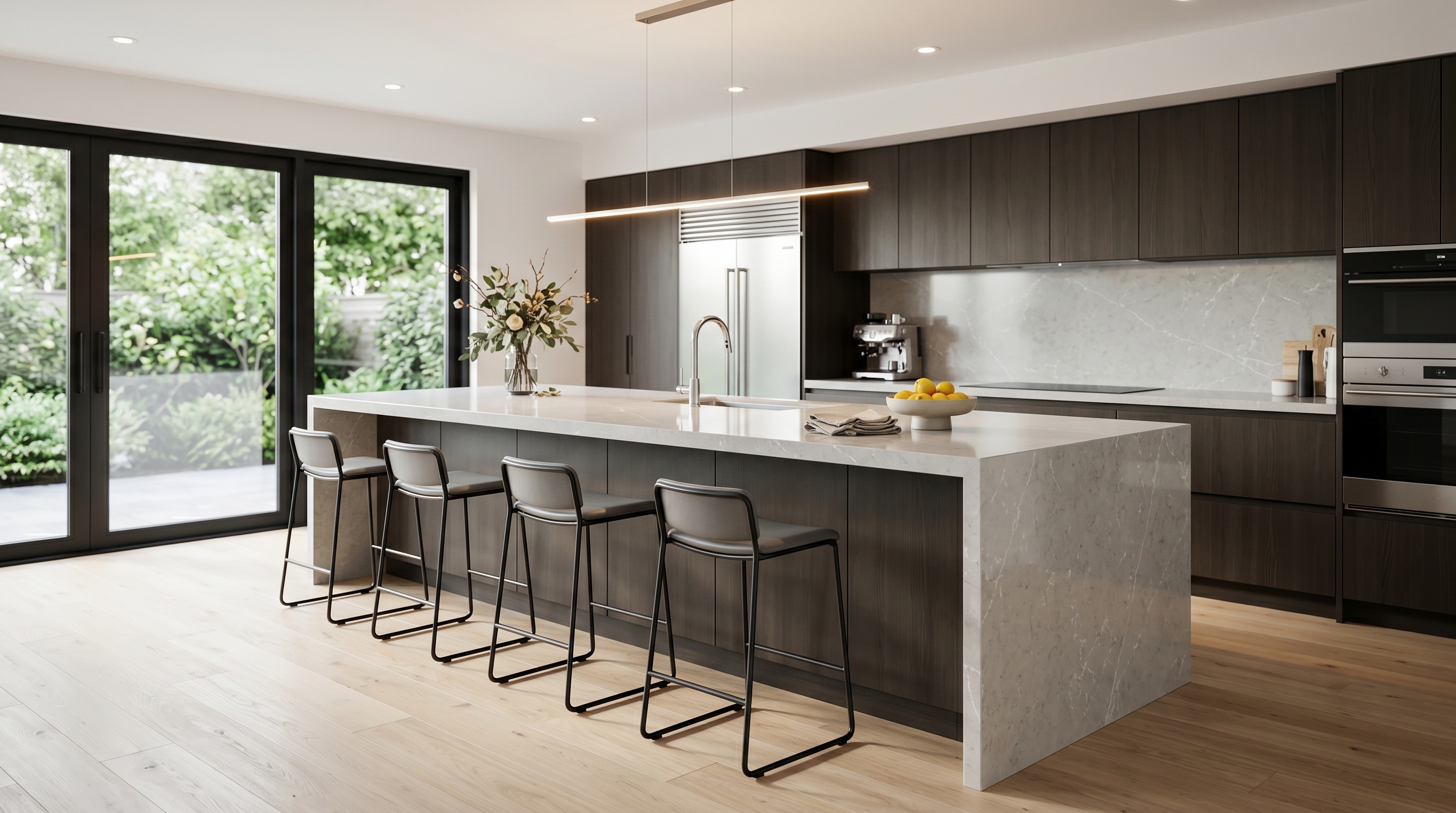
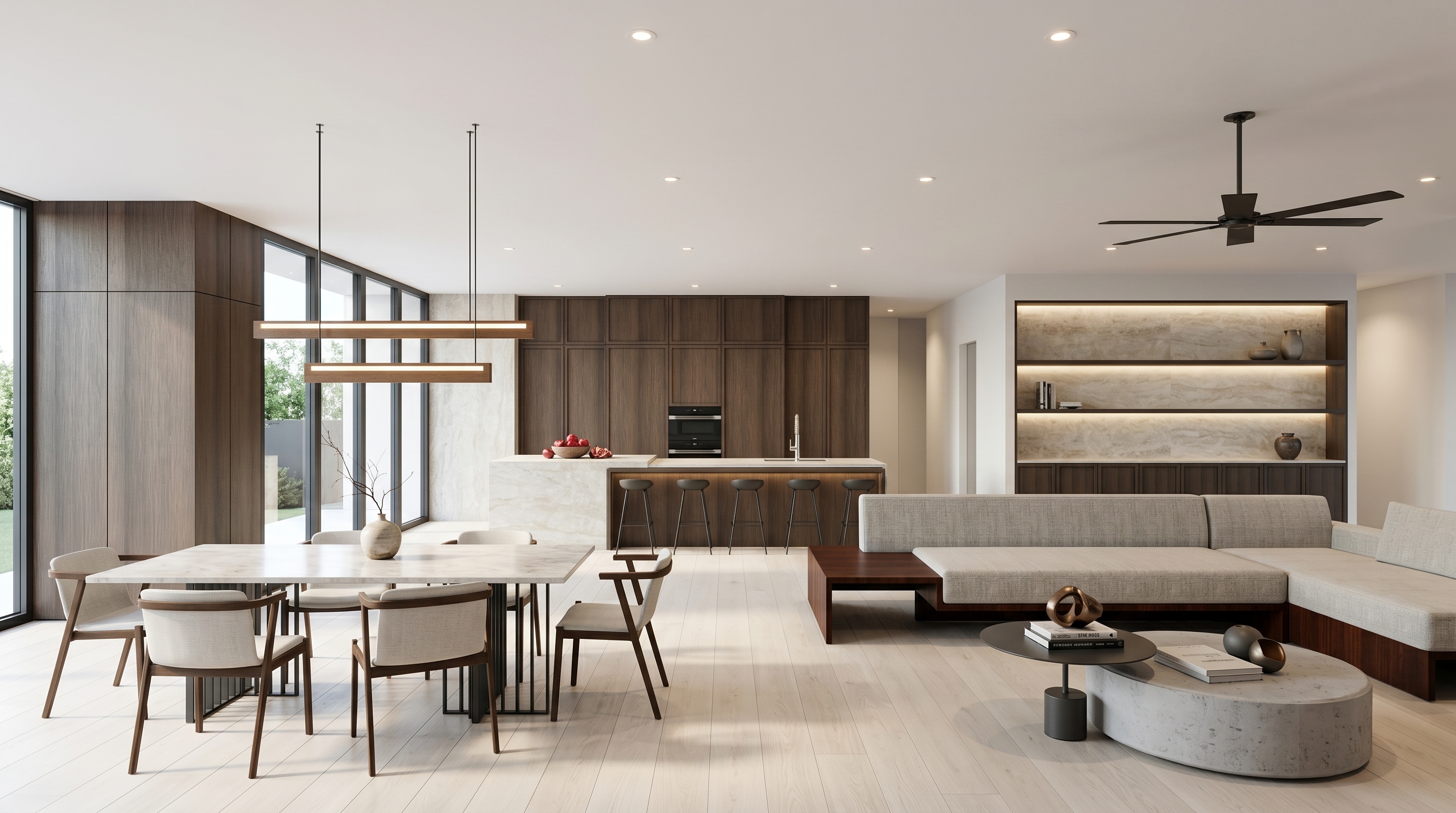
Every material that signals a serious kitchen — stone, glass, lacquer, steel, large-format porcelain — shares one acoustic property. It gives the sound back.
That is the line item nobody writes down. Kitchen acoustics get decided by accident, as the residue of a hundred choices made for the eye, and the result is consistent enough to be a rule: in most well-finished homes, the kitchen is the loudest room in the house. Not the media room. Not the gym. The kitchen.
The conventional complaint about the open plan is that it fails on sightlines and cooking smells. It usually fails on sound.
Kitchen Acoustics Are Set by the Finishes, Not the Appliances
The published absorption figures are unkind to the way we build. Plain gypsum wall board absorbs roughly 4 to 5 percent of the sound energy that strikes it in the 500–1,000 Hz band — the range that carries most of the human voice — and reflects the remainder. Painted concrete block performs about the same. Stone, glass and lacquered fronts do not perform better. Glued-down carpet, often treated as the acoustic fix, absorbs only about 14 percent at 500 Hz, and almost nothing of the lower frequencies that make a room feel heavy. Those figures come from a University of Oregon primer on room acoustics, written for classrooms, and they apply just as well to a kitchen island.
What follows is familiar to anyone who has hosted in a beautiful hard-surfaced room. Reflections pile up, the background rises, and everyone talks louder to clear it — the same escalation that makes a restaurant unbearable by nine o'clock. A room meant for conversation wants a reverberation time near three-quarters of a second. A room finished entirely in reflective material has no mechanism for getting there.
Your Appliances Are Rated for Noise. Your Room Is Not.
There is a strange asymmetry in how the industry handles sound. Appliances are held to account for it; rooms are not.
Ventilation is measured in sones, a loudness unit that runs on a linear scale — a fan rated at 3 sones is half as loud as one rated at 6. The Home Ventilating Institute, which certifies these ratings through independent laboratories, pegs one sone to the sound of a quiet refrigerator and notes that the lowest certifiable rating for residential ventilating products is currently under 0.3 sone. ENERGY STAR caps certified range hoods at 2.0 sones to carry the label.
So the hood has a number. The dishwasher has a number. The room — the thing that decides what happens to every one of those sounds after it leaves the machine — has none. A near-silent hood in a fully reflective kitchen still produces a loud kitchen, because the surfaces hand the sound back to you several times over.
The Threshold Is Lower Than You Think
Nobody is claiming your kitchen is dangerous. NIOSH treats 85 dBA as the point where noise becomes hazardous over a long exposure, and describes it plainly: 85 dBA is where you have to raise your voice to be heard by someone three feet away. A kitchen rarely gets there.
But the description is the useful part, not the number. The moment you notice yourself repeating a sentence across the island is the moment the room has stopped working — and it arrives far below any threshold anyone regulates. A kitchen doesn't have to be dangerous to be exhausting.
Put the Absorption Where Nobody Looks
The fix is not soft furnishings sprinkled through a hard room. It is one deliberate decision, made early, in the place you will never photograph.
Treat the ceiling. It is the largest uninterrupted surface in the room, nothing ever touches it, and it is the only plane where absorption costs you no durability and no visual discipline. Acoustic plaster, or a high-absorption panel concealed behind a slatted timber ceiling, does more than every textile you could add below it. Specify a material rated 0.8 or higher and give it real area.
Buy ventilation on sones, not only on airflow. Ask for the HVI-certified sone rating at the speed you will actually cook on, not at the lowest setting that flatters the brochure. A hood you refuse to switch on ventilates nothing.
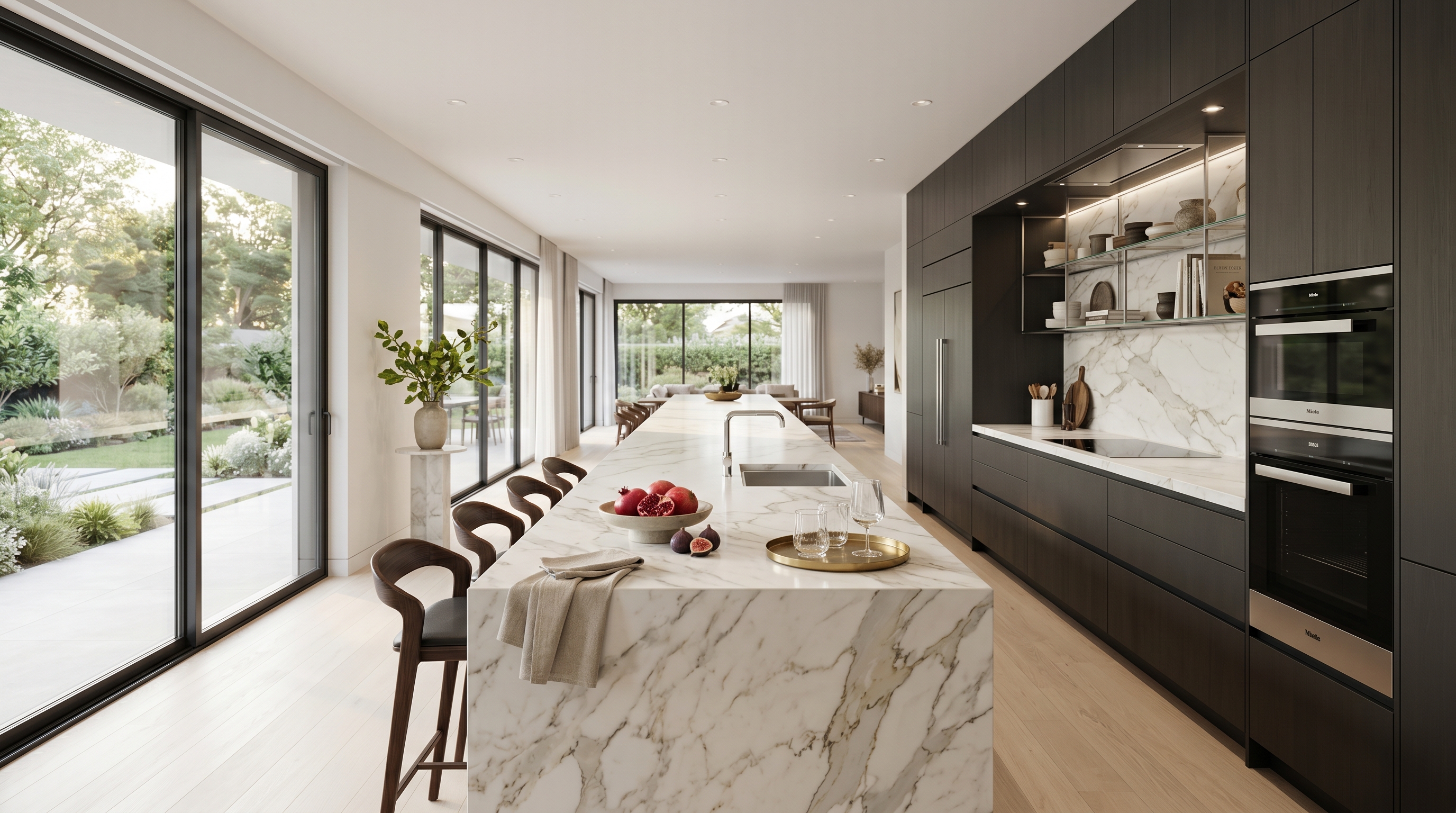
Stop building parallel mirrors. A full-height slab backsplash facing a stone island across a hard floor is a sound chamber with three reflective walls. If you want the slab, break the opposition — a run of open timber, a deep recess, a textured plaster return.
Admit one soft material into the room. Upholstered seating, a heavy curtain at the terrace door, a rug in the adjoining zone. One genuine textile surface is worth more than three clever details.
A kitchen is the only room in the house expected to perform and to be looked at in the same instant. We spend the whole budget on the second job. The kitchens that hold up over years are the ones where somebody also priced the first — and as we've argued in our case for giving the open plan its walls back, restraint in the plan does half the acoustic work before a single material is chosen.
You can see a finish under any light you like. You cannot see what a room will sound like at a dinner for ten. That one is decided months earlier, on paper, by whoever thought to ask.
Come Hear One
If this changed how you're thinking about your kitchen, the next step isn't another article — it's standing in a finished room and listening to it. Book a private showroom tour and spend an hour with our design team, one on one, at the studio nearest you: Atlanta, Boston, Burbank, Chicago, Dallas, Las Vegas, Los Angeles, or New York.