
Craft
The Freestanding Tub Is Mostly Sculpture
The freestanding tub is the photographed centerpiece of every luxury bathroom. The people who design baths for a living have quietly moved the money — and their own data explains why.
The freestanding tub has become the fixture you photograph, not the one you use. Set a sculptural oval beneath a window, aim the lens, and the listing more or less sells itself. It is the easiest centerpiece in residential design — and that is precisely the problem. In the luxury primary bathroom, the freestanding tub is mostly sculpture, and the people who design baths for a living have quietly moved their money somewhere more useful.
This is not a hunch. In the National Kitchen & Bath Association's 2026 Bath Trends Report — a survey of nearly 700 designers, remodelers, and architects — 55% said a larger shower matters more than having a bathtub at all. That is an industry voting against its own most photographed object.
Why the freestanding tub fails on contact
Everything that makes a freestanding tub photogenic works against the person trying to bathe in it. The silhouette reads as an object precisely because nothing supports it — no surround, no deck, no wall doing quiet work in the background. Strip those away and you also strip away the things that make a bath comfortable.
Start with heat. Most freestanding tubs are acrylic, prized for being light enough to drop anywhere and warm to the first touch. Acrylic also sheds heat quickly, so the water turns tepid while you are still in it. The materials that actually hold temperature — cast iron, solid stone — are heavy enough to dictate where the tub can sit and whether the floor beneath it needs reinforcing. You are choosing between a bath that goes cold and a bath that constrains the room.
Then there is the maintenance no one photographs. A built-in tub presents three sides to the cleaning cloth and hides the rest. A freestanding tub exposes every surface, the floor underneath, and the awkward gap behind it. You are not cleaning a tub; you are dusting a sculpture. And because there is no deck, there is nowhere to set a glass, a book, or a candle — the freestanding silhouette deletes the only horizontal surface most people actually want near a bath.
Comfort and longevity finish the case. A freestanding tub is harder to climb into, and its height is unforgiving for children and for anyone planning to stay in the house as they age. The NKBA's own data shows aging-in-place has gone mainstream rather than niche — a tub you cannot get into at seventy is a luxury with an expiration date.
Where the money is quietly going instead
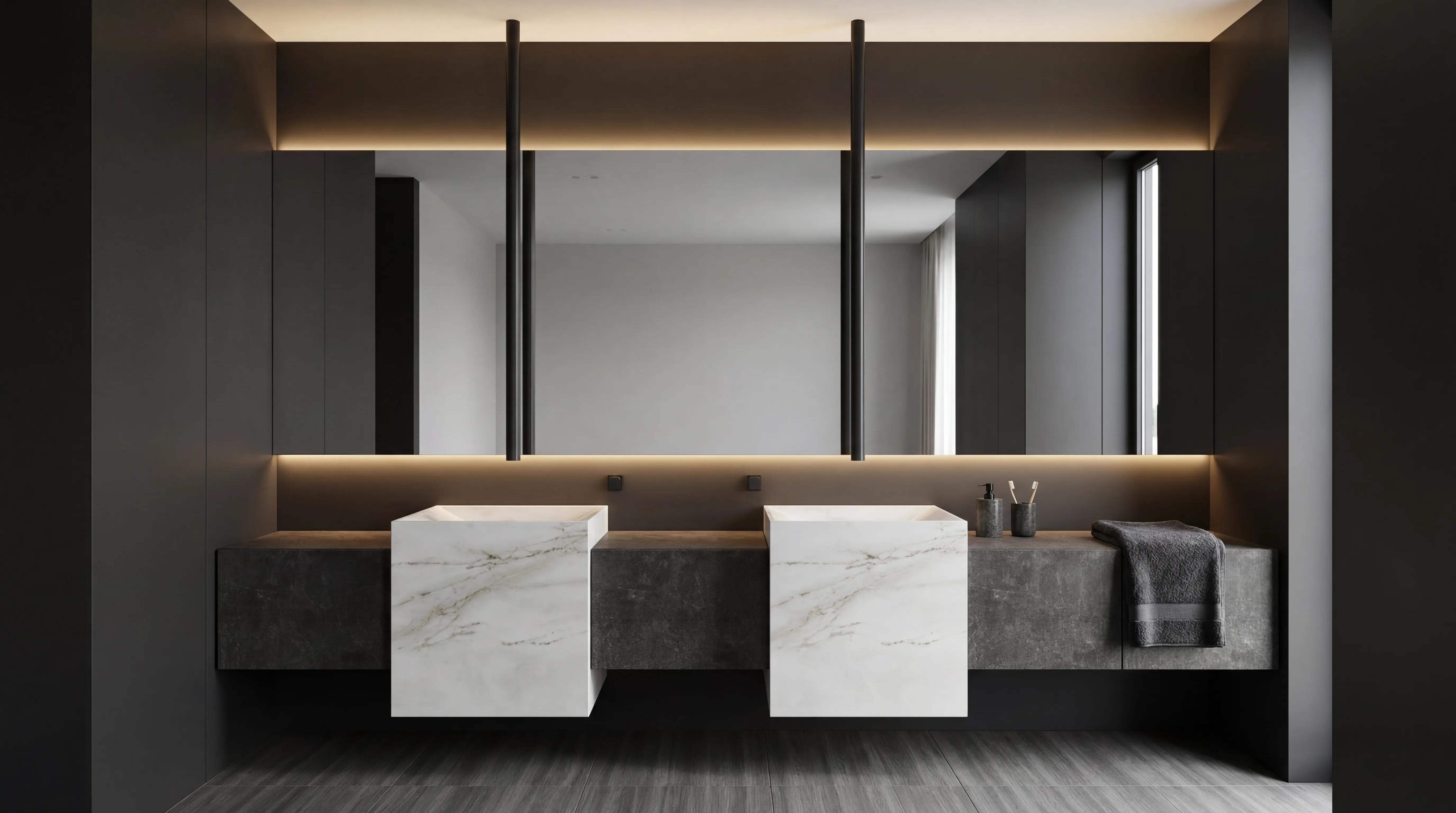
That 55% figure points somewhere specific: the shower. As the primary bathroom's footprint grows — 72% of the NKBA's respondents expect it to — the new square footage is being spent on steam, multiple heads, a bench, integrated lighting, and room enough for two. The shower has become the wellness center the freestanding tub was only ever pretending to be.
The tub has not disappeared. It has been demoted from mandatory centerpiece to deliberate choice, specified by people who genuinely soak rather than by people decorating for resale. And once it becomes a real decision, the sculpture usually loses to a built-in or deck-set tub that holds its heat and gives you a ledge to lean on.
Specify the tub you will actually get into
Be honest about how you bathe before you commit the room to a shape. If you soak weekly, buy for heat and comfort: a built-in or deck-mounted tub in cast iron or a solid surface, wrapped in a tiled surround wide enough to hold a glass of wine. If you soak twice a year, do not anchor the whole bathroom to the event — give the floor to a serious shower and let a compact tub play a supporting role, or skip it entirely and reinvest the space.
It is the same discipline we bring to the rest of the bathroom: design for the Tuesday night, not the camera. A freestanding tub is a decision you make for the photograph. A built-in tub is a decision you make for the next ten years.
None of this makes the freestanding tub a mistake. It is a sculpture, and now and then a room genuinely wants one. The error is confusing the object you photograph with the bath you use — and the best primary bathrooms are honest about which one they are buying.
Book a private showroom tour
If this changed how you are thinking about your bathroom, the next step is not another article. Book a private showroom tour and spend an unhurried hour with our design team, one on one. We will work through how you actually live — how you bathe, store, and move through the room — before a single fixture is specified. Our studios in Atlanta, Boston, Chicago, Dallas, New York, and beyond are built for exactly this kind of conversation.