
Craft
Your Outdoor Kitchen Cabinets Shouldn't Be Steel
Stainless steel is the default for outdoor kitchen cabinets. Outdoors it cooks in the sun and corrodes in salt air - here's the smarter material to specify.
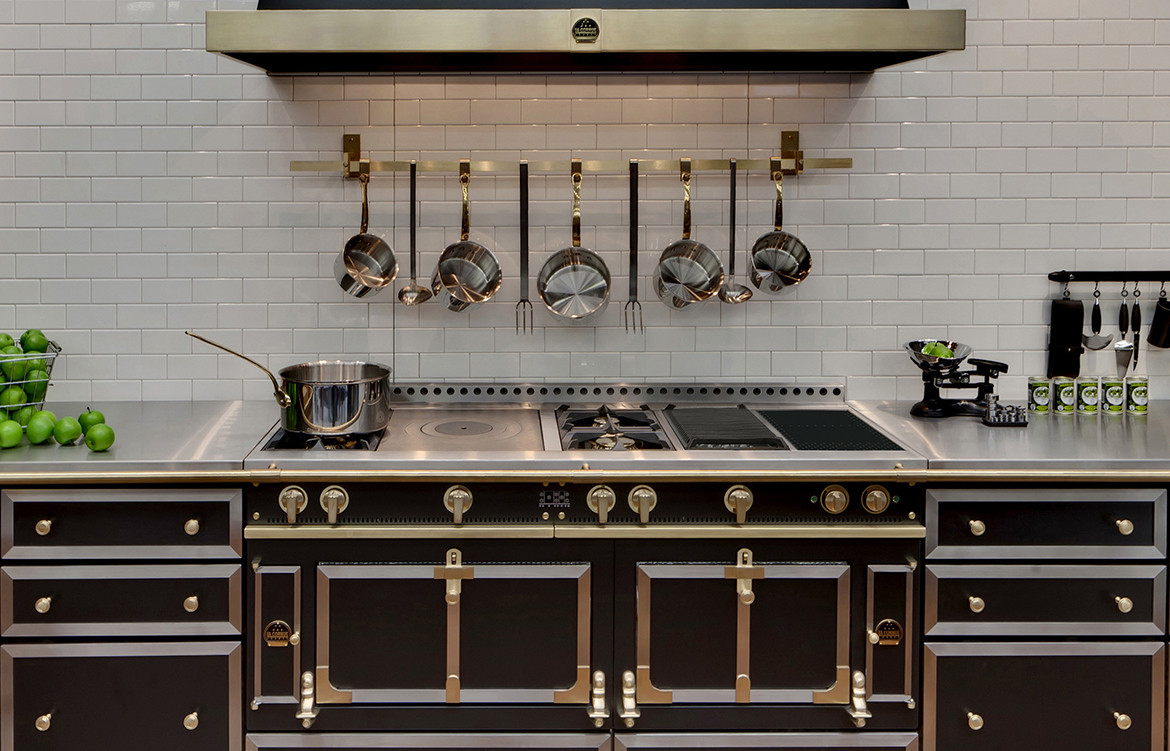
Walk into almost any outdoor kitchen showroom and the cabinets are stainless steel. It reads as the serious choice — the same metal as the grill, the same metal as a professional kitchen, impervious and permanent. Most buyers never question it.
They should. Indoors, where the air is conditioned and the light is filtered, stainless is close to ideal. Outdoors it is asked to do something else entirely: sit in direct sun, breathe salt air, and stay comfortable to touch on the hottest afternoon of the year.
The right outdoor kitchen cabinets are chosen for the site, not the showroom. On those terms, stainless steel is frequently the wrong cabinet — not because it fails, but because it was never selected for the conditions it has to live in.
The metal you can't touch in July
Stainless steel conducts heat well, which is exactly what you want in a pan and exactly what you don't want in a cabinet door. Under direct summer sun, a dark or matte exterior surface can climb to around 150°F — and skin begins to burn at roughly 140°F, according to burn-safety guidance from Brown University Health. A polished cabinet run facing west becomes both a heat source and a mirror, throwing glare across the patio at the exact hour people gather.
Polymer and stone don't do this. In desert and Gulf-coast climates, designers watch clients quietly stop using the side of the island that bakes — a five-figure cabinet run reduced to storage no one wants to open.
Salt finds the cheap grade first
The corrosion problem is subtler and more expensive. Stainless is stain-less, not stain-proof. The common 304 grade — what most cabinets and appliances are built from — is vulnerable to chloride, the active ingredient in coastal air and pool spray. Chloride breaks down the steel's passive layer in localized spots, leaving the brown freckling the trade calls "tea staining."
The remedy is 316, the "marine-grade" alloy, which adds about two percent molybdenum. In salt-spray comparisons it outlasts 304 by close to an order of magnitude. Almost no volume outdoor cabinet is built from it, because it costs more. So the metal sold as the durable choice is, in a coastal yard, often the grade that stains first.
"Premium" is doing a lot of work
Stainless became the default for a reason that has nothing to do with weather: it photographs as expensive and it matches the appliances. That is showroom logic, not site logic. The appliances should be stainless — a grill is a heat tool. The cabinetry around them is a different problem, and it deserves a different answer.
How to choose outdoor kitchen cabinets that last
Start with the climate, then the cabinet.
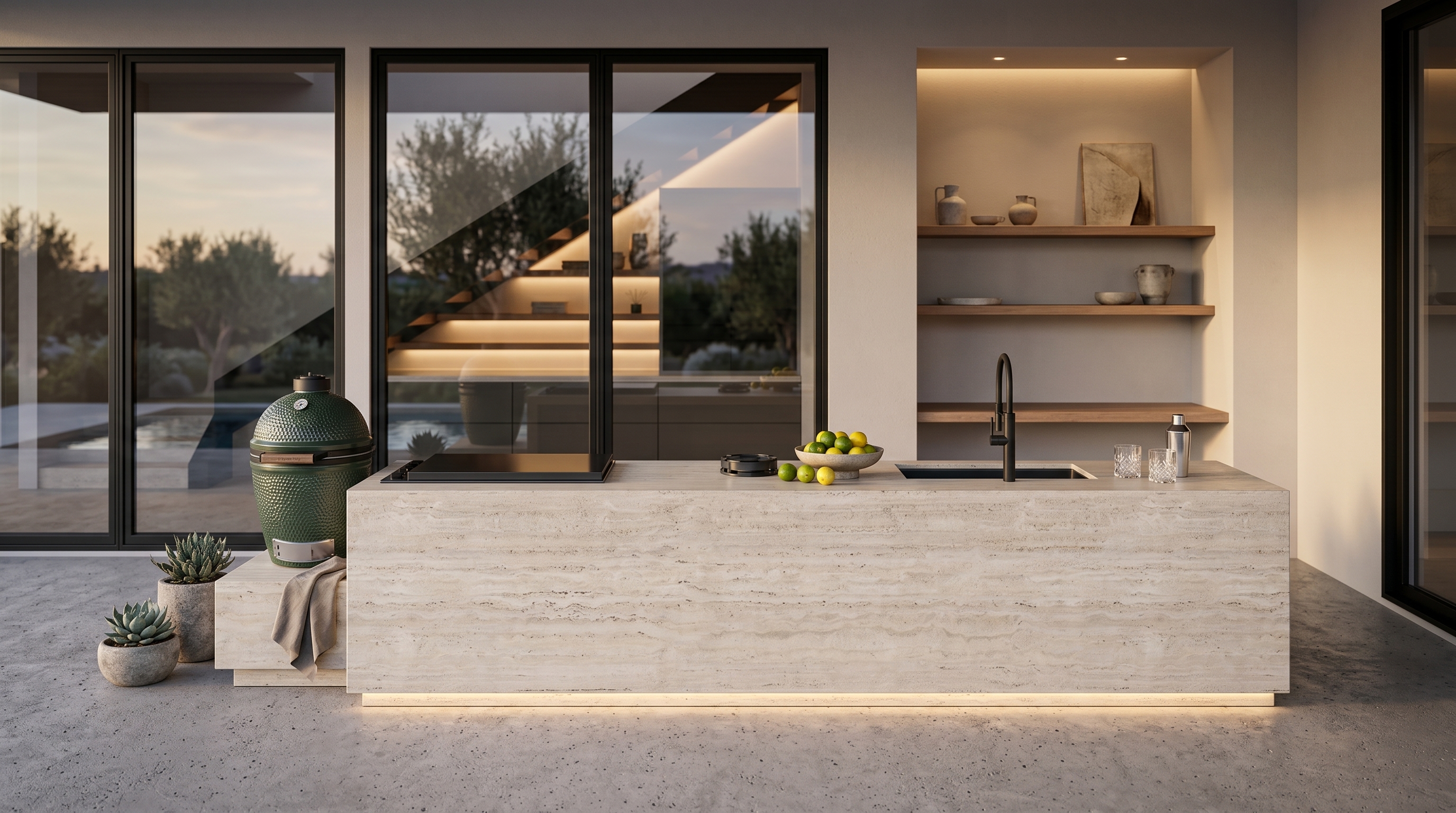
In hot, exposed yards, the surfaces people actually touch should stay cool: marine-grade HDPE polymer, masonry, or porcelain-clad cabinetry instead of bare metal. HDPE runs its color through the full thickness, shrugs off UV, and lasts twenty to thirty years with effectively no maintenance — scratches don't show because there is no finish to scratch.
On the coast, if you want the look of metal, insist on 316 or specify powder-coated stainless; the coating, not the grade, is what actually holds off salt. For warmth, teak and other dense hardwoods age beautifully but ask for upkeep, while weatherproof wood-look polymers deliver the same effect without the ritual.
And put a roof over it. Shade is the cheapest upgrade in any outdoor kitchen: a pergola or overhang cuts UV and surface temperature at once, and extends the life of every material underneath it — including the stainless you do keep.
The point
Stainless steel isn't a mistake. Treating it as the automatic answer is. The best outdoor kitchens choose their materials the way they choose their site — for the sun that hits them and the air that moves through them — and let the appliances be the only thing that has to be steel.
Book a private showroom tour
If this changed how you're thinking about your outdoor kitchen, the next step isn't another article. Book a private showroom tour and spend an hour with our design team, one on one — in Atlanta, Dallas, Chicago, New York, or any of our studios across the country — choosing materials for the way you actually live outside.