
Craft
Open Shelving Is a Photo Op, Not a Design Decision
Open shelving photographs beautifully and lives badly. Why the best designers now use it in exactly one place, and what belongs there instead.
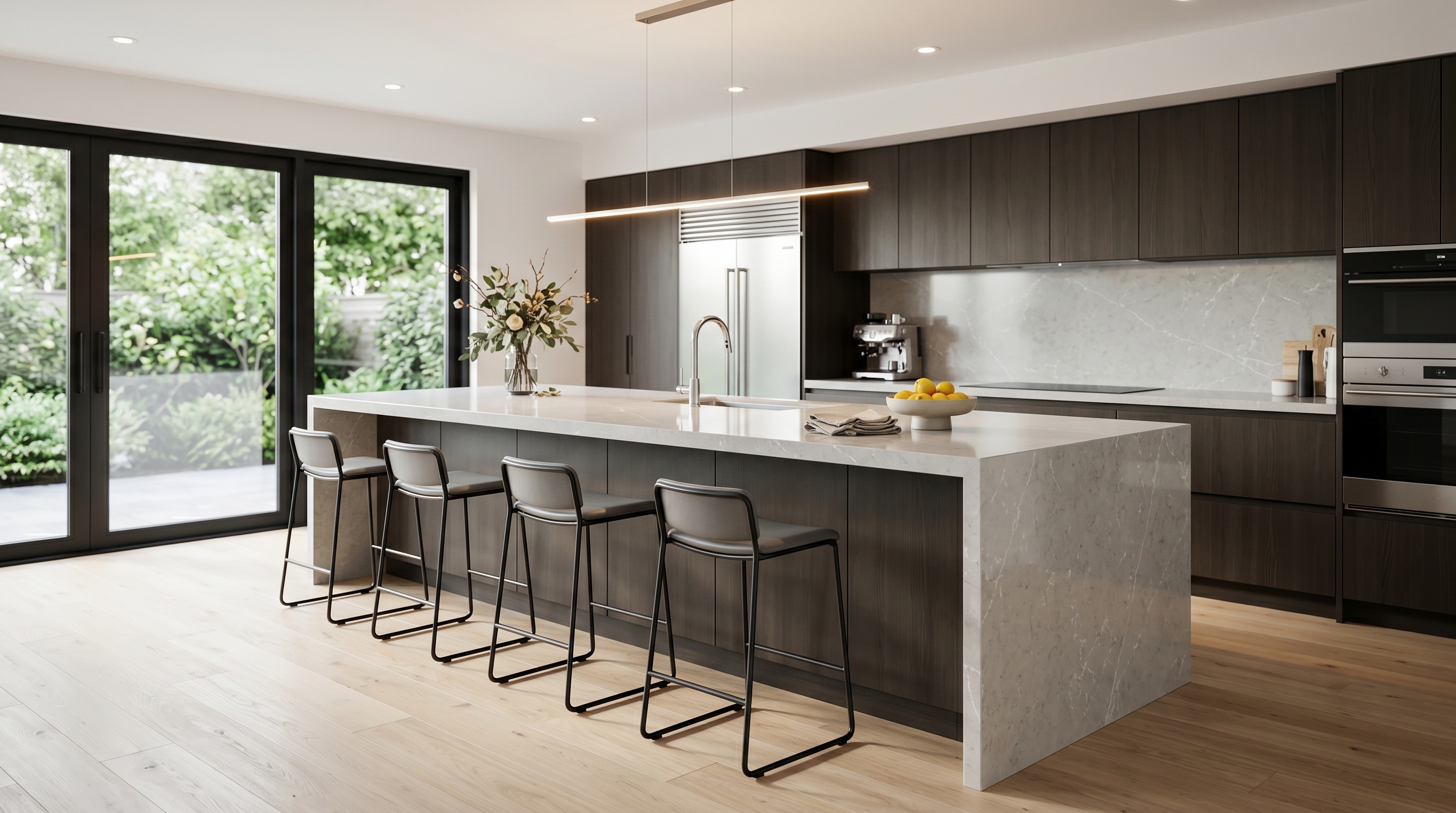
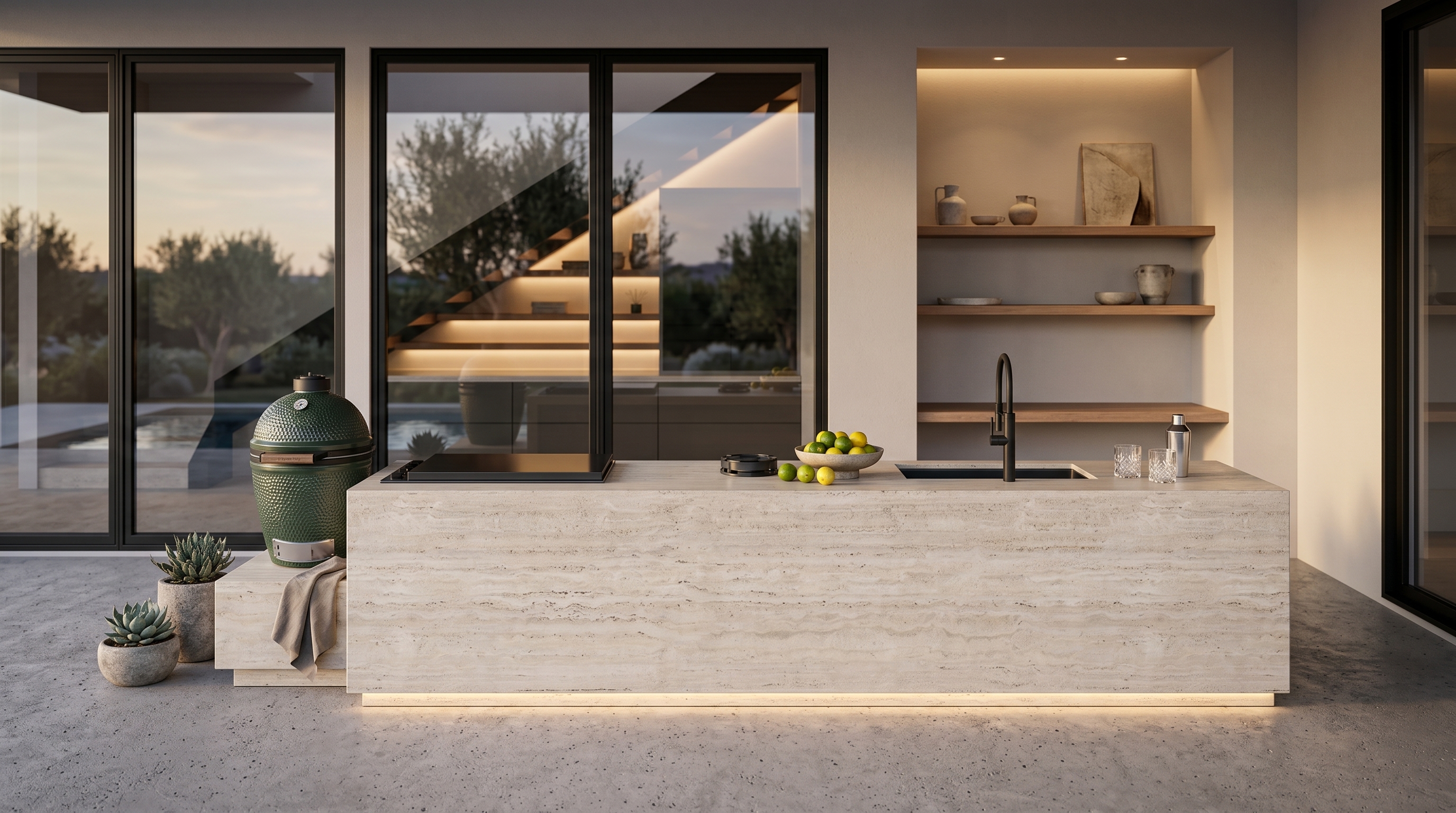
Open shelving has spent a decade as shorthand for the good kitchen — airy, unfussy, faintly bohemian, the sort of detail that signals you cook and you have taste. In most kitchens, it is also a decision made for the camera rather than the cook.
The honest version is simpler. Open shelving photographs beautifully and lives badly. A wall of exposed shelves is a standing invitation to dust, cooking grease, and the daily labor of keeping a dozen objects looking deliberate. The best designers understand this, which is why they have quietly stopped installing it by the yard.
The look is free; the upkeep is not
The appeal of open shelving is obvious the moment it goes up and expensive every day after. In a working kitchen, everything within a few feet of the range picks up a fine film of aerosolized oil, and everything above collects dust. On a closed cabinet you never see it. On an open shelf it settles on the rims of your bowls and the shoulders of your olive oil.
Designers who install open shelving tend to say the quiet part out loud. “Open shelving has its moments, but dust is an unavoidable reality, especially in city kitchens,” Ben Kempton of the studio 202 Design told Homes & Gardens this spring. That is the trade you are actually signing up for: a lighter-looking wall in exchange for a cleaning chore that never ends.
“Curated” is a job, not a style
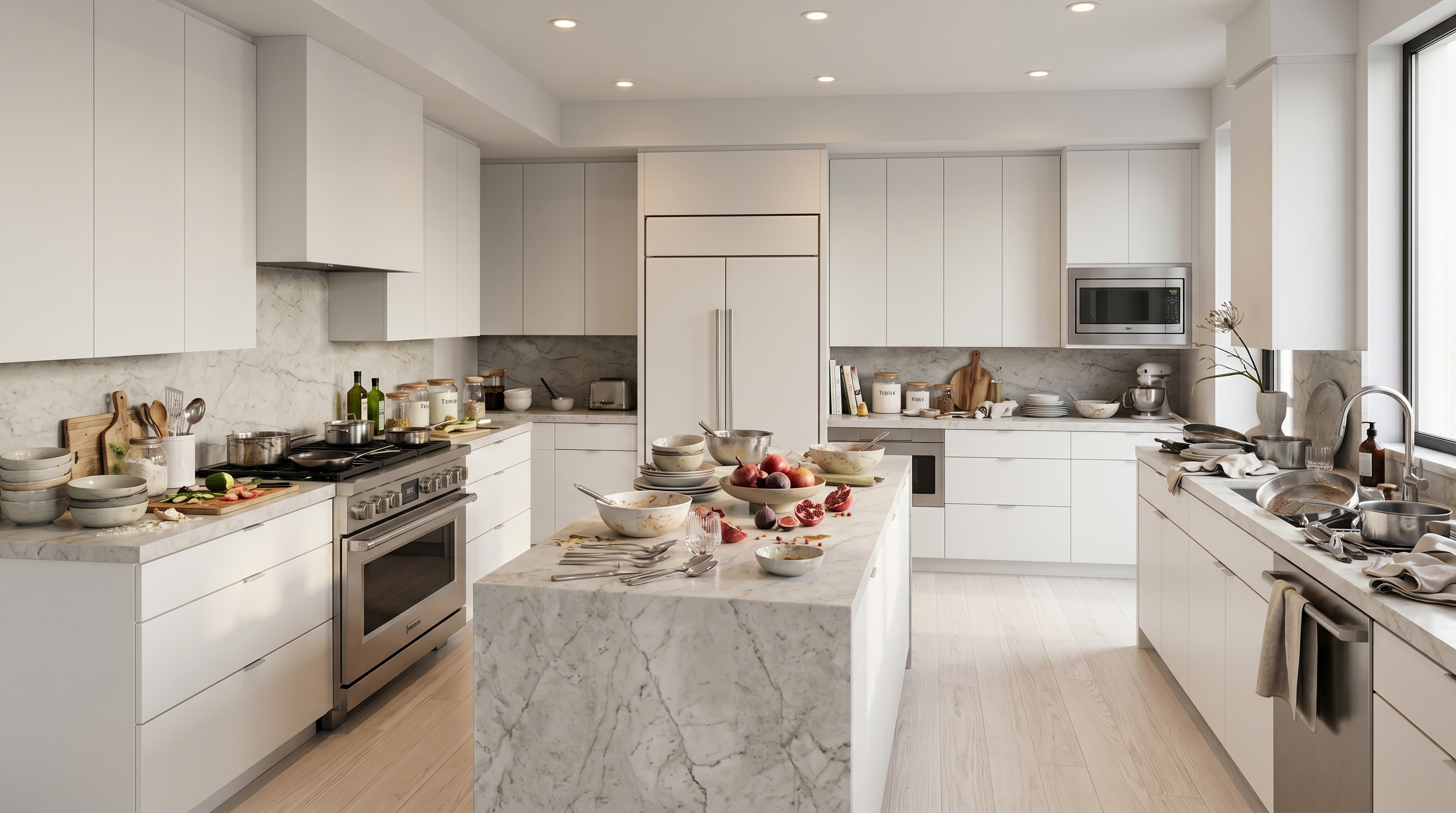
The other cost is invisible in photographs because photographs are the point. A styled shelf — the three ceramics, the single brass measure, the cookbook turned face-out — is a still life that has to be rebuilt every time you actually use the kitchen. Live in it for a week and the still life becomes a junk shelf: the vitamin bottle, the spare key, the mug that does not match.
“Open shelving can look wonderful, but it requires real discipline,” says interior designer Suzie Mc Adam. Discipline is the operative word. Open shelving does not give you a look; it gives you a maintenance contract for a look, renewable daily, and most households default on it within a month.
What replaced open shelving was better all along
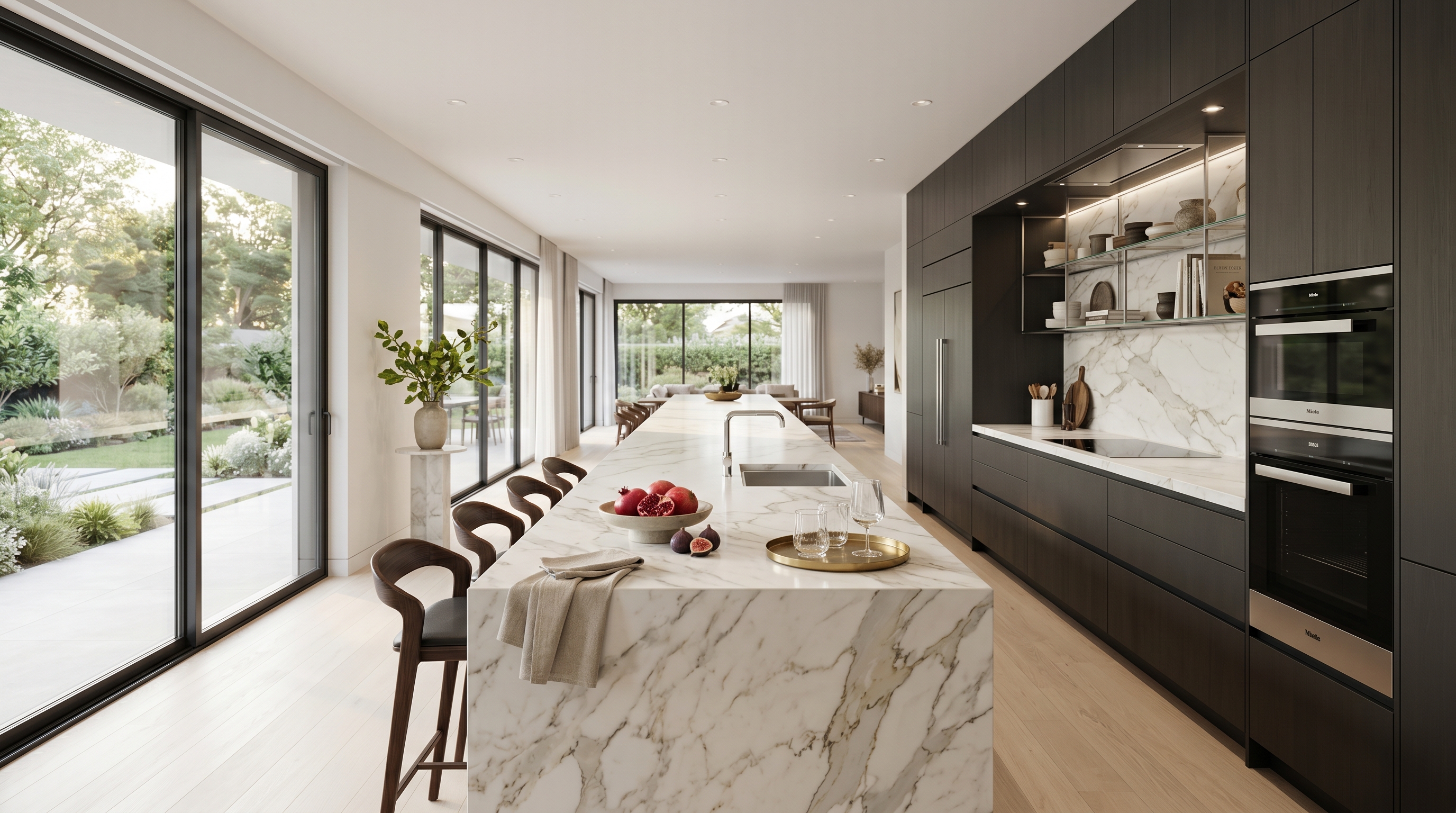
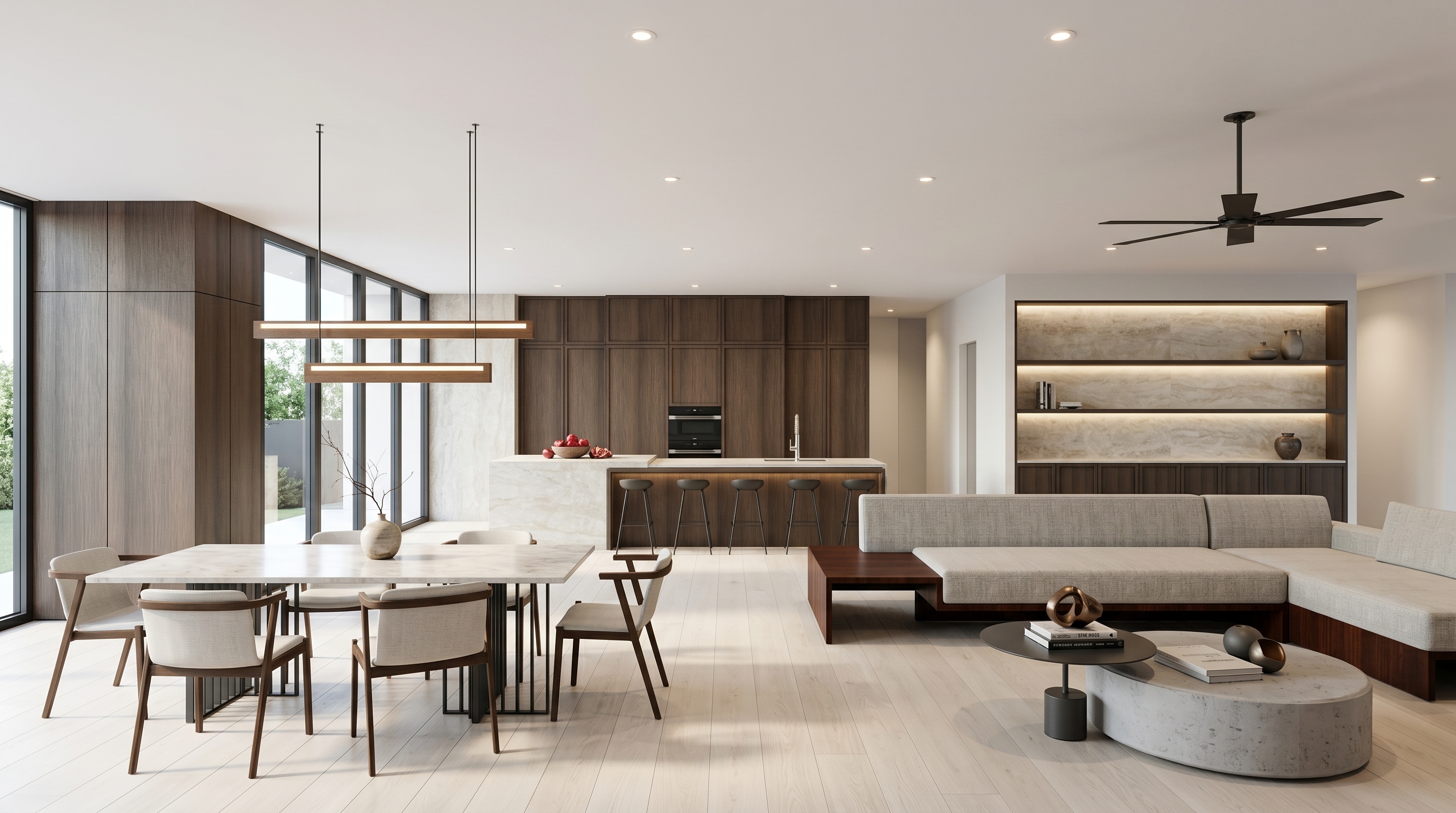
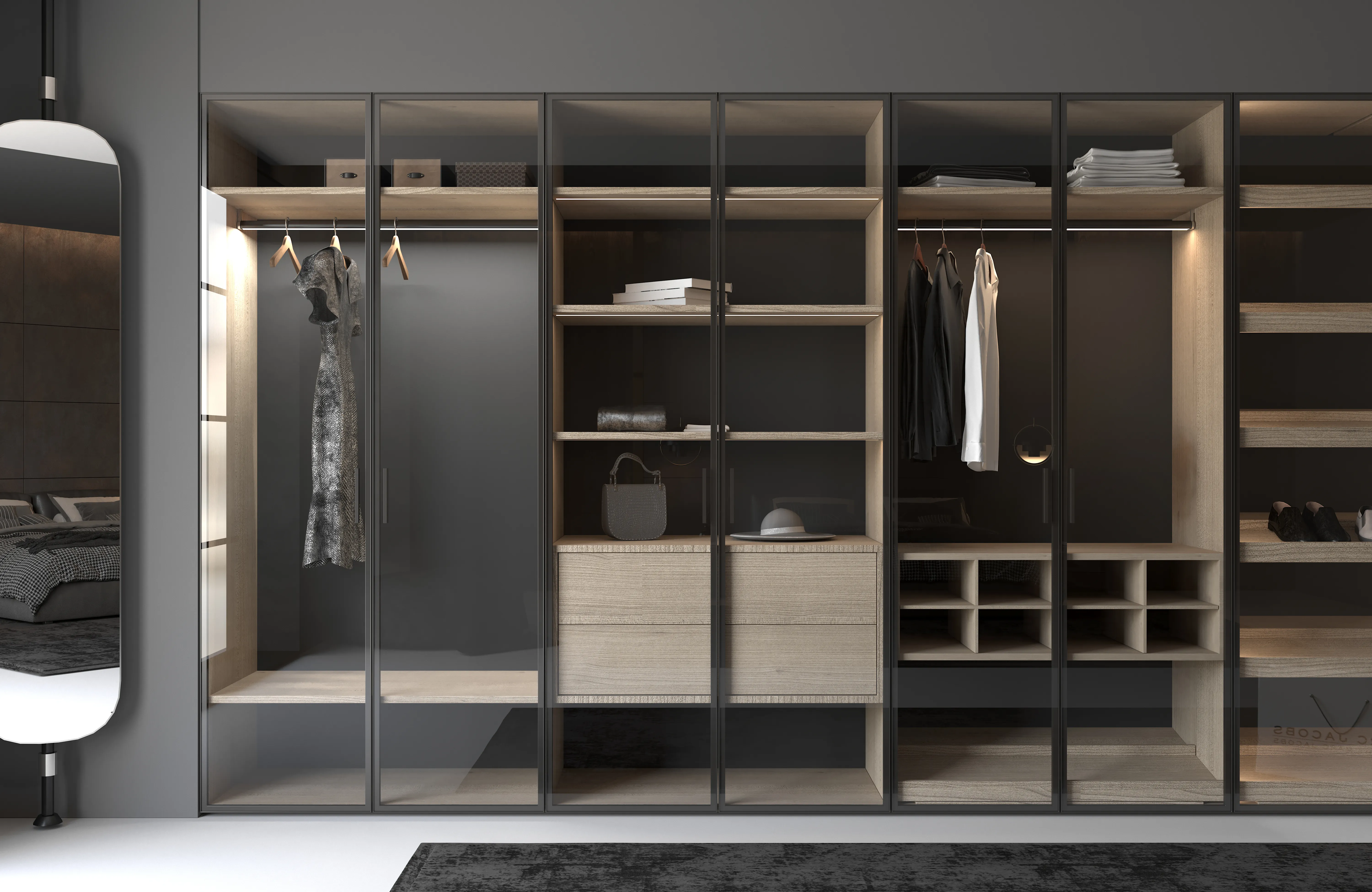
Watch where the trend has actually gone and you find restraint, not reinvention. The move in 2026 is away from long runs of shelves and toward glass-front cabinets — the same visual softness, the same chance to show a stack of good bowls, minus the film of grease and the endless styling. “Less, but better” is how the better designers now describe open display: a single architectural moment inside otherwise closed cabinetry, not a wall of it.
Glass earns its keep because it does two jobs open shelving cannot. It keeps the dust and grease off, and it reads as a deliberate frame rather than an accident of storage. Reeded or seeded glass goes one step further, hinting at what sits behind it — the good glassware, not the cereal boxes — without asking you to style every inch.
What to do instead
If you want the warmth of open display without the tax, narrow it down. Give yourself one shelf, not a wall: placed away from the range, lit from within, and treated as architecture rather than storage. Put everything you touch daily behind doors, where it can be a mess in private. Where you do want things visible, specify glass-front uppers with a reeded or antique finish, which flatter a collection and forgive a bad week. The kind of integrated, precision cabinetry BauTeam builds is designed to make that restraint look effortless. The goal is a kitchen that looks composed on a Tuesday, not only on the day it was photographed.
Open shelving was never the mark of a serious kitchen; it was the mark of a well-lit one. Build for the life you cook in rather than the picture you post, and the shelves mostly disappear — which, it turns out, was always the more expensive-looking choice.
Book a private showroom tour
If this changed how you are thinking about your kitchen walls, the next step is not another article. Book a private showroom tour and spend an hour with the BauTeam design team, one on one, at our showrooms in Boston, Chicago, or West Hollywood, where you can see how closed, glass-front, and open storage actually behave together.