
Craft
Bookmatched Stone Belongs on a Wall, Not a Counter
Bookmatched stone is sold as the ultimate kitchen luxury. It is really a wall material - and a working countertop is the one place it quietly falls apart.
Ask what the most impressive thing a piece of stone can do is, and someone will show you a bookmatch: two neighbouring slices from the same block, opened like a book, mirrored across a single seam. Symmetry pulled straight out of geology. It is the most photographed move in luxury kitchens right now, and the one clients ask for by name.
It is also, almost always, a wall material.
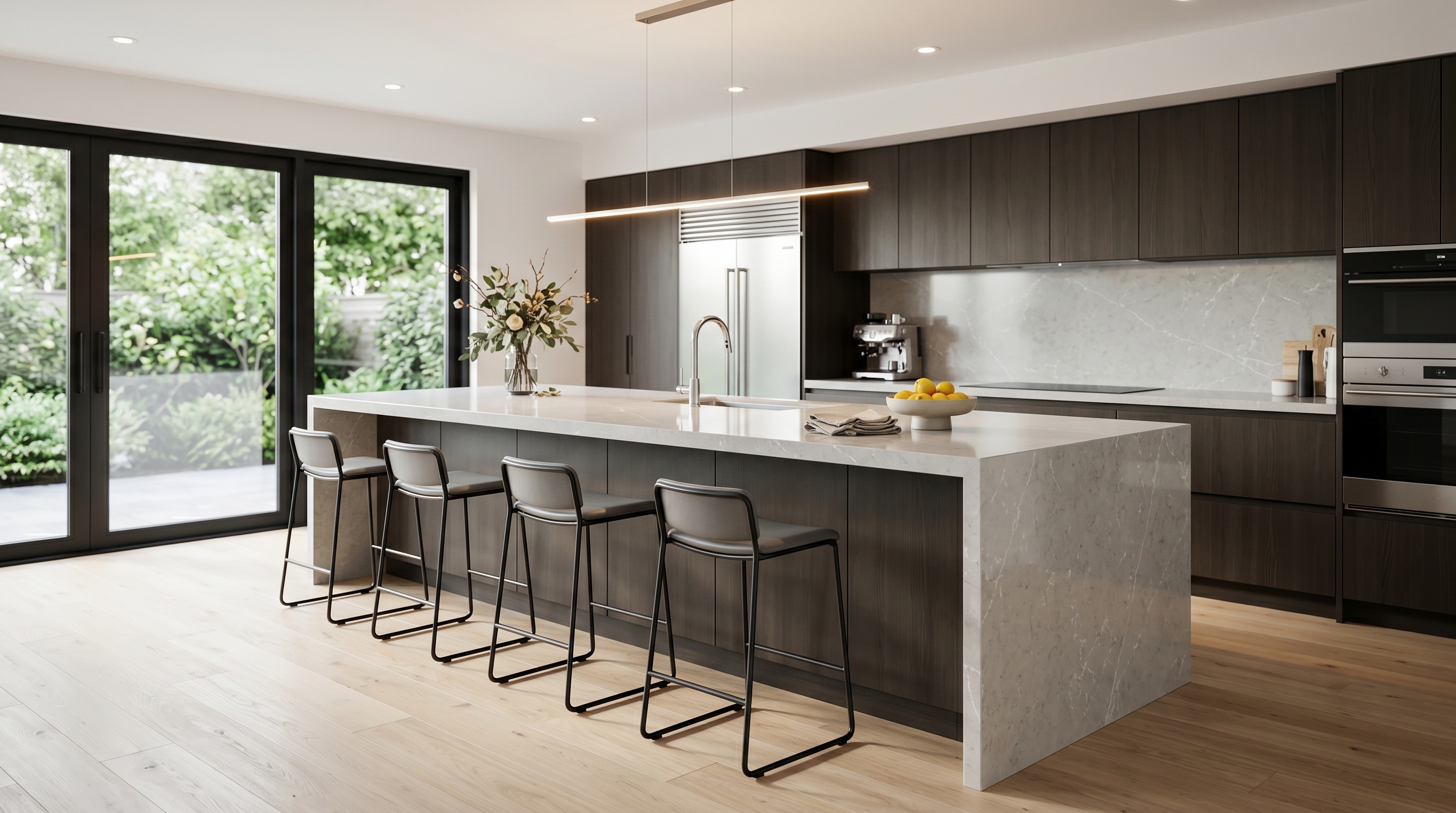
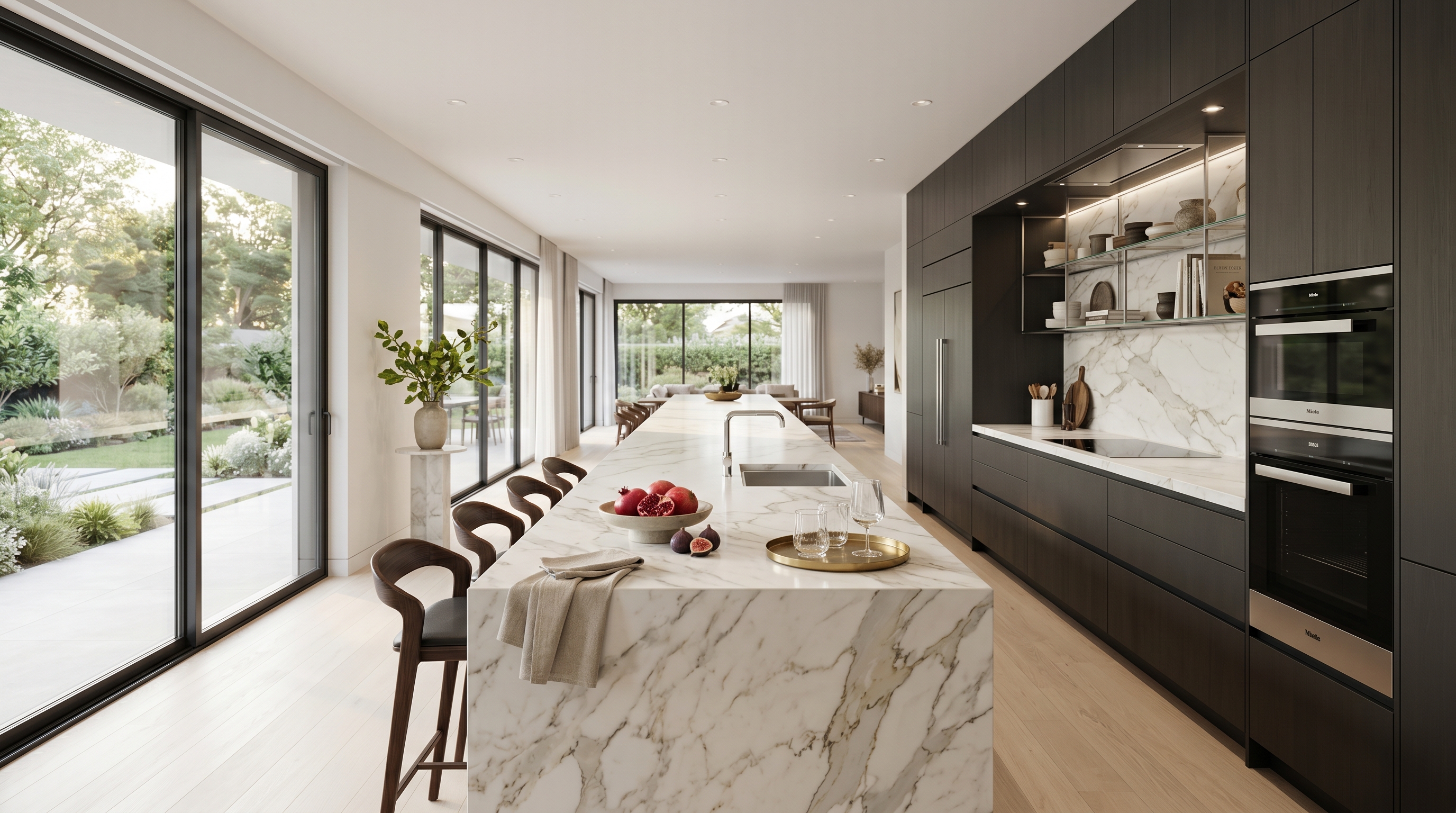
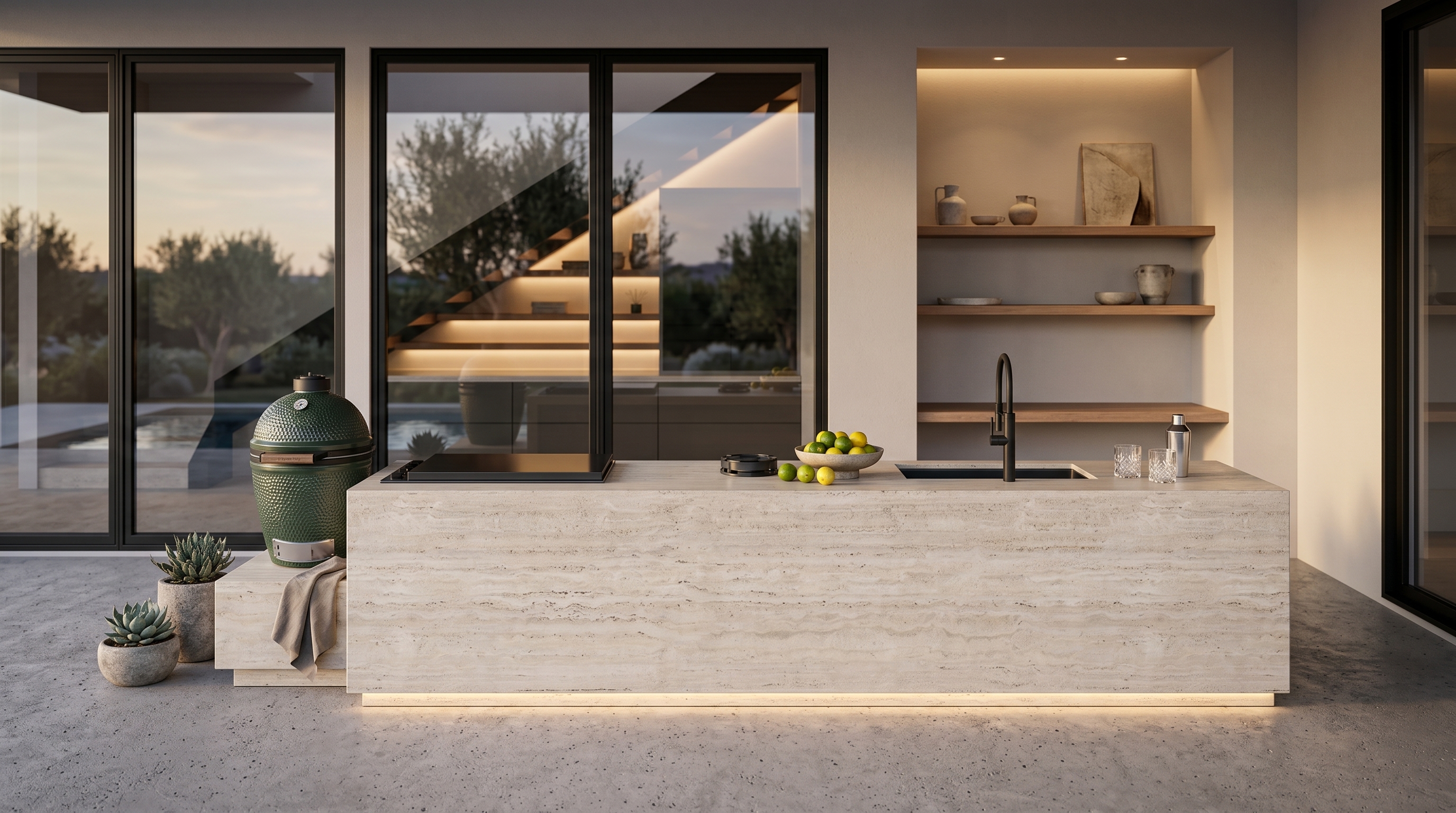
Bookmatched stone earns its drama on a large, uninterrupted plane - a fireplace surround, a shower wall, the flank of an island. The moment it is asked to be a working countertop, punched through with a sink, a cooktop and a run of cabinet fronts, the exact quality it was bought for is the first thing to go.
Bookmatched stone needs a plane, not a puzzle
The Natural Stone Institute, through its Use Natural Stone campaign, is unusually blunt on this point: it is not a good idea to force a bookmatched pattern into a surface interrupted by corners, cutouts and appliances. That is the trade body for the people who sell the stone, telling you where not to put it.
The reason is structural to the effect itself. A mirror only reads as a mirror when the eye can hold both halves at once. Drop a 33-inch sink into the middle of the axis and you have removed the fold in the book. What is left is two pieces of expensive, busy stone that happen to sit near each other.
The mirror is never really a mirror
Stone is not printed. Even sibling slabs cut minutes apart drift, and the same source is candid that a perfect mirror image is not attainable in fabrication - the pattern varies over short distances, and a degree of non-uniformity between twin slabs should simply be expected.
Distance forgives that. On a wall seen from eight feet away, the drift reads as movement, which is what you wanted. On a counter, viewed from thirty inches under a task light, three times a day, the same drift reads as a mistake. Vertical surfaces are looked at. Horizontal ones are inspected.
A bookmatch is a single point of failure
Bookmatching is procurement risk before it is anything else. Two slabs are required even when the area is small. The second face is polished at the sawyer, not the fabricator, so the pair usually has to be ordered and waited for. And if one of the two is lost to breakage, the entire layout can be lost with it, because the mate is irreplaceable.
Now consider which surface in the house is most likely to be cut, drilled, re-templated, chipped by an undermount, or pulled out entirely when a range changes size in twelve years. It is not the shower wall.
There is a softer risk too, and it is the one clients never anticipate. Mirrored patterns produce figures - a moth, an owl, a face. The stone industry's own advice is that once such a shape is seen it cannot be unseen. A wall you can look away from. A worktop you stand over every morning.
Bookmatch the vertical. Vein-match the horizontal.
The fix is not to give up the stone. It is to give each orientation the match it was designed for.
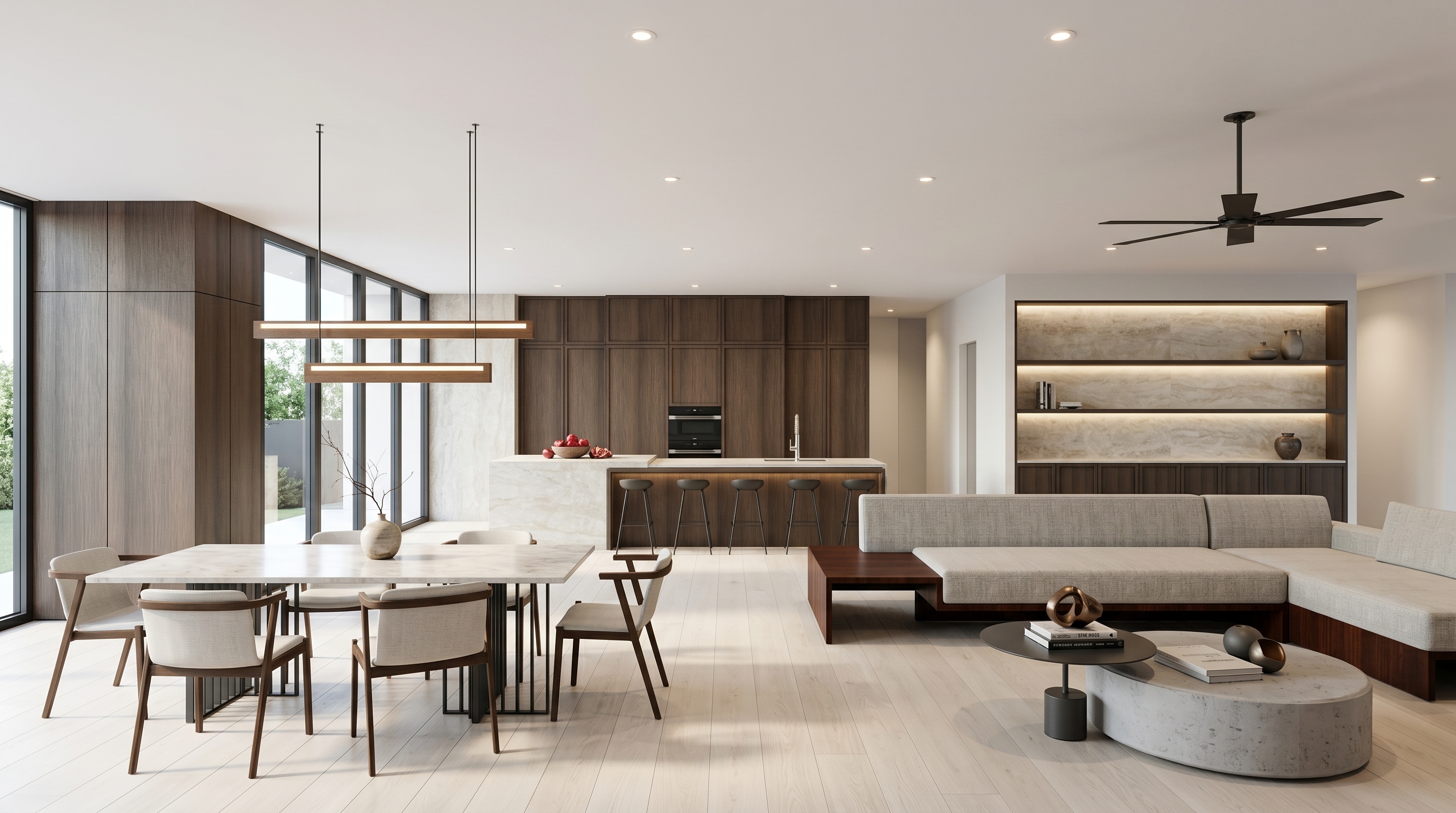
Reserve the bookmatch for one uninterrupted vertical plane and make it the only one in the room: the island's outer face, a hood surround, a slab wall behind the cooking zone. Then specify vein-matched slabs for the counters - sequentially cut from the same block so the veining runs continuously across the seam rather than folding back on itself. It is the match the industry already prefers for waterfall returns, and it survives a sink cutout because it has no axis to break.
Three things to put in writing before anything is cut. Ask whether the second face was polished at the block or converted later at the shop. Require a full dry-lay and a signed digital template, with every seam and cutout located, before the saw runs. And buy the third slab. On a two-slab layout, the spare is not contingency - it is the whole design.
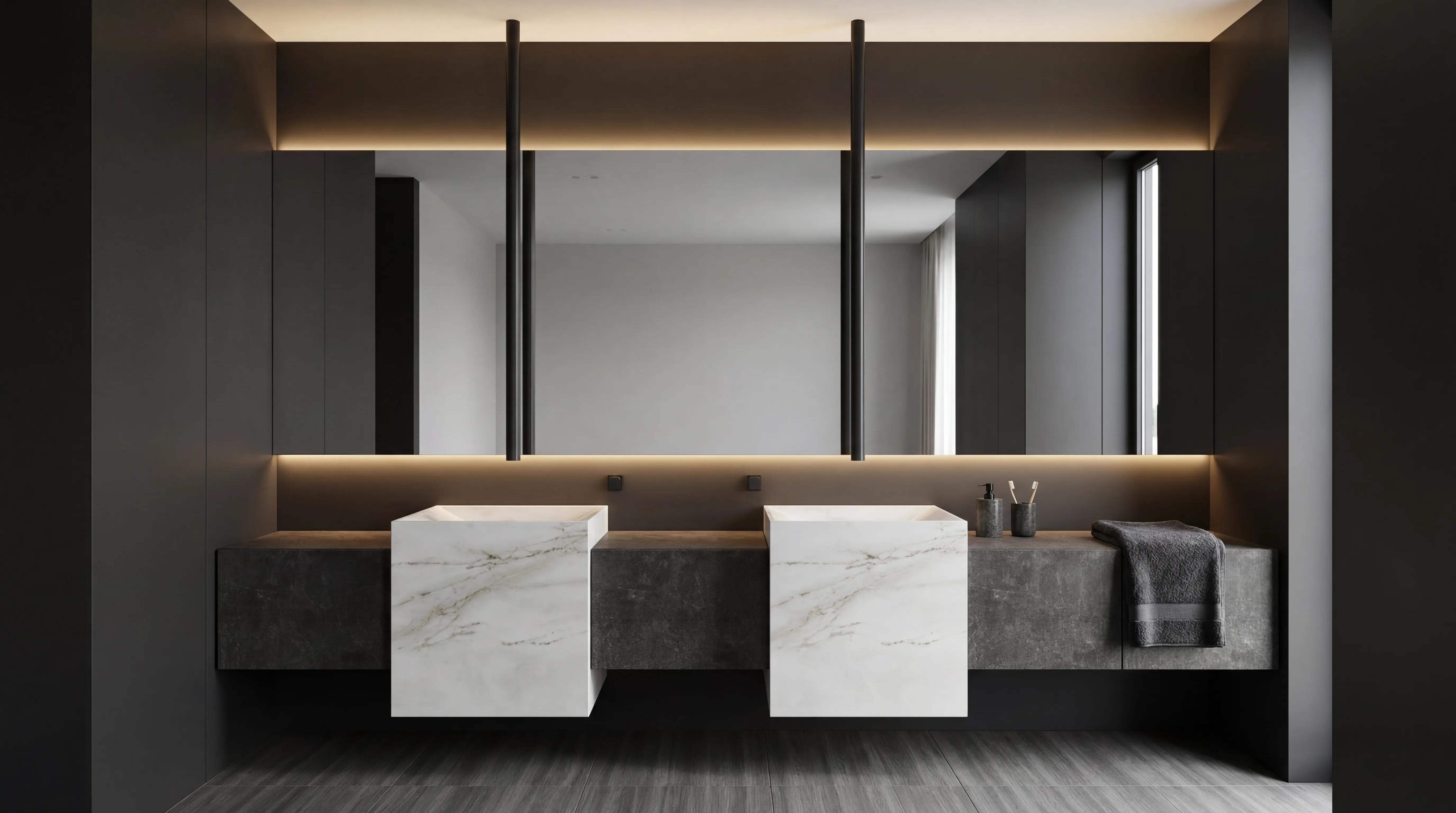
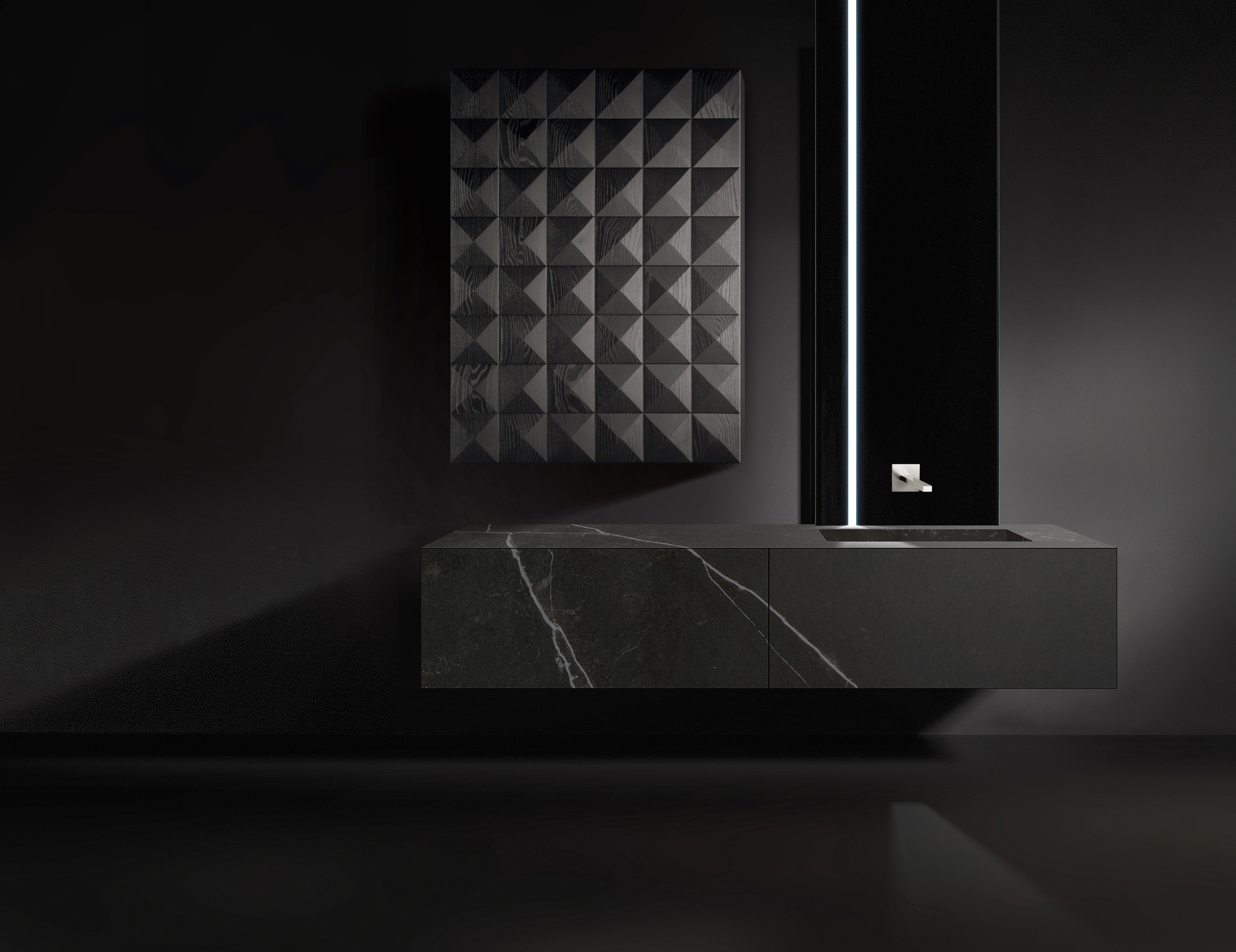
The best kitchens we build treat stone the way a gallery treats a painting: one wall gets the drama, everything else gets out of its way. The same discipline is what makes a stone vanity top read as architecture rather than decoration.
A bookmatch is the only pattern in your house that can be destroyed by a hole. Put it somewhere nothing needs to be cut.
Book a private showroom tour
If this changed how you are thinking about stone, the next step is not another article. It is standing in front of two slabs and deciding which plane earns them. Book a private showroom tour and spend an hour with our design team, one on one - in Chicago's Fulton Market, SoHo, the Dallas Design District, or any of our eight studios across the country.