
Craft
The Double-Bowl Sink Is a Pre-Dishwasher Relic
The double-bowl sink is sold as the practical kitchen choice. It's really a pre-dishwasher relic — and the pros have already stopped installing it.
The double-bowl sink is the safe answer. Two basins, the logic goes, means you can wash on one side and rinse on the other, soak a pot here while you scrub a plate there. It is the shape most people picture when they picture a kitchen sink, and the one most builders drop in without being asked.
It is also a machine built for a chore you no longer do by hand. The divided sink was designed around washing up before the dishwasher existed. Keep the second bowl and you are spending counter space, cabinet space, and working room to preserve a step your appliances took over decades ago. The double-bowl sink isn't practical. It's a pre-dishwasher relic.
The second bowl was built for a chore you outsourced
The reason there were ever two basins is specific and dated. As Remodelista puts it, the divided sink was "popular before the advent of the dishwasher, when its two compartments served as an easy system for washing dishes: soapy water and dirty dishes in one bowl, clean water for rinsing in the other." That was the whole justification — one bowl to wash, one to rinse.
The dishwasher erased it. Once the machine does the washing and the rinsing, the rinse bowl has no job left. What it mostly holds now is a drying rack, or a pile of things waiting to go into the dishwasher anyway. You kept the divider. You lost the reason for it.
The divided sink loses the math
A double bowl is not free to keep. The unit runs long — 40 inches is common, and some reach 48 — and it eats a stretch of counter a kitchen can rarely spare. The National Kitchen & Bath Association's planning guidelines ask for a continuous run of countertop at least 36 inches wide beside the sink, plus landing space on both sides. A 48-inch double basin is fighting that math before you have washed a single dish.
Then there is the indignity of the smaller bowl. To force two basins into a normal cabinet, most double sinks shrink one side; a common split leaves a main bowl around 21 inches and a second closer to 15. Fifteen inches is too little to be useful. Reece Williams, who has sold sinks for two decades at Cherin's Appliance in San Francisco, told Remodelista the small second bowl is "just annoying" — "it makes it hard to wash bulky items like roasting pans." The divider you added to gain flexibility is the reason your roasting pan no longer fits.
The people who design kitchens have already left
This is not a fringe position. Ask the architects doing serious renovations and the double bowl is quietly disappearing from their drawings. "We see the trend moving away from the double-bowl sink," Oakland architect Jerome Buttrick told Remodelista. "Our clients prefer one large bowl; in fact, we're not installing any double-bowl sinks at all." His reason is function, not fashion: with one big basin, "it's easy to clean that large roasting pan, wok, or lobster pot" — no divider to bump into. A single deep bowl fits the cookware you own. A divided one fits the cookware they sold your grandmother.
What to specify instead of a double-bowl sink
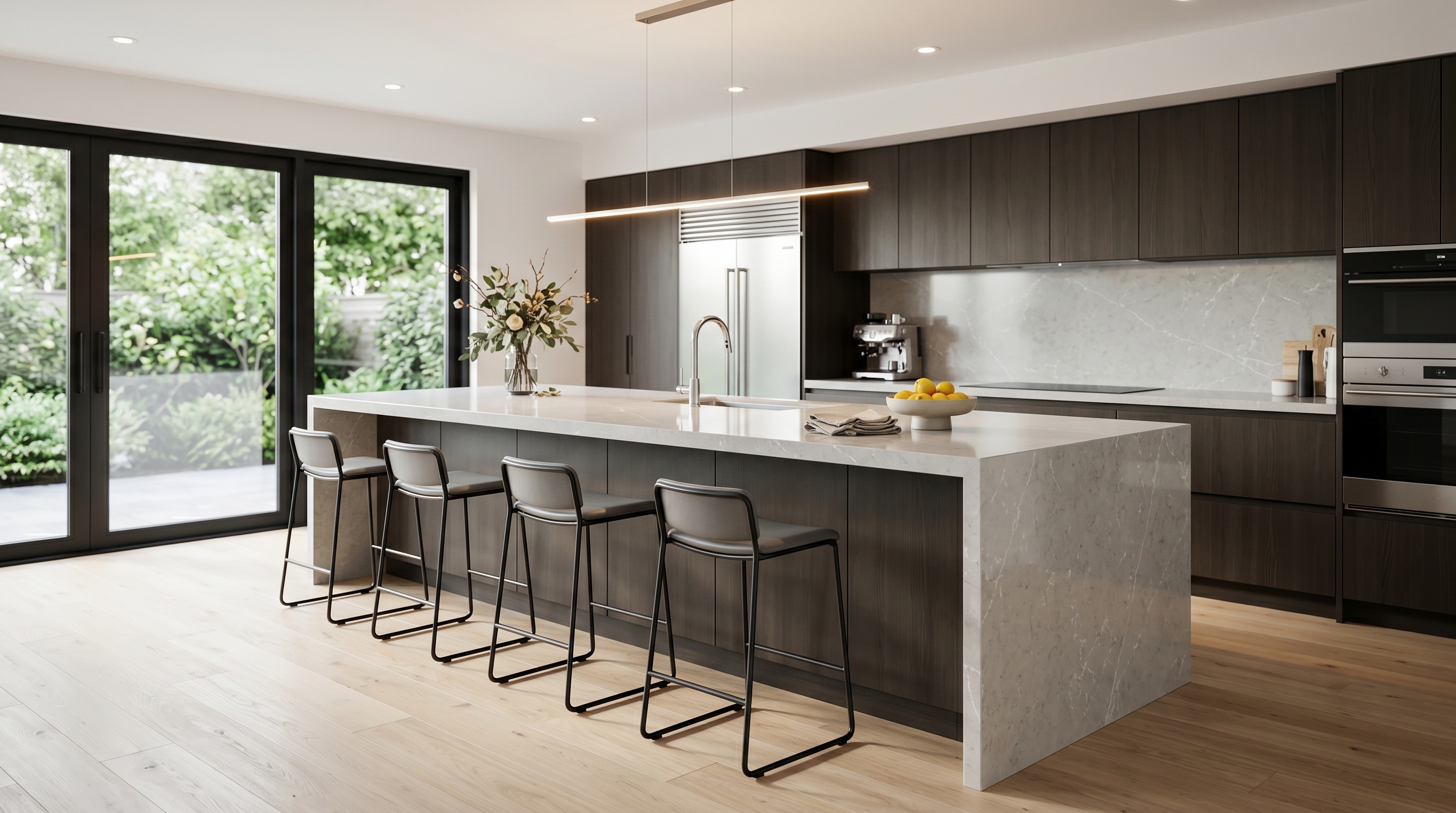
Start with one large single bowl — roughly 30 to 36 inches, deep, no divider — sized to take a sheet pan, a stockpot, and the roasting pan flat on the bottom. A workstation version, with an integrated ledge for a board or colander, gives back the staging surface people think they need the second bowl for, without carving the basin in half. Keep the dishwasher within the reach the cleanup zone wants and let it do the rinsing it was bought to do.
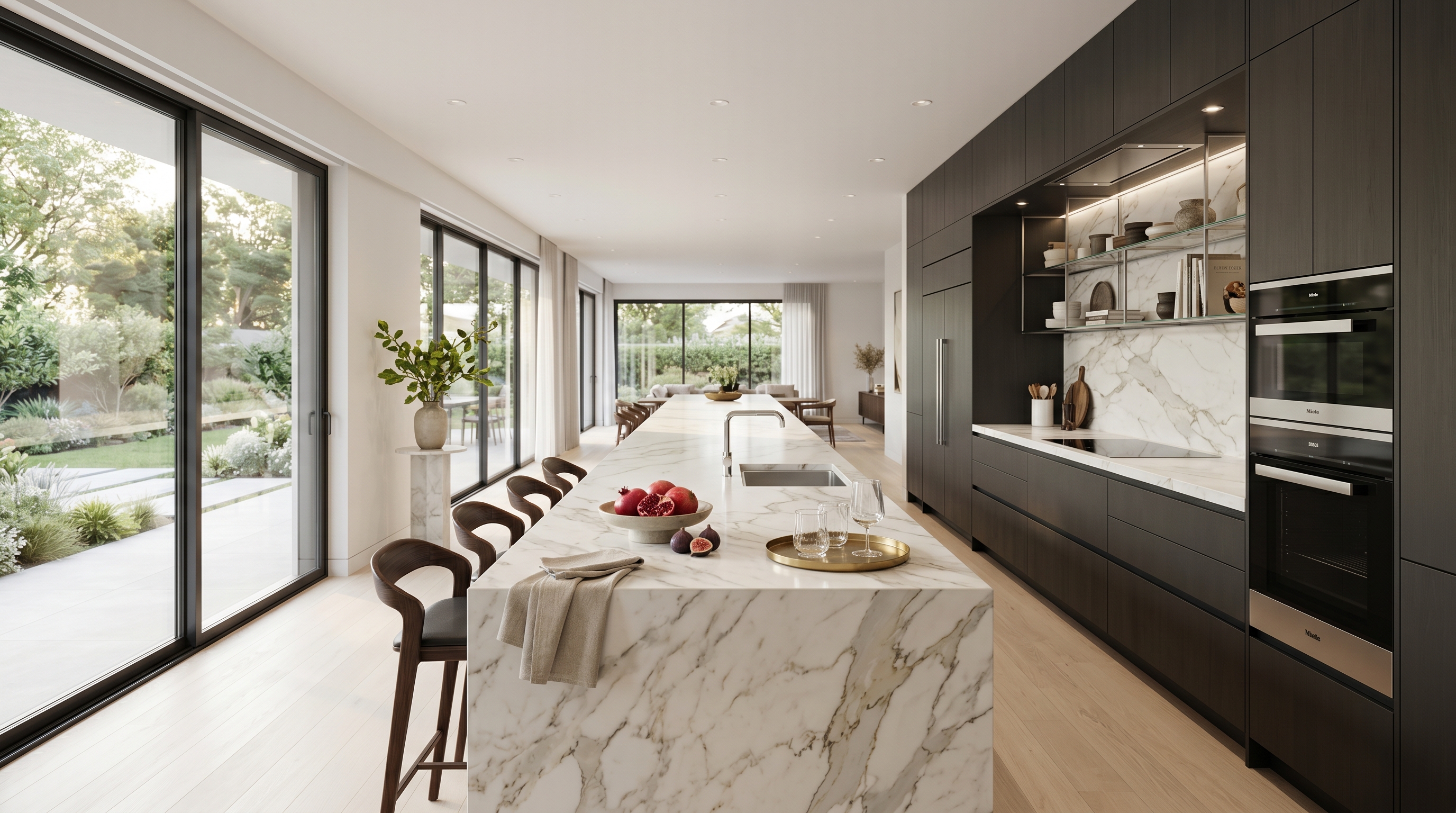
If you genuinely cook two-handed and want a second basin, don't split the main sink — add a separate prep or bar sink elsewhere on the run or in the island, so each one is full-size instead of two compromised halves. It is the same principle that governs a well-planned German kitchen: give every element one clear job and enough room to do it well.
The double bowl endures because it looks sensible, not because it works. It divides a sink to preserve a task the dishwasher retired, and charges you counter space for the privilege. Buy one honest basin, big enough for the pan you actually scrub, and let the machine handle the rest.
Book a Private Showroom Tour
If this changed how you're thinking about the one fixture you use more than any other, the next step isn't another article. Book a private showroom tour and spend an hour with our design team, one on one, planning the sink, the cleanup zone, and the cabinetry around them as a single system. Our studios run from Atlanta and Boston's Back Bay to Chicago, Dallas, Las Vegas, Los Angeles, and SoHo.