
Craft
The Covered Outdoor Kitchen Is a Quiet Mistake
The covered outdoor kitchen reads as the premium build. But a solid roof over the grill traps carbon monoxide and grease — and the building code has noticed.
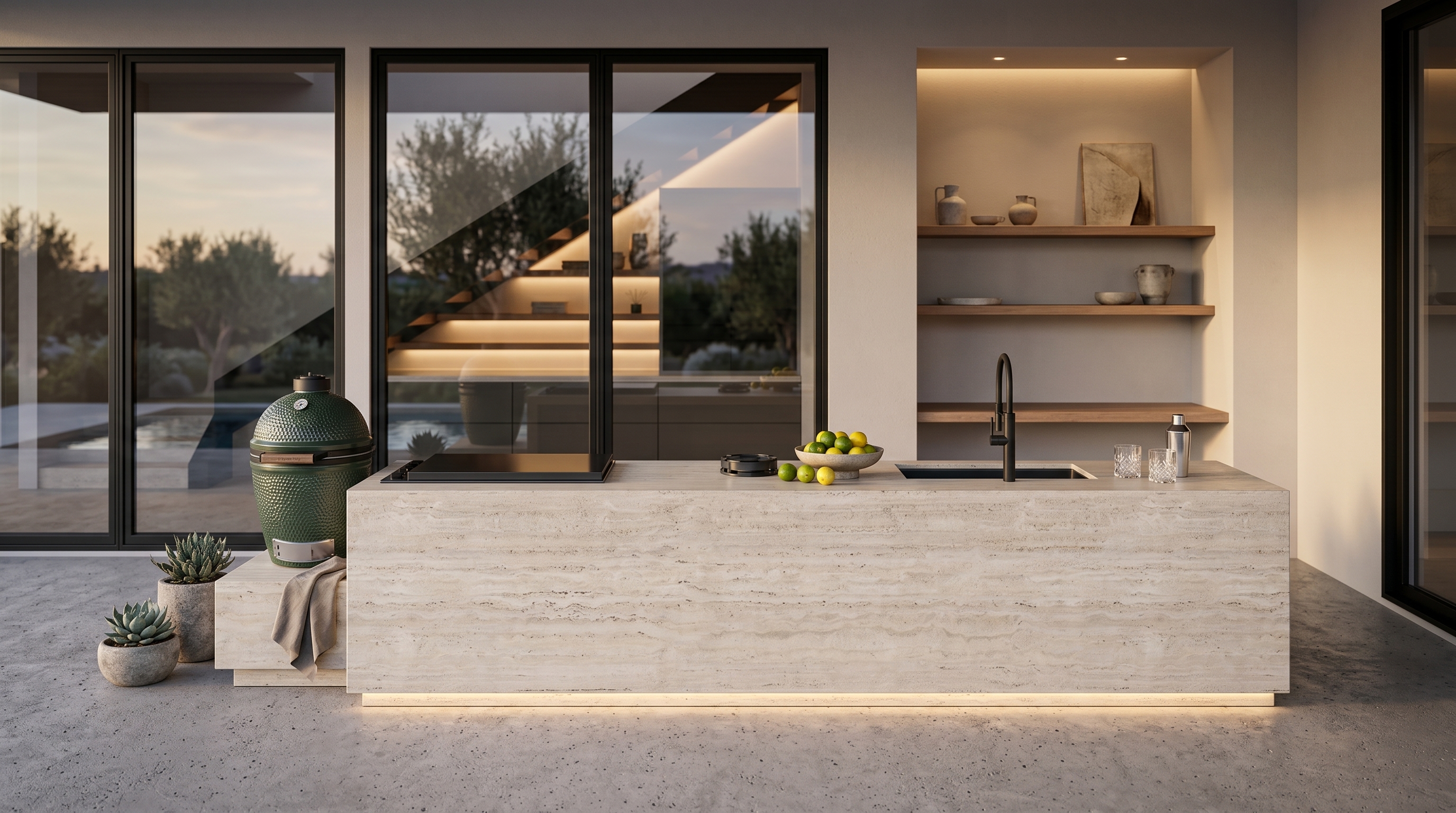
The covered outdoor kitchen is the reflex luxury build of the moment. A solid roof, a timber pavilion, an outdoor room you can use in any weather — it reads as the serious version of the backyard grill, the one that suggests a real architect was involved.
It is also the single decision that quietly turns an outdoor kitchen into a liability. The problem is not the cabinetry or the appliances. It is the ceiling over the grill.
A covered outdoor kitchen looks like more kitchen. What it actually does is take the one feature that made the space safe — open air — and put a lid on it.
The Grill Was Engineered to Cook in the Open
Open the installation manual for almost any gas grill and you will find the same line manufacturers have printed for decades: for outdoor use only. Most specify a minimum 60-inch clearance between the cooking surface and any overhead construction, and warn explicitly against running the grill beneath combustible overhead structures without an exhaust hood.
Sixty inches is five feet. Very few of the handsome pavilions going up over outdoor kitchens leave five clear feet above the grates, and fewer still are framed from anything a fire marshal would call non-combustible. The roof that makes the space photograph well is the same roof the appliance was designed never to sit under.
The Covered Outdoor Kitchen's Real Trade-Off
Combustion is combustion. A grill turning gas or charcoal into heat also turns it into carbon monoxide — an odorless gas that a roof is very good at holding in place. The U.S. Consumer Product Safety Commission attributes roughly 20 deaths and 400 emergency-room visits each year to carbon monoxide from charcoal grills alone, and its guidance is blunt: opening a window or running a fan will not bring CO down to a safe level.
That warning was written for tents and garages, but the physics do not care about your finishes. The more you enclose the cook zone — walls on three sides, a low solid ceiling, a snug pergola — the closer a beautiful outdoor room drifts toward the very conditions the CPSC has spent forty years telling people to avoid.
Grease Does Not Disappear Under a Ceiling
Then there is everything the smoke carries. Every session lays a film of grease on whatever sits above the grates. Outside, it burns off and weathers away. Under a roof, it collects on the underside of your expensive cedar — staining it, and building the kind of fuel load that turns an ordinary flare-up into a structure fire.
This is why covered installations that are done properly require a ducted vent hood, frequently rated at 1,200 CFM or more, and why a growing number of building departments now demand one the moment a grill sits under any cover at all. A hood is not an upgrade to a covered outdoor kitchen. It is the tax on having built one.
What to Build Instead
The answer is not to abandon shelter. It is to stop putting the roof over the fire.
Cover the parts of the outdoor kitchen that reward it — the prep counter, the dining table, the lounge — and let the grill breathe. Push the cook zone to the open edge of the structure, or out from under it entirely, so combustion happens in the air the appliance was built for. If the design genuinely requires the grill under cover, then the hood, the clearances and the non-combustible surround are not line items to value-engineer away; they are the price of admission. Our outdoor kitchen systems are planned around precisely this line — where shelter ends and the fire begins.
The best outdoor kitchens are not the most enclosed ones. They are the ones that understood the whole point was to be outside, and kept the fire where the air is.
Book a Private Showroom Tour
If this changed how you are thinking about your covered outdoor kitchen, the next step is not another article. Book a private showroom tour and spend an hour with our design team, one on one — in Atlanta, Dallas, New York, or any of our studios across the country — planning a space that works as well as it photographs.