
Craft
The All-White Kitchen Was Never Timeless
"Timeless" was always the wrong word for the all-white kitchen. In 2026, wood cabinets outsell white for the first time — here's why that matters.
The all-white kitchen was sold to a generation as the safe choice. Neutral. Resilient. Above all, timeless — the one decision you could make without risk. That word did a great deal of quiet work, and it was always the wrong one.
Timeless was never a description of the all-white kitchen. It was a hedge. It meant: I would rather commit to nothing than commit to something I might regret. And a room built to avoid regret tends to avoid character along with it.
The market has now said as much out loud. For the first time in nearly a decade, more renovated American kitchens are being finished in wood than in white.
“Timeless” was always a sales word
Every enduring material earns the label honestly — stone, unlacquered brass, oak that deepens for forty years. White paint borrowed it. A white kitchen photographs cleanly and offends no one, which is exactly why builders reached for it and buyers accepted it. It was the beige carpet of the last decade: not a choice so much as the absence of one.
There is nothing wrong with restraint. Restraint is the whole German tradition of building — remove until only the necessary remains. But restraint and default are not the same gesture. One is a decision made carefully; the other is a decision avoided. The all-white kitchen was usually the second kind, dressed as the first.
The data turned in 2026
The 2026 Houzz Kitchen Trends Study, which surveyed 1,780 homeowners, found wood the most popular cabinet finish in recent renovations at 29 percent — up six points in a year — narrowly ahead of white at 28. Medium-toned wood led the category at 15 percent, light wood at 11. It is the first time in the study's recent history that white has not held the top line.
Professionals moved first. In the NKBA's 2026 report, white oak leads specified cabinetry at 51 percent, prized for its gray undertone and quiet, consistent grain. Warm neutrals now command near-unanimous designer preference, and the colors gaining fastest are green, blue, and brown — not another shade of white. As Forbes put it this spring, wood is not creeping back so much as dominating kitchen design again.
The all-white kitchen reads as default, not neutral
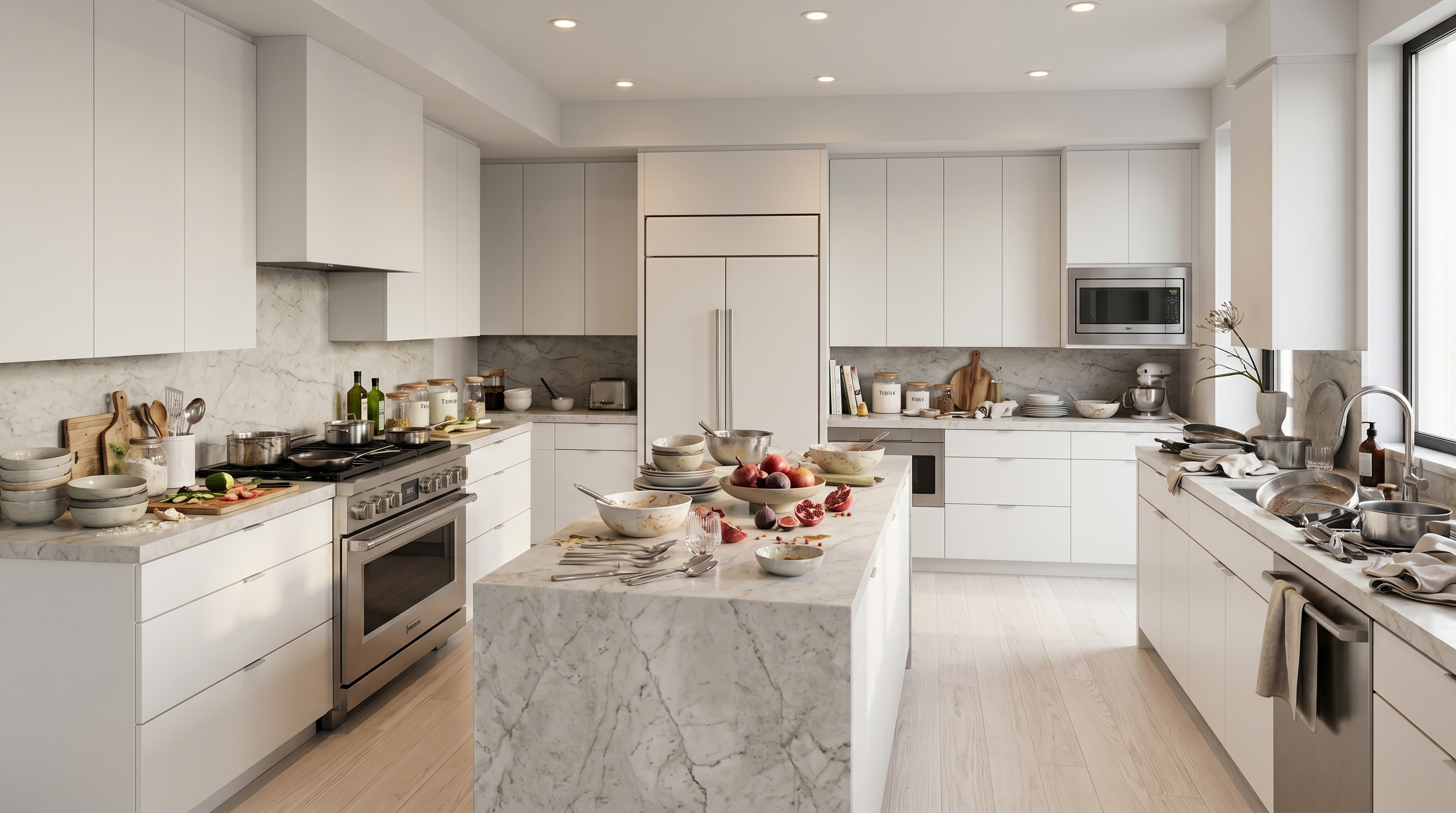
Here is the uncomfortable part for anyone mid-renovation: a stark white kitchen no longer reads as a blank slate. It reads as a date stamp. The eye has been trained by fifteen years of open-house listings to file bright white cabinetry under builder-grade — the finish chosen to move a property, not to live in one. Neutral was the promise. Anonymous is what it delivers.
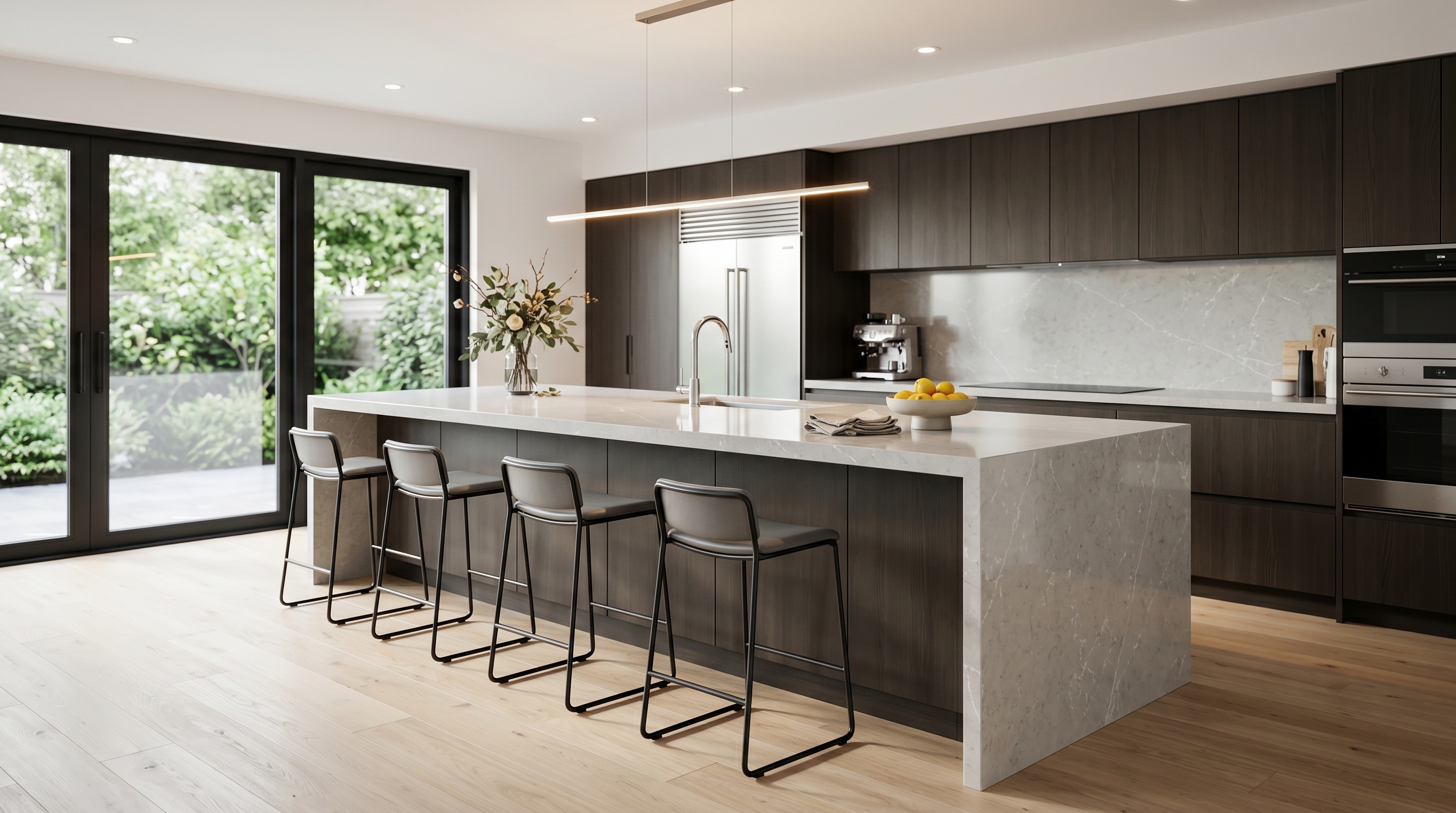
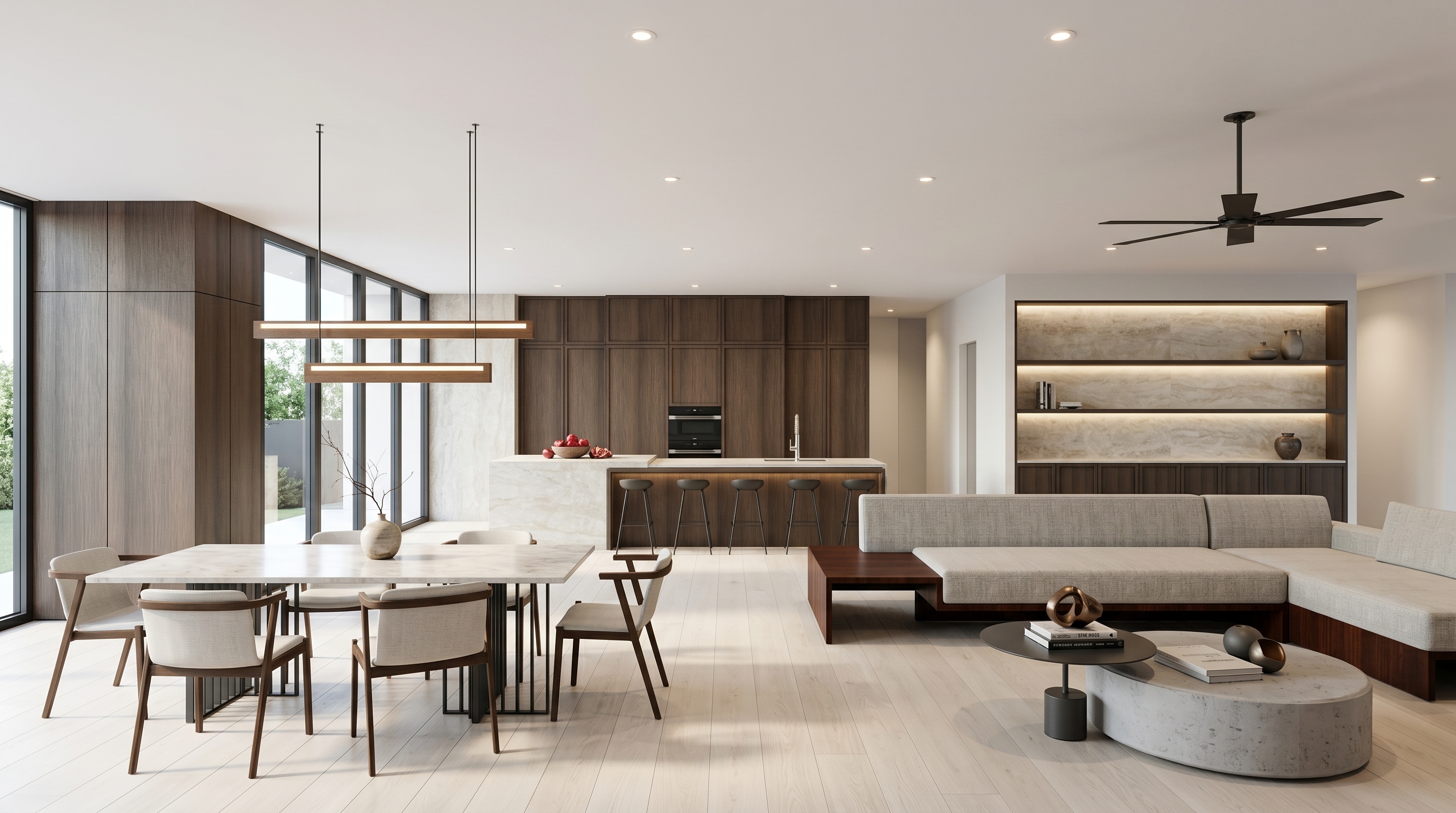
Wood does the opposite. Grain is the one surface that cannot be faked and cannot be mass-produced into sameness; no two runs of oak are identical, which is precisely why a wood kitchen feels specific to the house it sits in. That specificity is the thing an all-white room was designed to avoid, and it is the thing that now signals care.
What to do instead of reaching for white
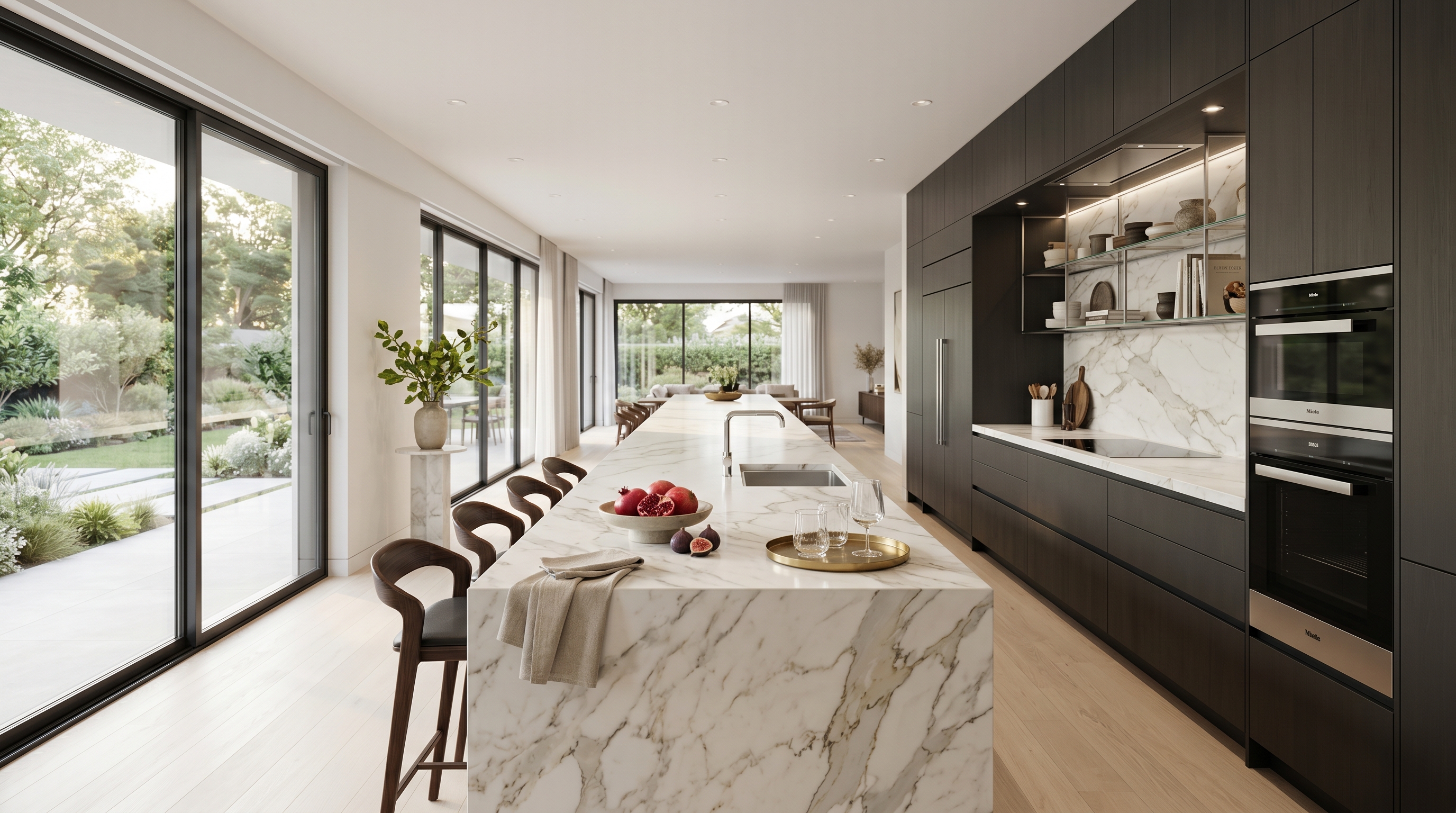
Start from material, not color. Choose a surface with depth — rift-cut oak, a honed stone with movement, a matte lacquer with actual pigment in it — and let the palette follow from what that material wants to sit beside. If you love a bright kitchen, keep the brightness but warm the white until it stops feeling clinical; a cream or soft ivory holds light without the hospital edge. And commit. One considered decision, followed all the way through, will outlast three cautious ones every time.
The goal was never wood for its own sake. Wood is simply what happens when people stop designing to avoid an opinion and start designing to hold one.
Timeless is not the room that dates the slowest. It is the room that was clearly, confidently itself the day it was built — and stayed that way because no one could mistake it for anyone else's. The all-white kitchen was many things. That was never one of them.
Book a private showroom tour
If this changed how you are thinking about your kitchen, the next step isn't another article. Book a private showroom tour and spend an hour with our design team, one on one — in Atlanta, Boston, Chicago, Dallas, New York, or any of our eight studios — working through material, grain, and light against your actual space.