
Craft
The Full-Height Slab Backsplash Went Too Far
The full-height slab backsplash is 2026's reflex luxury move. But running the countertop up the wall strips the one thing a kitchen needs at eye level.
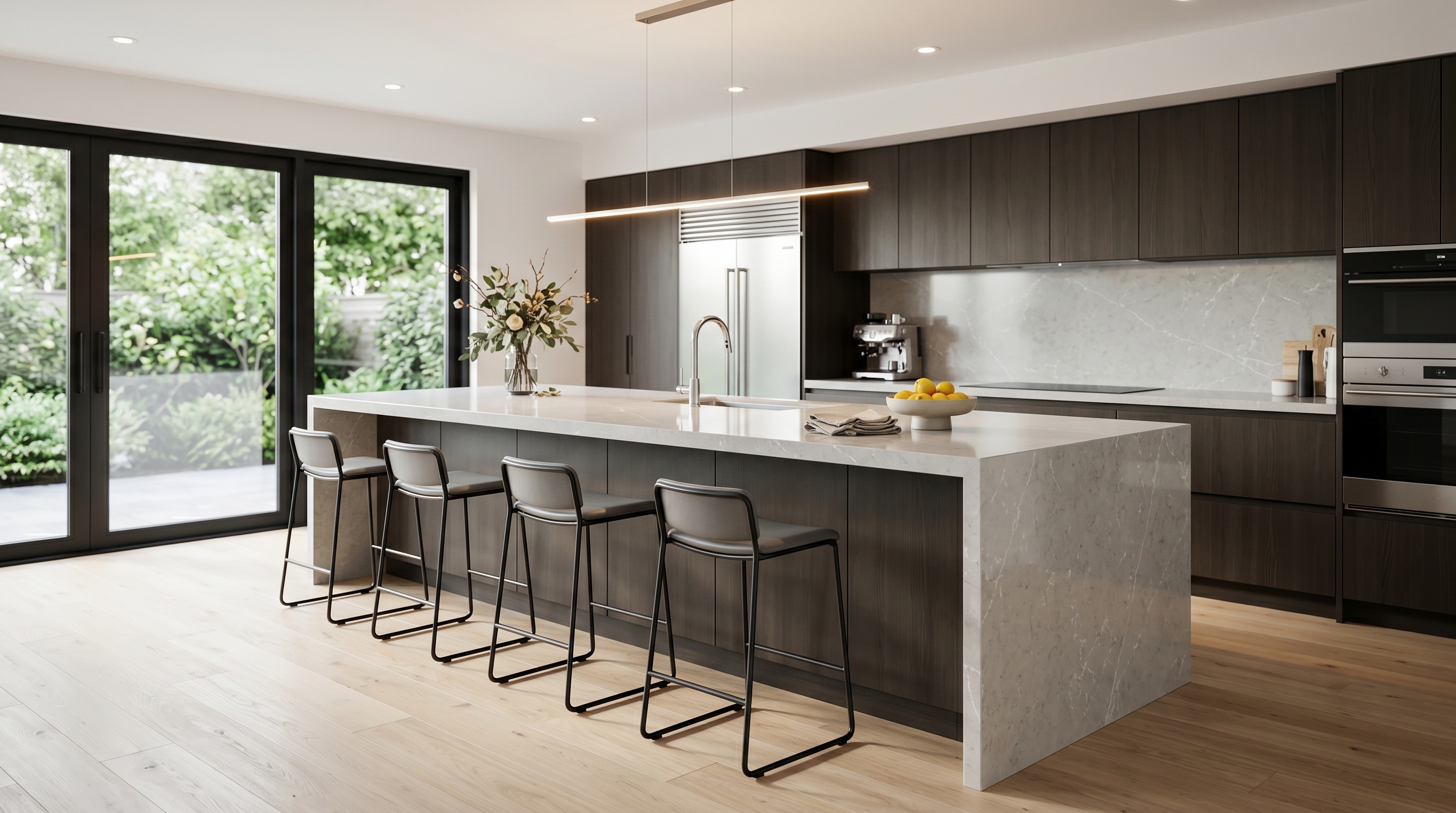
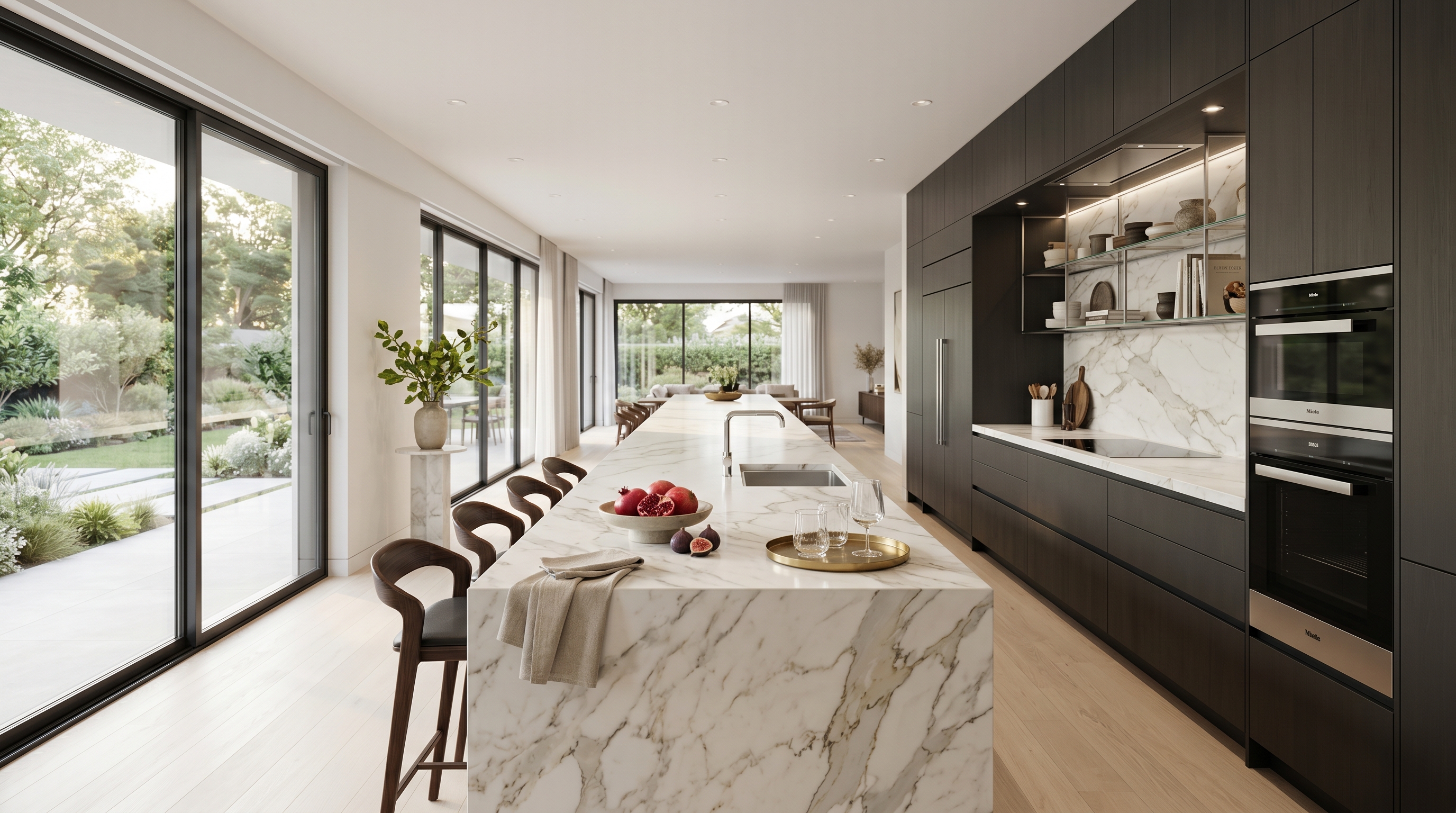
The full-height slab backsplash — the countertop stone run straight up the wall to the underside of the cabinets — has become the reflex sign of a serious kitchen. Grout-free, seamless, quietly expensive. It reads as the obvious luxury choice, and the numbers say the market now agrees without much argument.
According to the 2026 Houzz Kitchen Trends Study, slab-format backsplashes now account for 28 percent of installations in renovated kitchens — the fastest-growing category in the survey. When a detail climbs that fast, it stops being a decision and becomes a default.
And this particular default quietly removes the one thing the wall at eye level was doing for the room. It takes away the texture.
The slab backsplash's seamless look is the problem
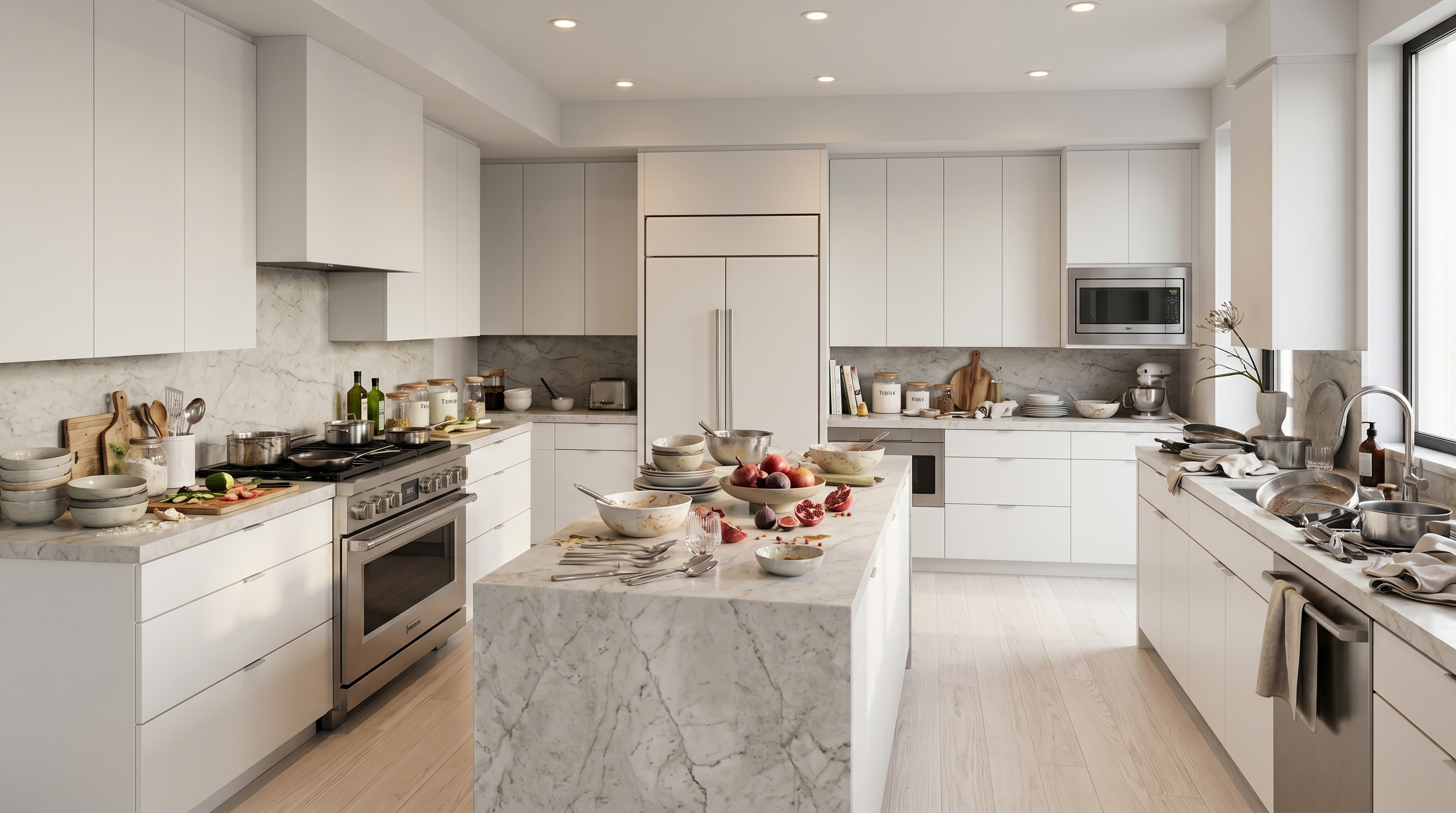
The selling point is the uninterrupted sheet of stone: veining flowing from counter to wall with no grout line to break it. On the right slab, behind the right range, that is genuinely beautiful. But step back and count the hard, polished surfaces a kitchen already carries — the counters, usually an island, often a stone hood surround. Run the same slab up the wall and you have doubled the polished stone in the most-looked-at zone of the room.
The result is not more luxury. It is more sameness. The eye travels across the counter, up the wall, along the island, and never finds anything to catch on. A room finished entirely in the expensive thing stops reading as expensive. It reads as flat.
You are paying a premium to remove texture
The slab is not the cheap way to do this. A tile backsplash installed runs roughly $25 to $65 per square foot, materials and labor together. A full-height stone slab lands closer to $45 to $120 per square foot before fabrication, and most fabricators price the extension as an add of $50 to $150 per linear foot on top of the countertop — two to four times the cost of the tile it replaces. On a mid-size kitchen that is several thousand dollars.
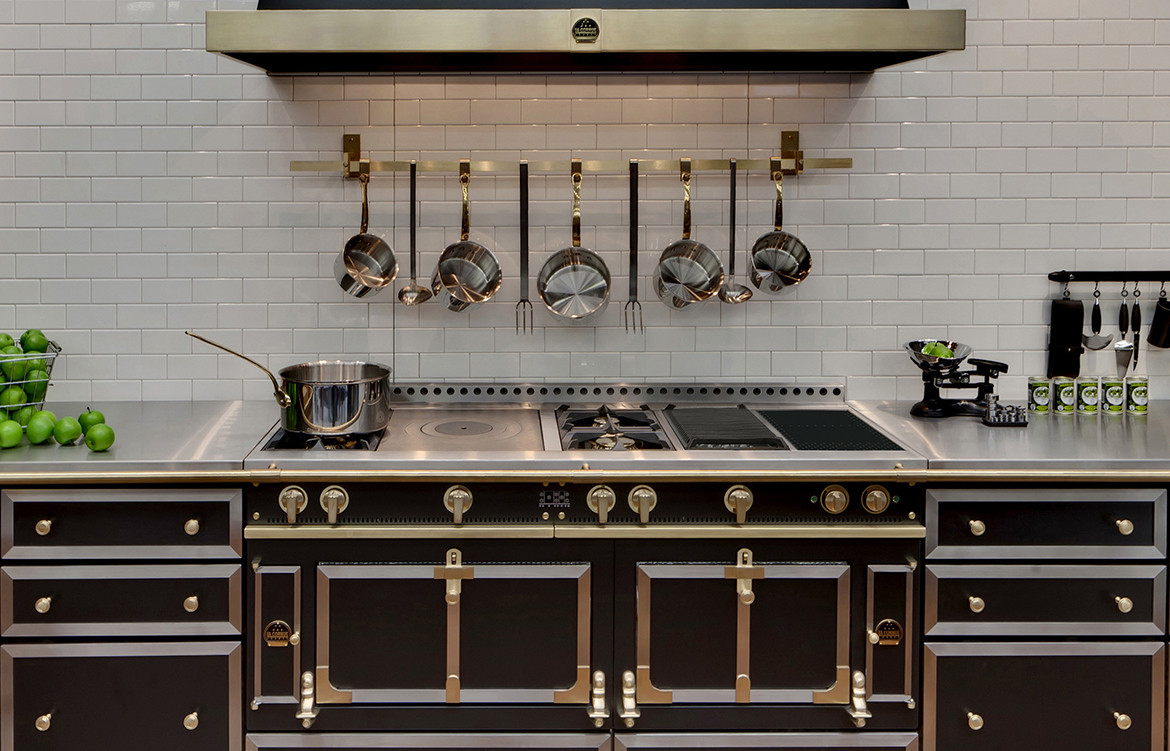
And what does the premium buy? The removal of the exact layer designers reach for when a kitchen feels cold. Fluted ceramic, honed zellige, a handmade tile set in a running bond — these bring a depth and a tactility that a polished slab, however dramatic, cannot. Paying more to end up with a harder, flatter wall is a strange trade. It is also the one the trend now makes by reflex.
The slab commits you; tile lets the room breathe
A slab is one material and one statement, permanently. Chip it and the repair is a fabrication problem, not a swap-one-tile fix — matching stone from the same lot is not always possible. It also welds the backsplash to the countertop decision, so the two read as a single note. Tile decouples them. The counter can stay quiet while the wall carries the personality, or the reverse. That is not a compromise; it is a second instrument in a room that usually only gets to play one.
It also runs against where design is actually heading. The same forces pulling kitchens toward matte, warm, handmade materials are the ones the full slab ignores — the same quiet correction that has the waterfall countertop going out of style. The slab backsplash is the most against-the-grain choice you can make in a warmth-first climate, even as it becomes the most popular.
What to do instead of paving the wall
Stop running the slab up the whole kitchen out of habit. Reserve the seamless slab for the one place it truly earns its keep — the wall directly behind the range, where continuous veining reads as a deliberate focal point and grout would only fight the cooktop. Everywhere else, let a tactile material do the eye-level work: a honed tile, a fluted ceramic, something with a hand in it. If the counter stone is already dramatic, a short four-inch slab return under a plain painted wall keeps the stone the star without paving the room in it. Choose the backsplash for how the room feels at breakfast, not for the resale photo.
The slab backsplash is not a mistake. It is a beautiful move asked to do the whole wall when it should have done one part of it. Give the eye something to touch, and the expensive stone finally looks expensive again — the way it does in a kitchen designed as a whole rather than matched to itself.
Book a private showroom tour
If this changed how you are thinking about your backsplash, the next step isn't another article. Book a private showroom tour and spend an unhurried hour with our design team, one on one — at our Buckhead studio in Atlanta or any of our showrooms across the country — matching stone, tile, and texture against your actual kitchen before a single surface is ordered.