
Craft
The Best Kitchens Are Losing Their Upper Cabinets
More storage was always the goal. The best kitchens of 2026 are tearing out their upper cabinets — trading dead top shelves for light, wall, and better ergonomics.
For most of a century, the measure of a serious kitchen was how much you could pack into it. More cabinets, more doors, more shelves climbing the wall toward the ceiling. Storage was the brief, and the upper cabinet was its workhorse.
The best kitchens being built right now are quietly removing them.
This is not minimalism for its own sake, and it is not a fear of clutter. It is a recognition that the wall of upper cabinets — the one element nearly every renovation treats as non-negotiable — was never as useful as it looked.
The top shelf was always dead storage
Kitchen planners have a name for the band of space where you can actually work without a step stool: the comfortable reach zone, running roughly from mid-thigh to shoulder height. The National Kitchen & Bath Association builds its planning guidelines around it, and specifies a standard 18 inches of clearance between the countertop and the bottom of a wall cabinet.
Do the arithmetic and the verdict is unkind. On a typical run, only the lowest shelf of an upper cabinet falls within easy reach. Everything above shoulder height — the top two shelves of most uppers — is, by the industry's own logic, reserved for things you handle twice a year. You built a wall of cabinetry to house a waffle iron and a vase.
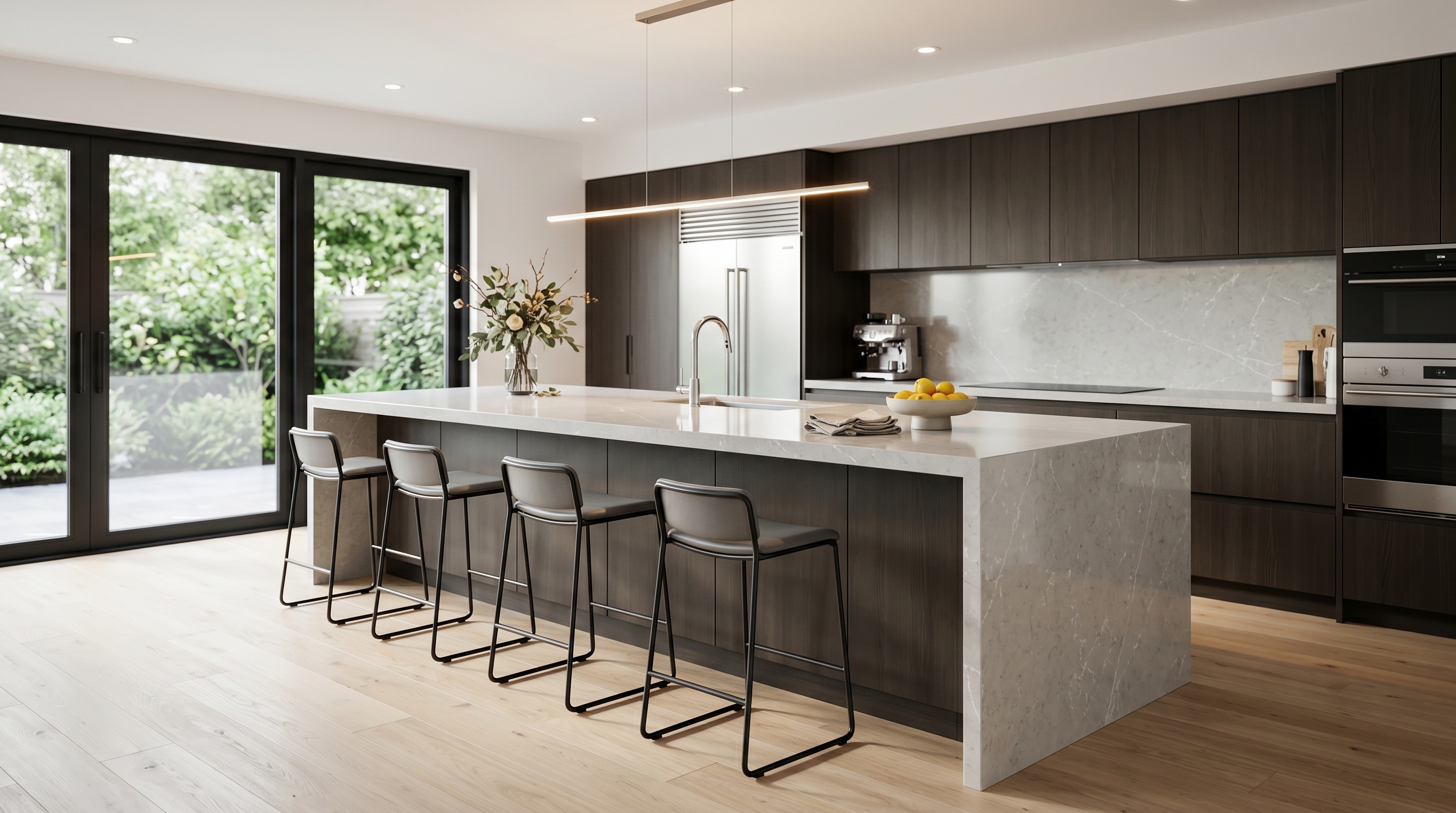
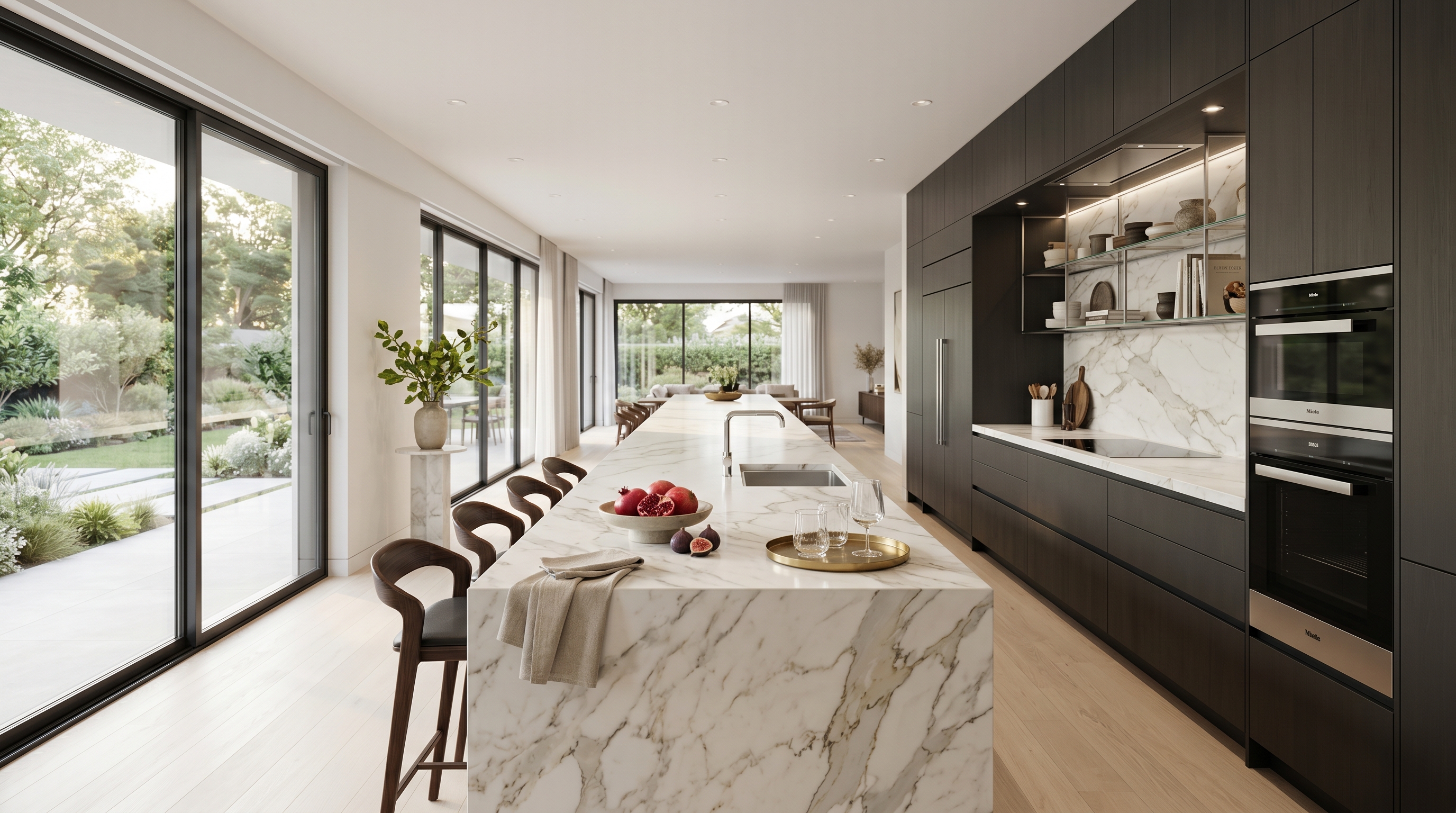
What you lose is wall. What you gain is architecture.
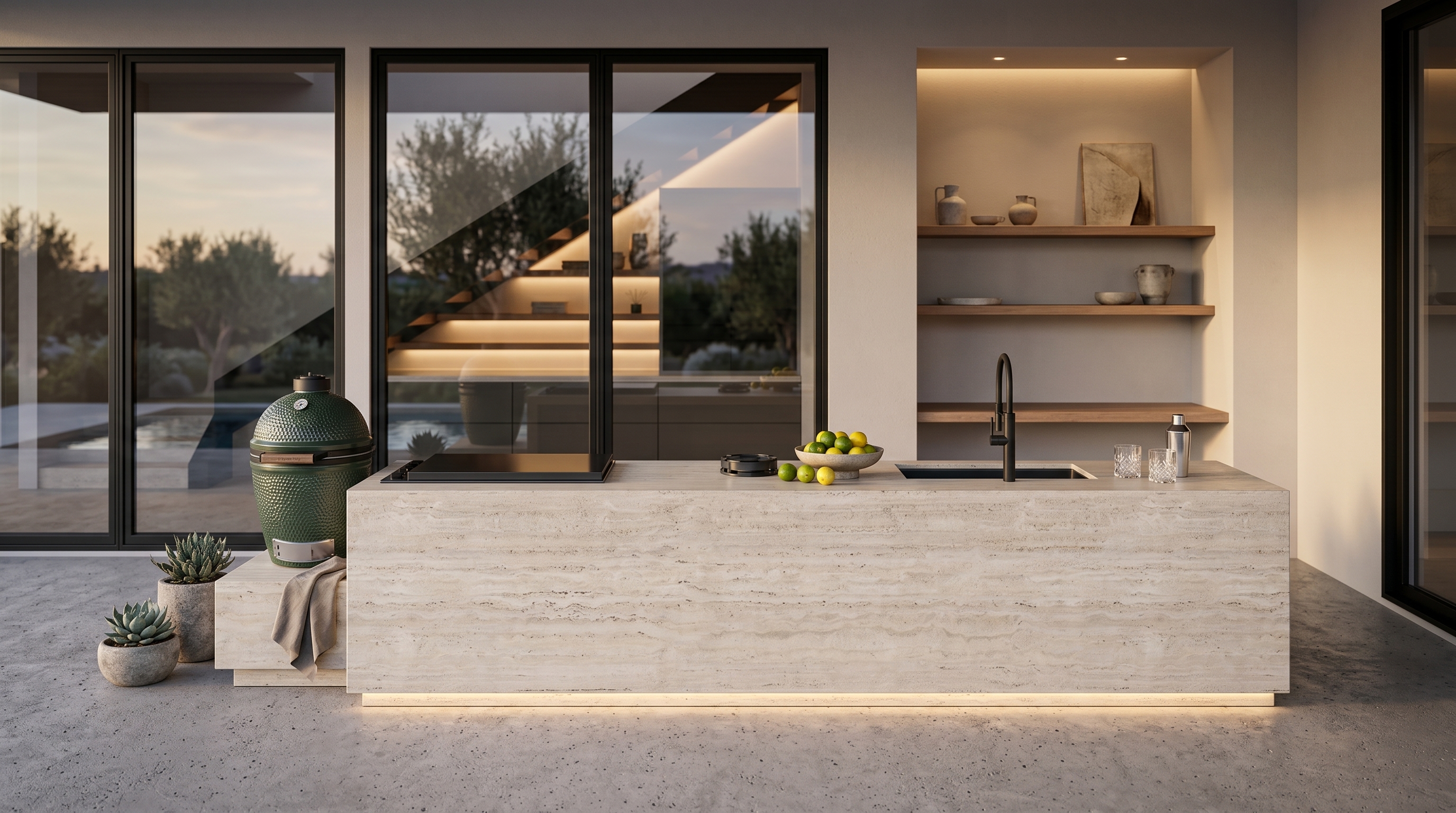
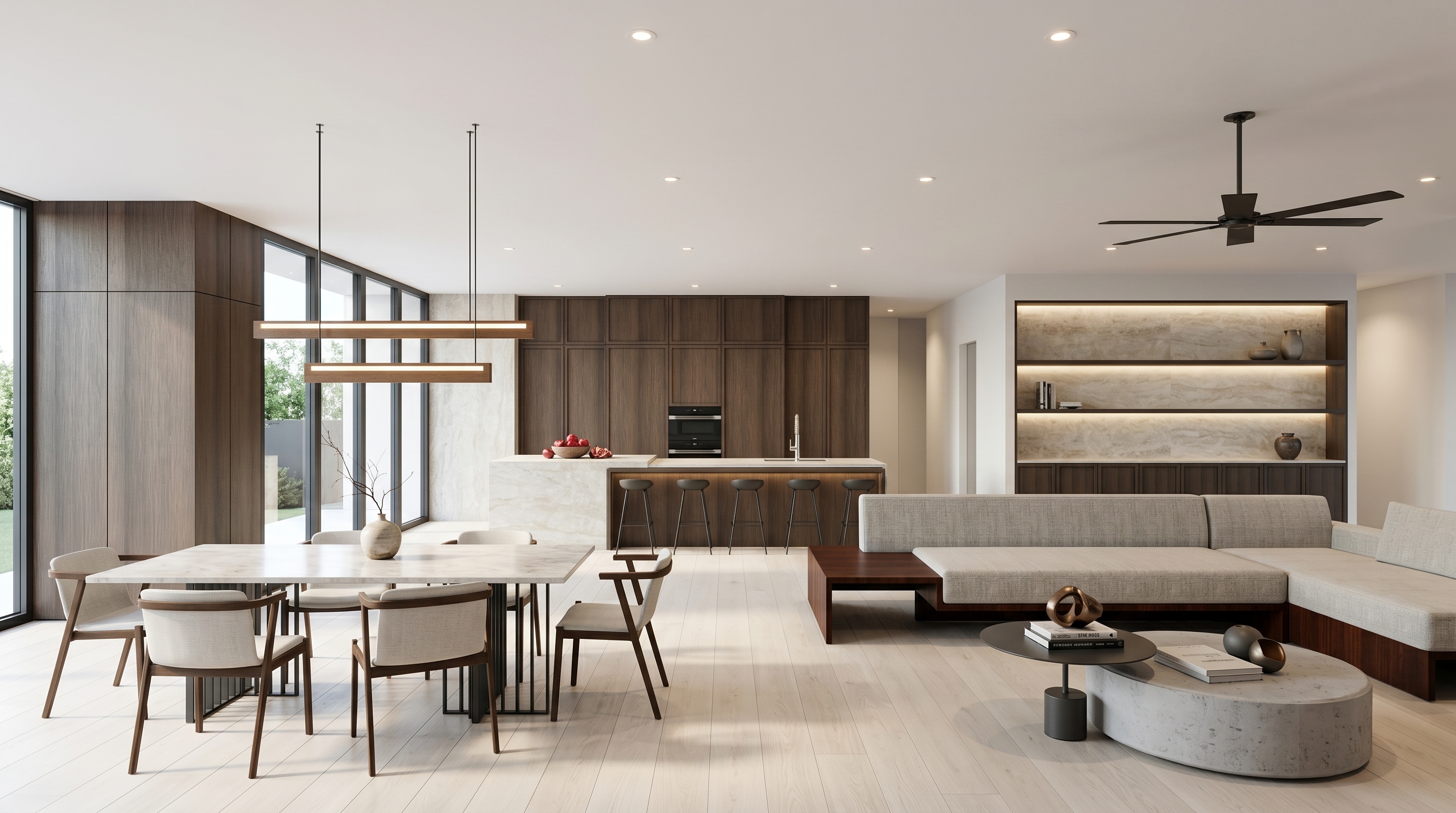
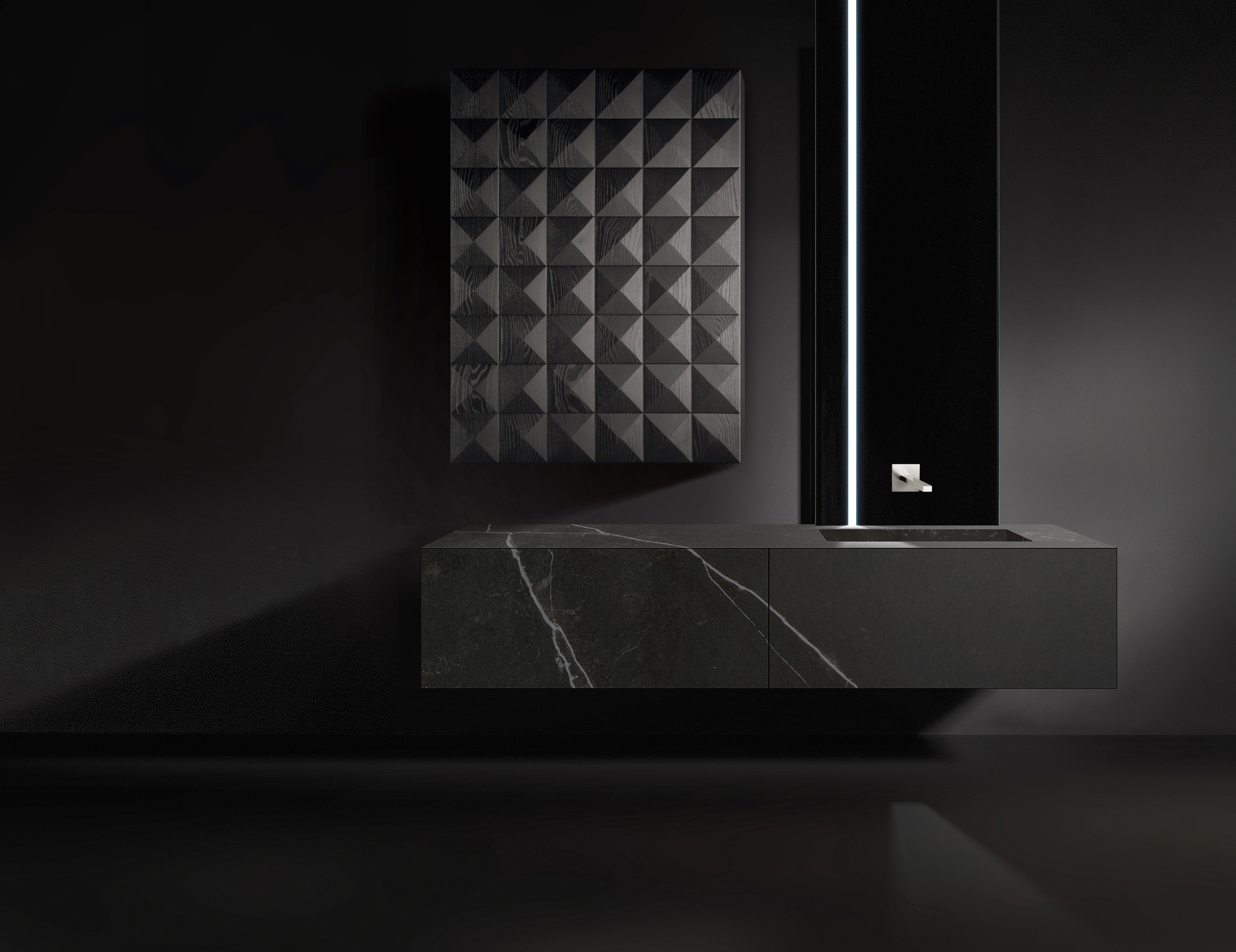
Strip the uppers away and the room stops reading as a corridor of doors. "Forgoing upper cabinets introduces openness and lightness," says interior designer Marie Flanigan. "It allows architectural elements — windows, plaster walls, or statement stone — to breathe and become focal points." The result, she told Homes & Gardens, "often feels less utilitarian and more like a beautifully integrated living space."
That is the trade most people never get offered. A blank upper wall is not empty space waiting to be filled. It is the one surface in the room where light, stone, and proportion are allowed to do the work that forty linear feet of door fronts cannot.
The storage does not vanish — it relocates
The objection writes itself: where does everything go? Down, mostly, and into one place. The kitchens losing their uppers are not losing capacity; they are consolidating it into a single run of full-height cabinetry or a discreet pantry, and into deep base drawers that bring their contents to you instead of asking you to climb.
A bank of drawers holds more usable volume than the cabinet above it and surrenders it without a reach. Tall storage on one wall does the heavy lifting the uppers pretended to do. The total often comes out even — but now all of it lives inside the zone where your hands already are.
What to do instead
If you are planning a kitchen, treat the upper cabinet as a choice rather than a reflex, and pressure-test it wall by wall:
- Consolidate bulk storage into one run of full-height cabinetry or a proper pantry, where a tall door earns its height.
- Replace a row of uppers with one or two shelves set at working height — or leave the wall to a window, a slab of stone, or plaster.
- Move everyday dishes and cookware into deep base drawers, not overhead.
- Keep uppers only where you genuinely reach them: flanking a hood, never marooned above a far counter.
The test is simple. If you would need a stool to use it, it is decoration pretending to be storage.
The wall of upper cabinets survived this long because it looked like diligence — proof that no inch was wasted. The better kitchens have figured out that the wasted inches were up there all along. Take them back, and the room finally has somewhere to breathe.
Book a private showroom tour
If this changed how you are thinking about your own walls, the next step is not another article. Book a private showroom tour and spend an hour with our design team, one on one, mapping storage to the way you actually cook. Our studios — from Atlanta and Boston to Chicago, Dallas, and New York — are built for exactly this kind of conversation. You can also explore our kitchen collection before you visit.