Craft
The Vanity as Architecture
The bathroom is the first and last room of every day. It deserves the same rigour given to any great interior.
The bathroom is the first and last room of every day. It deserves the same rigour given to any great interior.
And yet, in most homes, it doesn't get it. The vanity — the single object that shapes how a bathroom is used — is too often treated as a piece of furniture dropped into a tiled box. A countertop on legs. A cabinet picked from a catalog. The result is a room that functions adequately and feels like a utility.
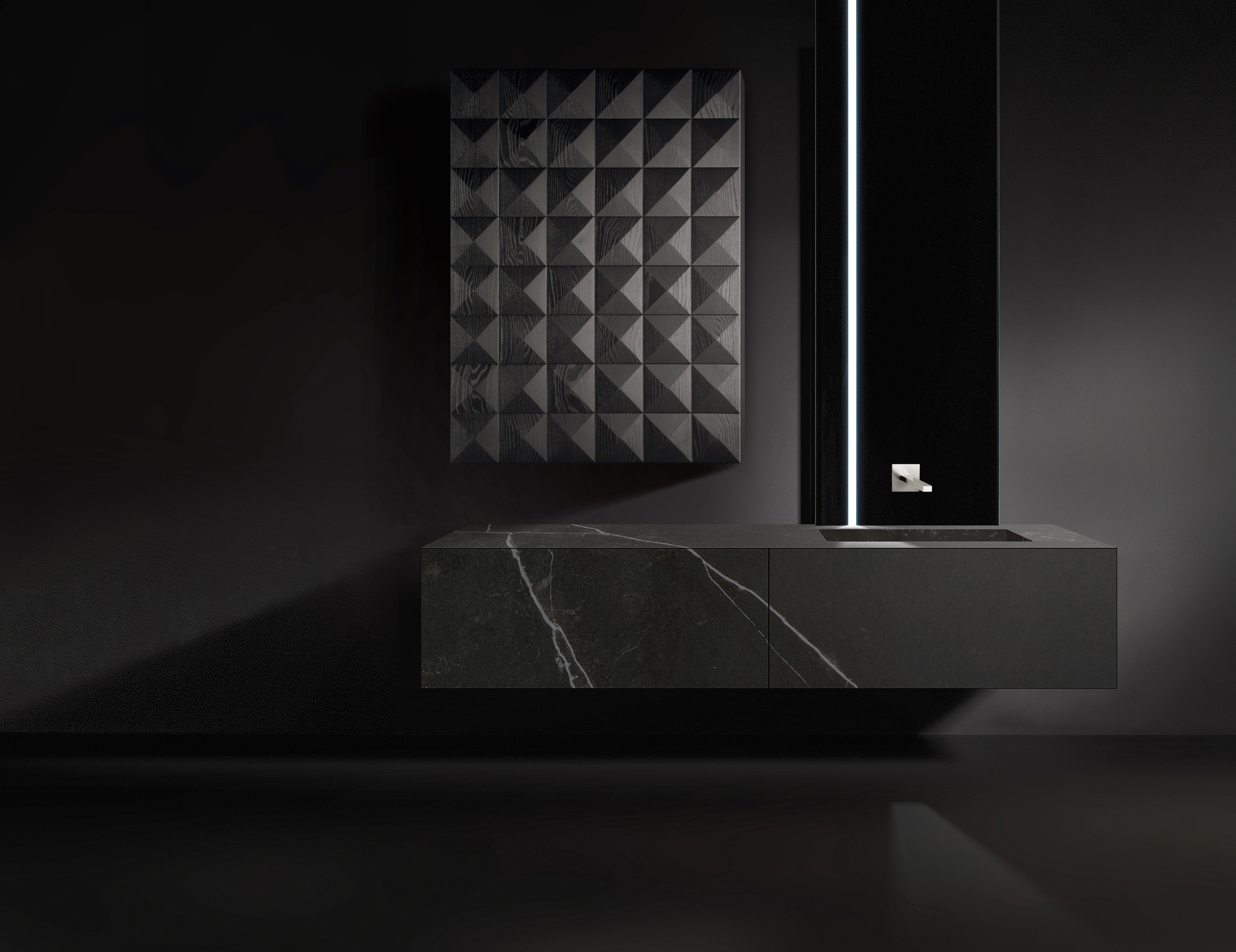
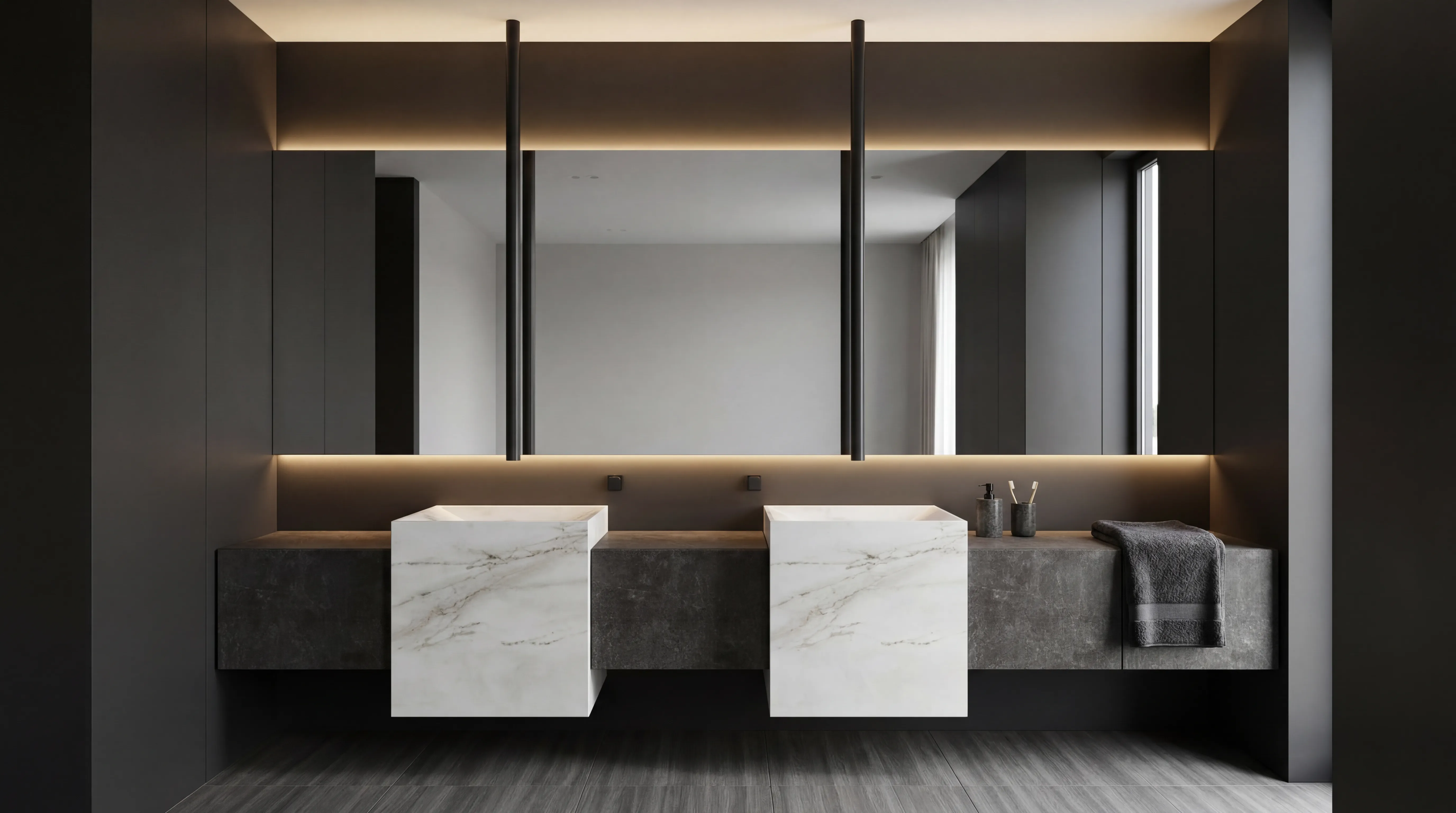
A vanity, designed properly, is not furniture. It is architecture. It defines the proportions of the room, organizes the way light falls, and absorbs the small rituals of every morning and every night into something quiet and considered.
Proportion before product
The first decision is not what the vanity is made of. It is how tall, how deep, how long, and how it meets the wall, the floor, and the ceiling. A vanity that floats on a wall changes the perceived volume of the room. One that runs the full length wall to wall reads as built-in architecture rather than installed cabinetry. Mirrors set into the same plane as the cabinet face make the wall continuous; mirrors hung in front of it fragment it.
These are architectural decisions. They are made before any material is chosen, and they determine more about the finished bathroom than the stone or the fittings ever will.
The vanity sets the rhythm of the room. Everything else — lighting, tile, fittings — follows from it.
Storage as choreography
The interior of a vanity is rarely seen and constantly used. Done well, it choreographs the morning: toothbrush where the hand reaches first, skincare at eye level, hair tools on a vented pull-out wired for power, laundry concealed behind a soft-close front. Done poorly, it is a single deep cabinet under a sink, half-empty and impossible to organize.
The difference is engineering. Drawer interiors lined and divided to the millimeter. Outlets brought to where they're needed instead of where the contractor found space. Plumbing routed around storage rather than through it. None of this shows from the outside. All of it is the reason the room works.
Materials chosen for water, not for photographs
A bathroom is the hardest room in a house. Steam, splash, temperature swing, daily chemical exposure. Materials that look beautiful in a showroom and fail in a bathroom are a familiar disappointment.
The vanities BauTeam builds use surfaces engineered for the environment: sealed stone or sintered quartz tops that resist heat and staining without resealing, lacquered fronts cured to handle humidity without delaminating, hardware tested for cycles measured in decades. Materials are chosen first for how they age. Their beauty is the second consideration, not the first.
The room you live in, twice a day
A great vanity changes the way the bathroom is experienced. Mornings move faster because storage is intuitive. Evenings slow down because the room invites them to. The architecture of the vanity — its proportion, its surfaces, its quiet competence — is felt rather than noticed.
That is the standard a bathroom deserves. The same standard given to any great interior.
See the system up close.
The way a vanity is built is best understood with hands on the drawers and eyes on the joinery. Book a private studio tour for an unhurried conversation with a BauTeam design consultant.