
Craft
Solid Wood Cabinets Are the Wrong Kind of Luxury
The market sells solid wood as the premium cabinet. In fine cabinetry it is the unstable choice — and the best German workshops quietly build from engineered cores instead.
The luxury market has settled on a comforting equation: solid wood means quality, and anything else is a compromise. Ask most buyers what separates a serious kitchen cabinet from a cheap one, and "real wood" is the answer.
It is the wrong answer. In fine cabinetry, solid wood cabinets are not the premium choice — they are the unstable one. The cabinets engineered to survive decades are rarely built from solid panels at all, and the best German workshops understood this a long time ago.
This is not a cost argument. It is a physics argument.
Why Solid Wood Cabinets Never Stop Moving
Wood is hygroscopic, which is a precise way of saying it can never be sealed off from the air around it. As the Oregon State University Extension Service puts it, the attraction between dry wood and water is so strong that it is impossible to prevent moisture gain. A finished cabinet door is not inert. It trades moisture with your kitchen every day of its life.
That exchange has dimensions. Wood settles at an equilibrium moisture content set by the humidity around it — roughly 6 percent at 30 percent relative humidity, climbing past 15 percent as the air turns damp. A heated home in January and the same home in a humid August can move a panel several percentage points of moisture content, and the wood answers by swelling and shrinking. It moves most across the grain: tangential shrinkage runs about 8 percent from a saturated to a bone-dry state, roughly twice the radial figure. The USDA Forest Products Laboratory has published these coefficients for a century. They are not in dispute.
A solid door is simply a wide panel doing all of this on your wall. Over the years it cups, the finish telegraphs hairline cracks at the joints, and the millimeter-perfect reveal you paid for drifts out of true.
The Best Cabinets Are Built From Cores
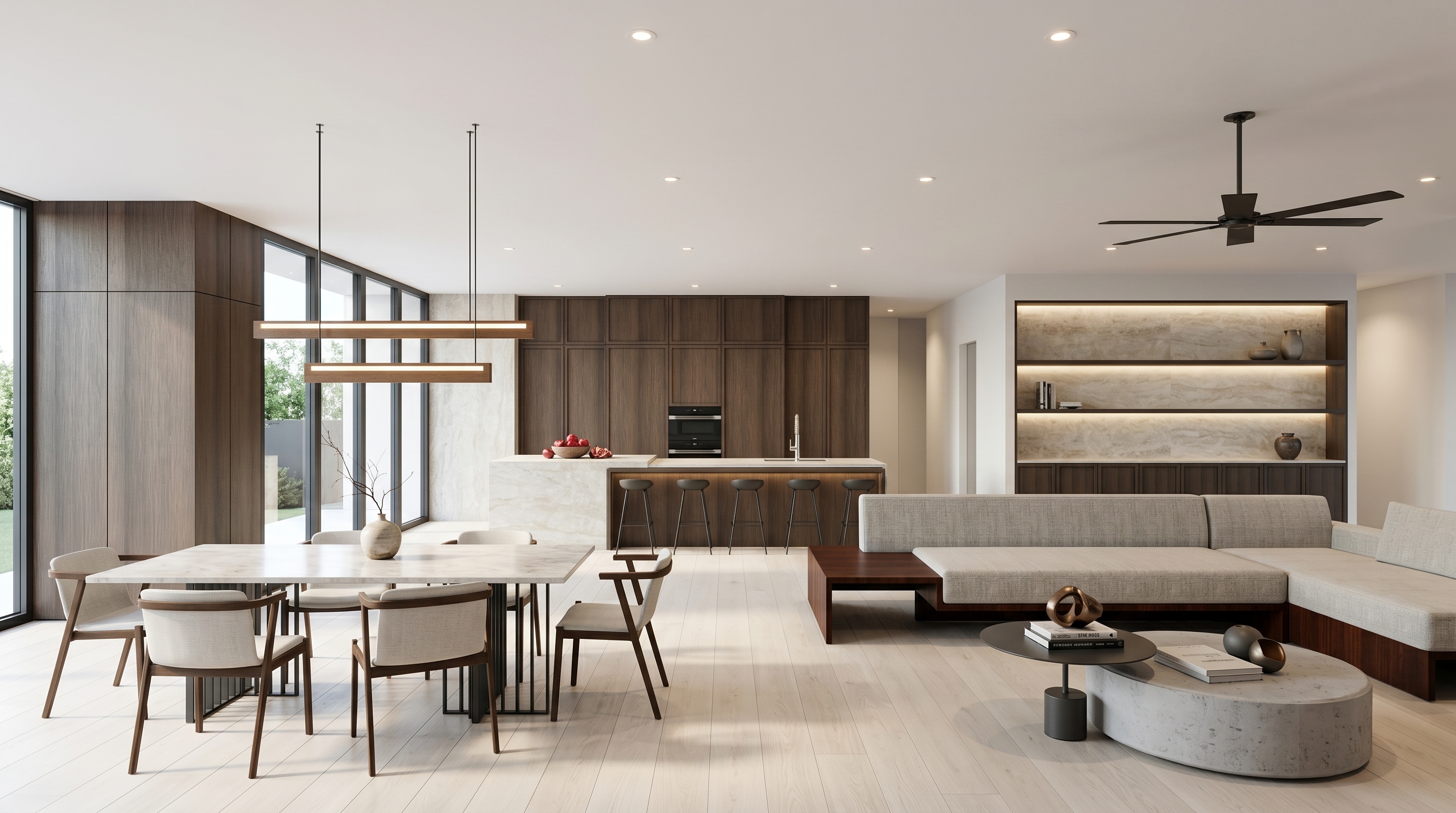
The alternative is not a downgrade. A veneer over an engineered core — high-grade fiberboard or multi-ply — gives you the exact species you wanted on the surface, bonded to a substrate with no single grain direction to fight. The core holds the face flat. The seasons come and go, and the door does not care.
This is why a real walnut veneer over a stable core is more honest, not less, than a solid walnut slab that slowly bows the room out of alignment. It is also why the technique endures in museum conservation: institutions veneer precisely because veneer outlasts the solid alternative. The surface you see is real. What sits behind it is just better engineered than a tree.
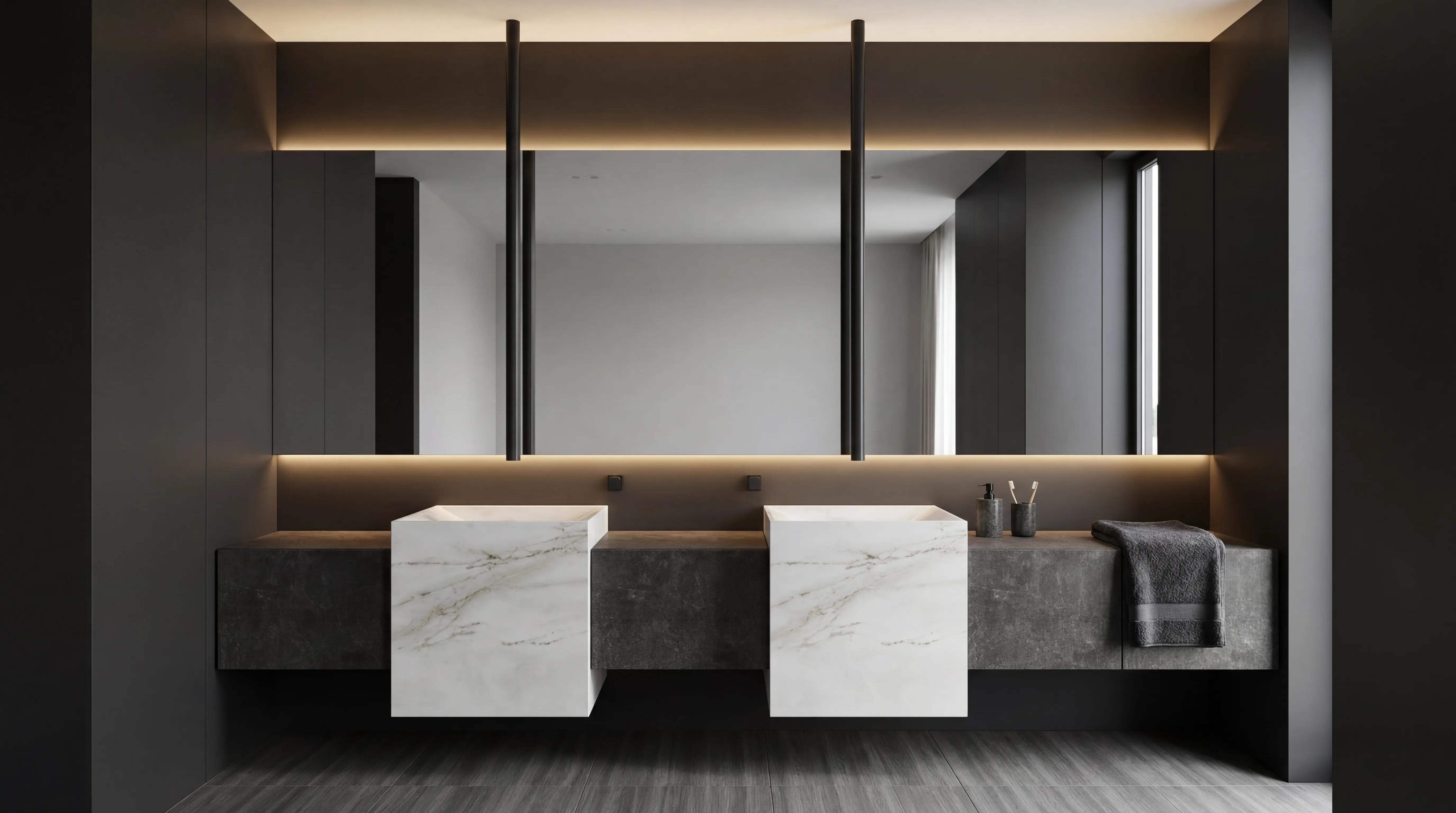
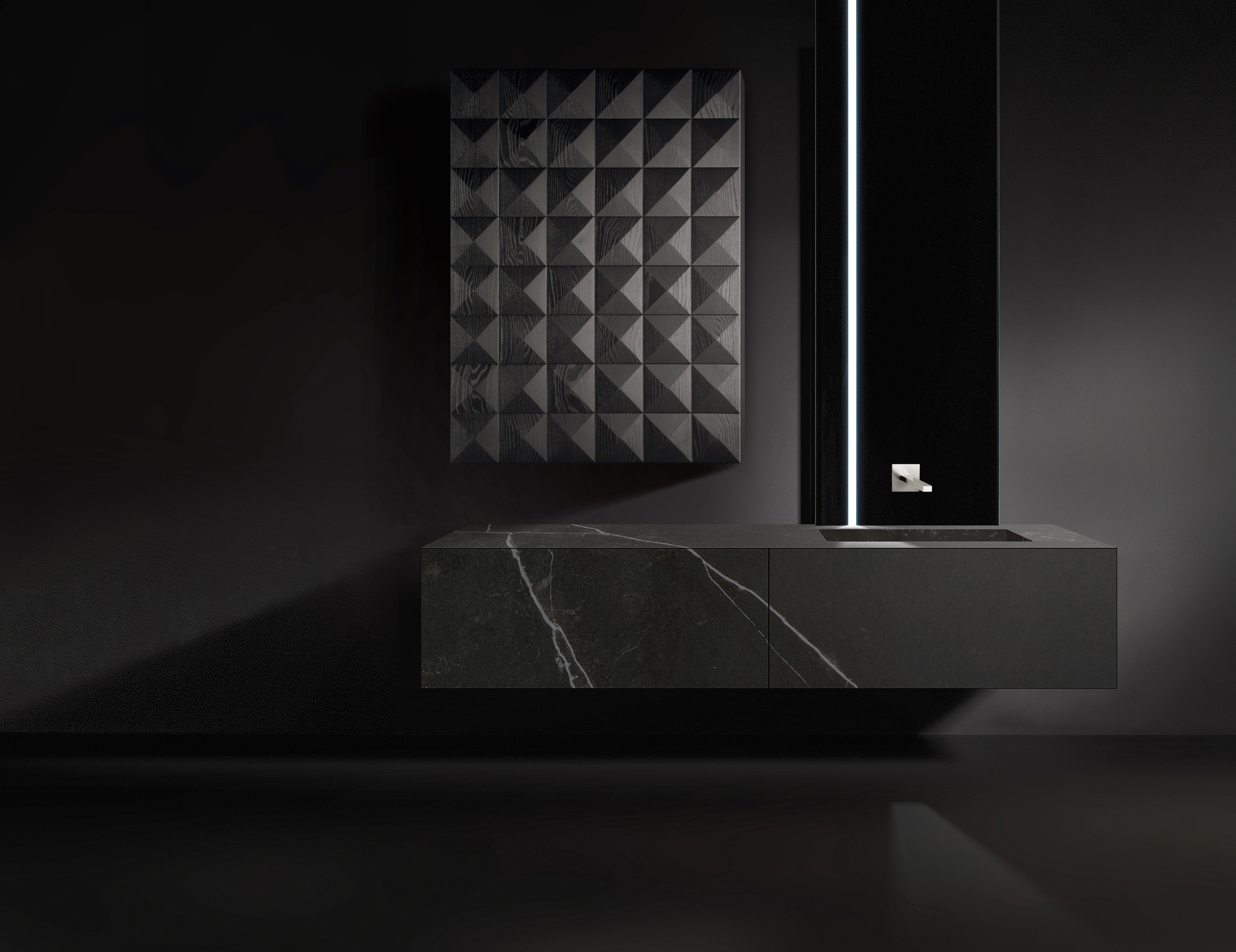
The logic is sharpest where humidity is brutal — the bathroom. A solid-wood vanity sitting through a thousand hot showers is a warranty claim waiting to happen, which is why considered vanity design leans on engineered substrates built to ignore the steam.
What to Ask Before You Sign
Stop using "solid wood" as your quality filter. It tells you almost nothing about how a cabinet will age. Ask instead what the door and the box are actually made of, and why. A good answer names the core material and explains how it stays flat. A weak answer just repeats the word "solid" as though it were a guarantee.
Then look at the edges and the joints, where engineered construction either hides cleanly or gives itself away, and ask to see a German-built kitchen door that has lived in a finished home through a full year of seasons. The one that still reads as a single crisp plane has told you everything you need to know.
Solid wood earns its place in a chair leg or a thick table top, where mass and movement are part of the character. A cabinet door is a precision surface, and precision and seasonal movement do not share a house comfortably. The luxury was never the slab. It is the door that still lines up in year ten.
Spend an Hour With the People Who Build It
If this changed how you are thinking about cabinets, the next step is not another article. Book a private showroom tour and spend an hour with our design team, one on one — at any of our studios, from Chicago to New York — walking through exactly how your cabinets will be built, and why. Reserve your private tour.