
Craft
The Double Vanity Is Usually the Wrong Call
The double vanity is the default request in every primary bathroom. It is also how most people end up with two cramped sinks and no usable counter.
Ask a designer what clients request first for a primary bathroom and the answer is reliably the same: two sinks. The double vanity has become shorthand for a grown-up bathroom, the feature that signals you have arrived. It is also, in most of the rooms it lands in, the wrong call.
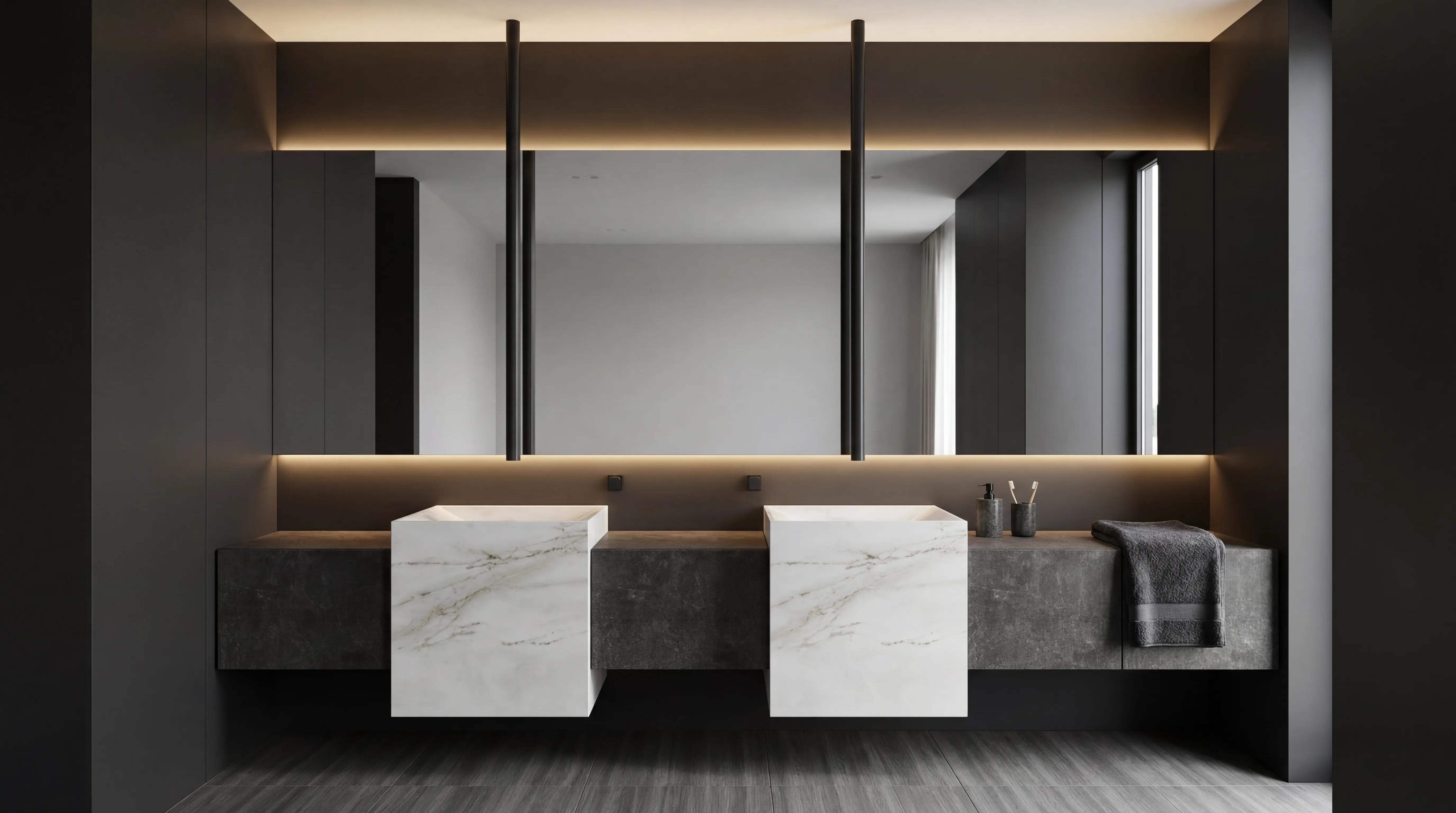
The problem is not the idea of two sinks. It is the wall they are forced onto. A double vanity asks a single stretch of cabinetry to do twice the work, and most walls are not long enough to do it well. What clients picture is the hotel suite. What they get is two shallow basins crowded shoulder to shoulder, with no counter left to set anything down.
The double vanity math no one runs
The dimensions are not a matter of taste. The National Kitchen & Bath Association recommends at least 36 inches between the centerlines of two sinks, and treats 30 inches as the hard floor. Account for the basins themselves and the clearance each one needs, and a genuinely comfortable double vanity wants 72 inches of wall or more.
Most primary bathrooms hand the vanity around 60. At that width the two sinks sit close to the ends of the cabinet, and the space between them — the part you actually use — shrinks to a sliver. You have bought two sinks and lost the counter that made the room worth standing in.
A counter is the thing you actually use
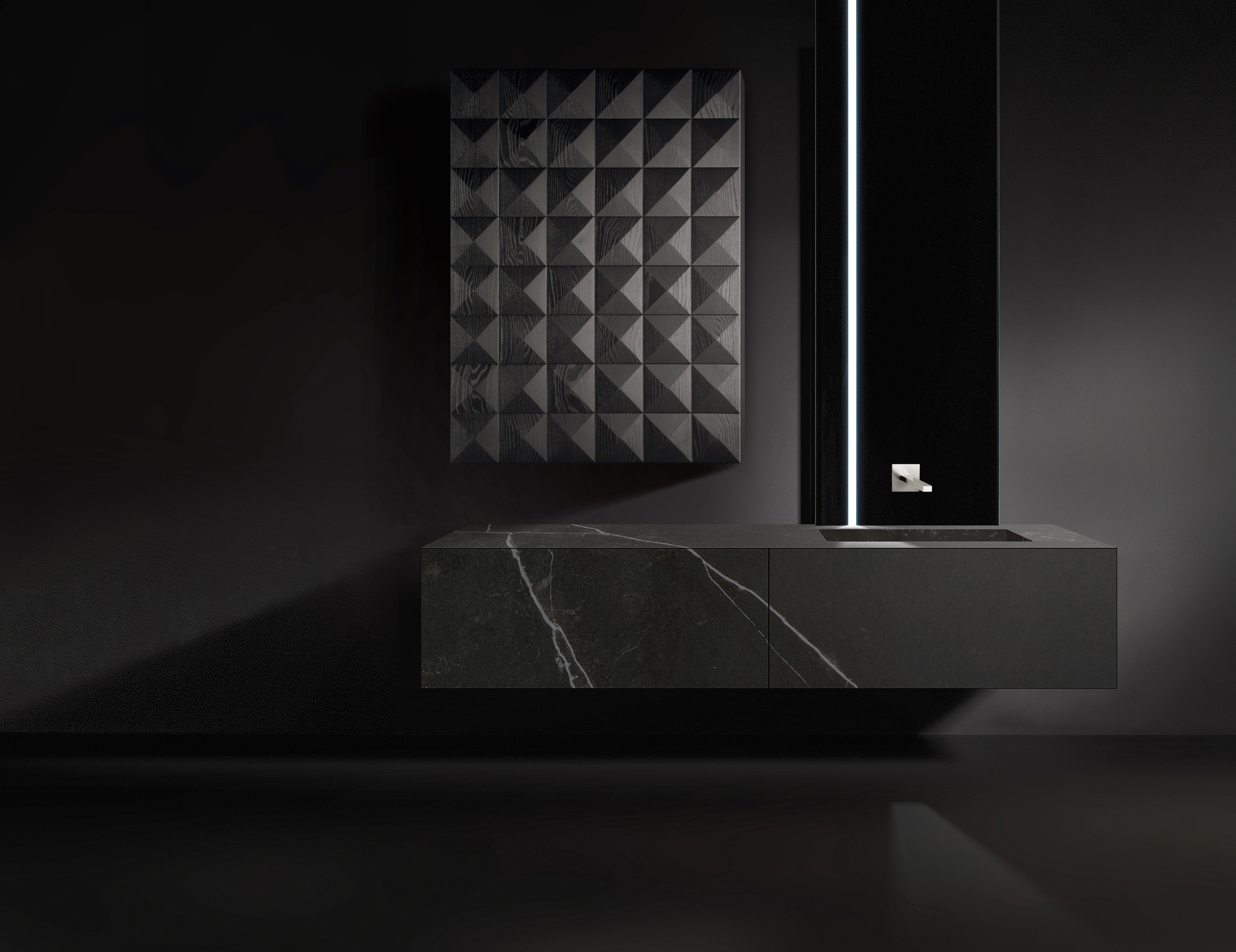
Walk through how the room gets used. The faucet runs for a minute or two. The counter is in service all day: the tray of daily things, the folded towel, the bag set down mid-routine, the glass of water left by the mirror. A single basin with a long, unbroken counter gives you a surface that works. Two sinks give you two leftover margins, each too narrow to hold much of anything.
There is a storage cost too. Splitting the cabinet for a second set of plumbing fragments the space below. Two drawer stacks interrupted by two P-traps hold less, and hold it more awkwardly, than one well-planned run of drawers under a single basin.
You are solving a rush hour that rarely comes
The case for two sinks rests on a single image: two people at the mirror at the same moment, every morning, elbows politely apart. For a few households that is real. For most it is a story told at the showroom and forgotten by the second week, when one sink quietly becomes the sink and the other collects jewelry and a candle.
Designers have noticed. The more considered move now is not the wider double. It is two separate single vanities on opposing walls, each with its own counter and mirror, or one oversized vanity that gives the whole wall to a single person at a time. Both acknowledge the same truth: people do not want to share a trough. They want a station that feels like theirs.
What to build instead
Before you specify two sinks, measure the wall and subtract honestly. If you cannot give the vanity at least 72 inches, build one basin, not two, and spend the reclaimed width on counter and drawers. If the room genuinely needs two stations and the wall can carry them, split them — two singles facing each other read as far more deliberate than one stretched double. This is the logic behind every vanity we design: the surface and the storage come first, and the fixtures follow.
The test is simple. Stand at the vanity and imagine setting down everything you actually hold in the morning. If there is nowhere to put it, the second sink was never the luxury. The counter was.
The double vanity sells because it sounds like more. In the rooms most people have, it delivers less — less counter, less storage, less of the calm a bathroom is meant to provide. The grown-up bathroom is not the one with two sinks. It is the one with somewhere to set the cup down.
Plan a vanity with someone who measures first
If this changed how you are thinking about your bathroom, the next step is not another article. Book a private showroom tour and spend an hour with our design team, one on one — measuring the wall you actually have and designing the vanity it can actually carry. Our studios, from Buckhead to SoHo, are set up for exactly this conversation.