
Craft
Recessed Lighting Is the Cheapest Thing in Your Kitchen
A grid of recessed cans is the default sign of a finished kitchen. It is also the cheapest-looking choice in the room — and the best designers are quietly pulling them out.
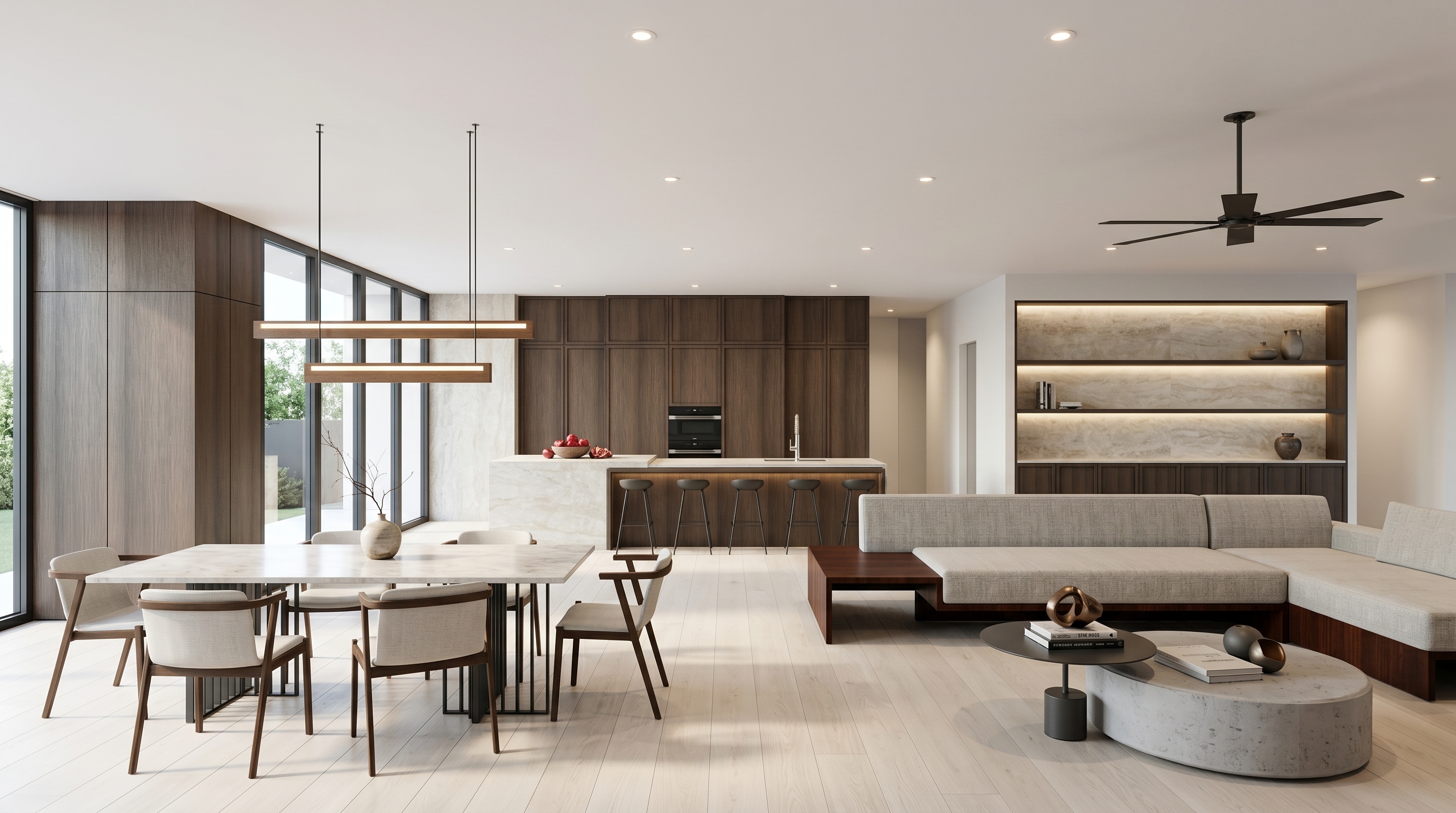
There is a particular ceiling you have seen a hundred times. A tidy grid of recessed lighting, evenly spaced, marching across the kitchen in rows. It is the default sign that a kitchen is finished and, by some unspoken logic, expensive. It is neither.
A ceiling full of downlights is the cheapest-looking decision you can make in a kitchen, and the cost has nothing to do with the fixtures. The people who light rooms for a living have been quietly pulling the cans out — and what they replace them with asks for less ceiling, not more.
The reflex is understandable. More light reads as better, and recessed cans are the most frictionless way to add it. But brightness and quality are different things, and the grid optimizes for the wrong one.
More Light Is Not the Same as Better Light
Spread a dozen identical downlights evenly across a ceiling and you get what lighting designers call flat light: the room is illuminated, but it has no depth, no shadow, no sense of where to look. Everything is lit to the same dull average — the exact quality you find in an office or a parking structure.
The numbers argue against the even wash. The Illuminating Engineering Society’s recommended levels put general kitchen lighting at roughly 30 to 40 foot-candles, but the working zones — the range, the sink, the prep counter — closer to 70 to 80. A uniform grid cannot serve both. Crank it bright enough for the cutting board and the whole room turns clinical; dim it to something livable and the counter goes murky.
You Are Standing in Your Own Light
There is a more practical problem, and anyone who has chopped an onion under a row of ceiling cans has felt it. Downlights sit behind you when you face the counter, which means your own body throws a shadow directly onto the surface you are trying to use. The brighter the can, the sharper the shadow.
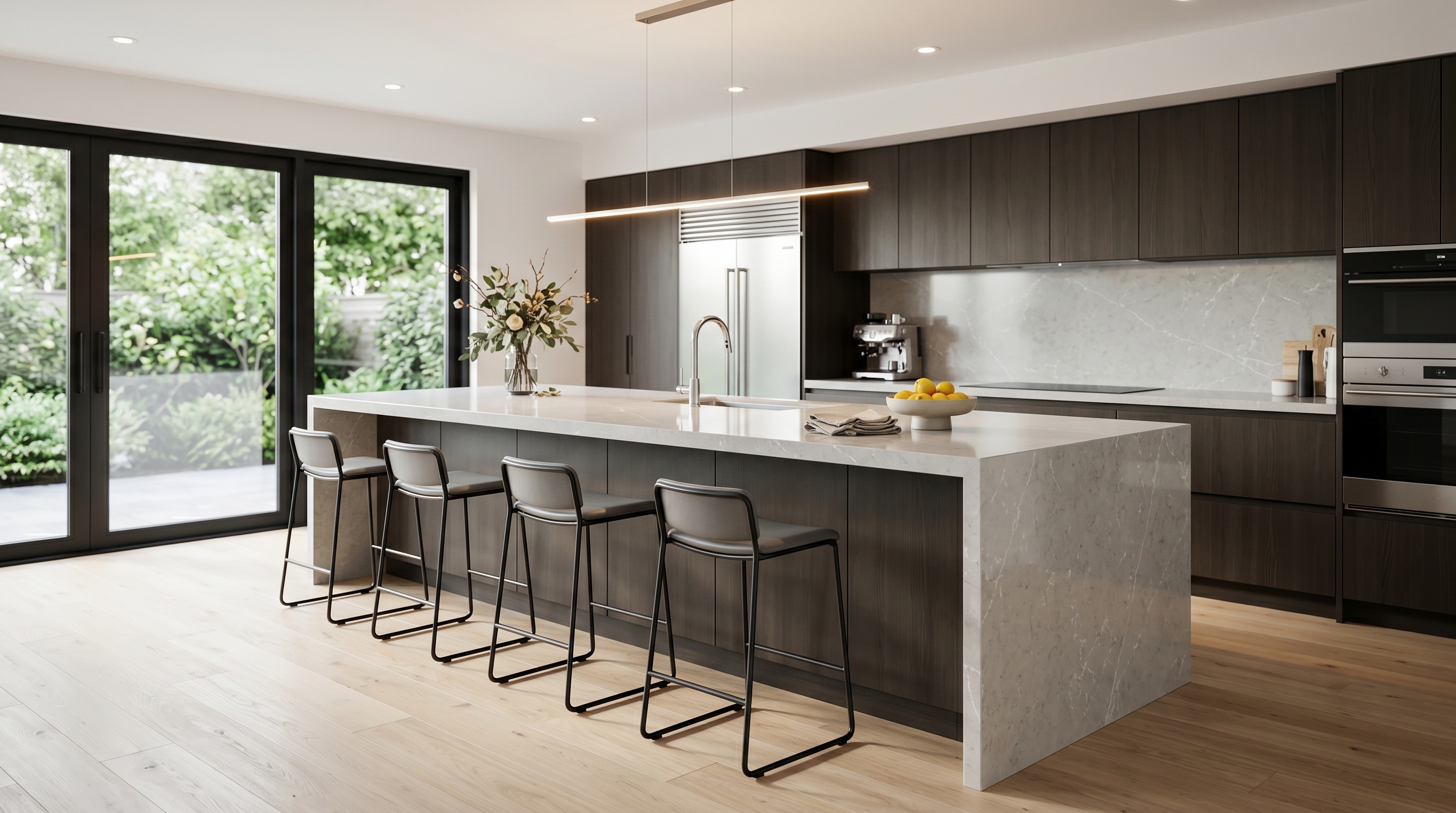
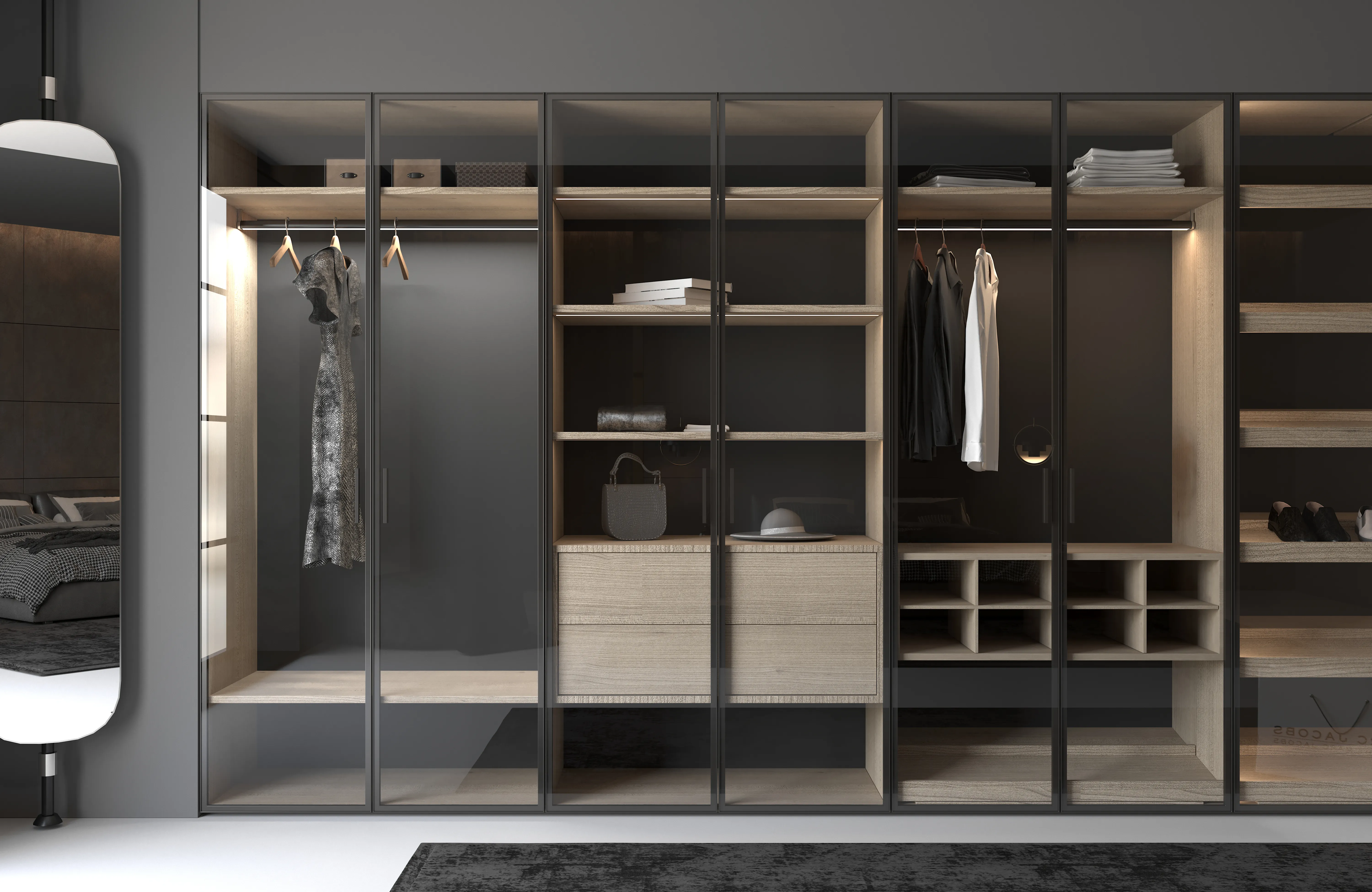
This is why under-cabinet lighting is not a luxury upgrade but the most useful light in the room. Mounted at the front underside of the wall cabinets, it lands on the counter from the right direction and erases the shadow the ceiling creates. In a kitchen without upper cabinets — increasingly the request — that task layer moves to a slim fixture under a shelf or a discreet rail. The principle holds either way: light the work surface from the front, not from behind your head.
The Grid Reads as Builder-Grade
The aesthetic argument is the one designers will say out loud. A ceiling pocked with evenly spaced holes is the visual signature of a developer kitchen, and no amount of stone or cabinetry fully cancels it.
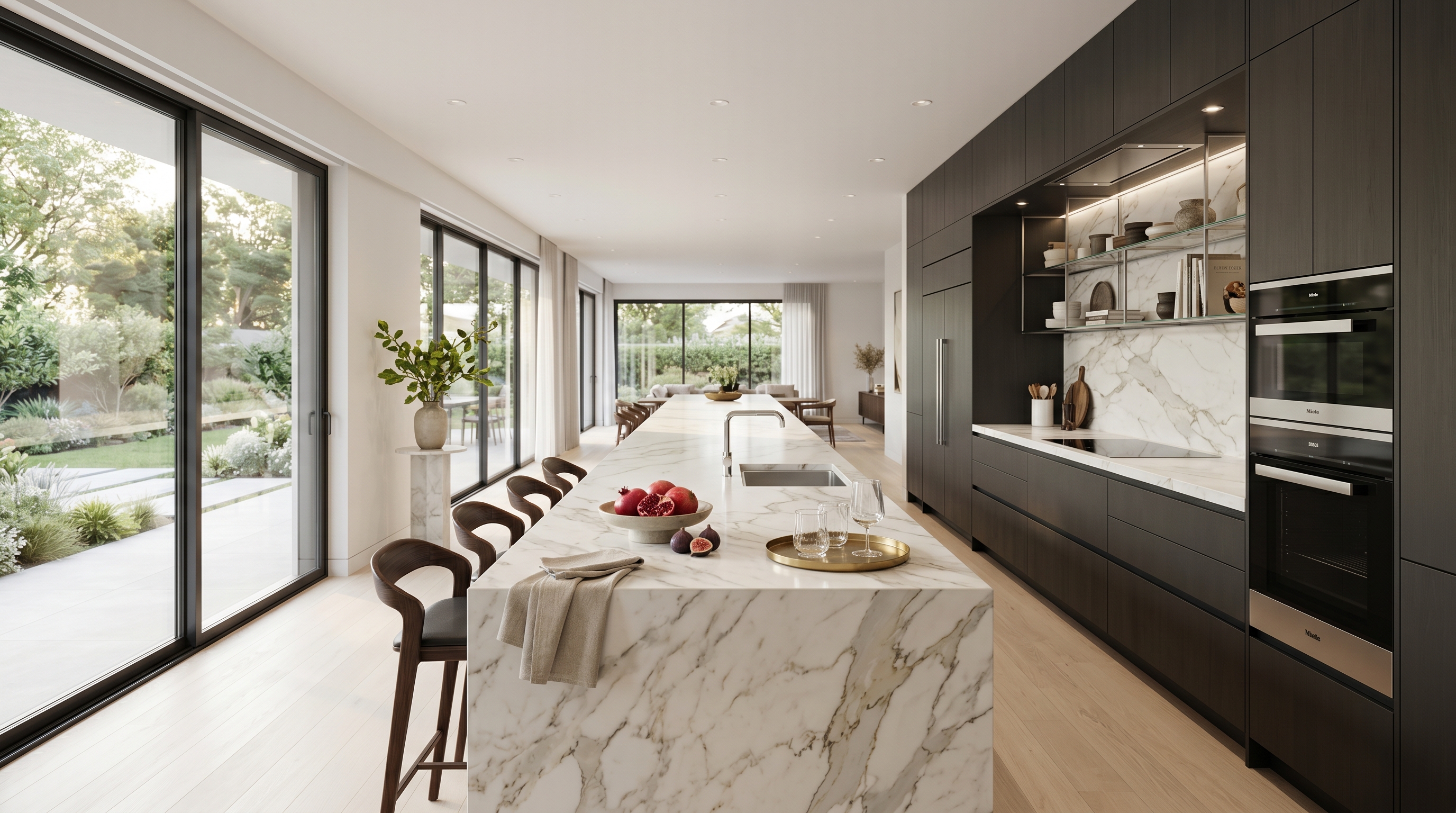
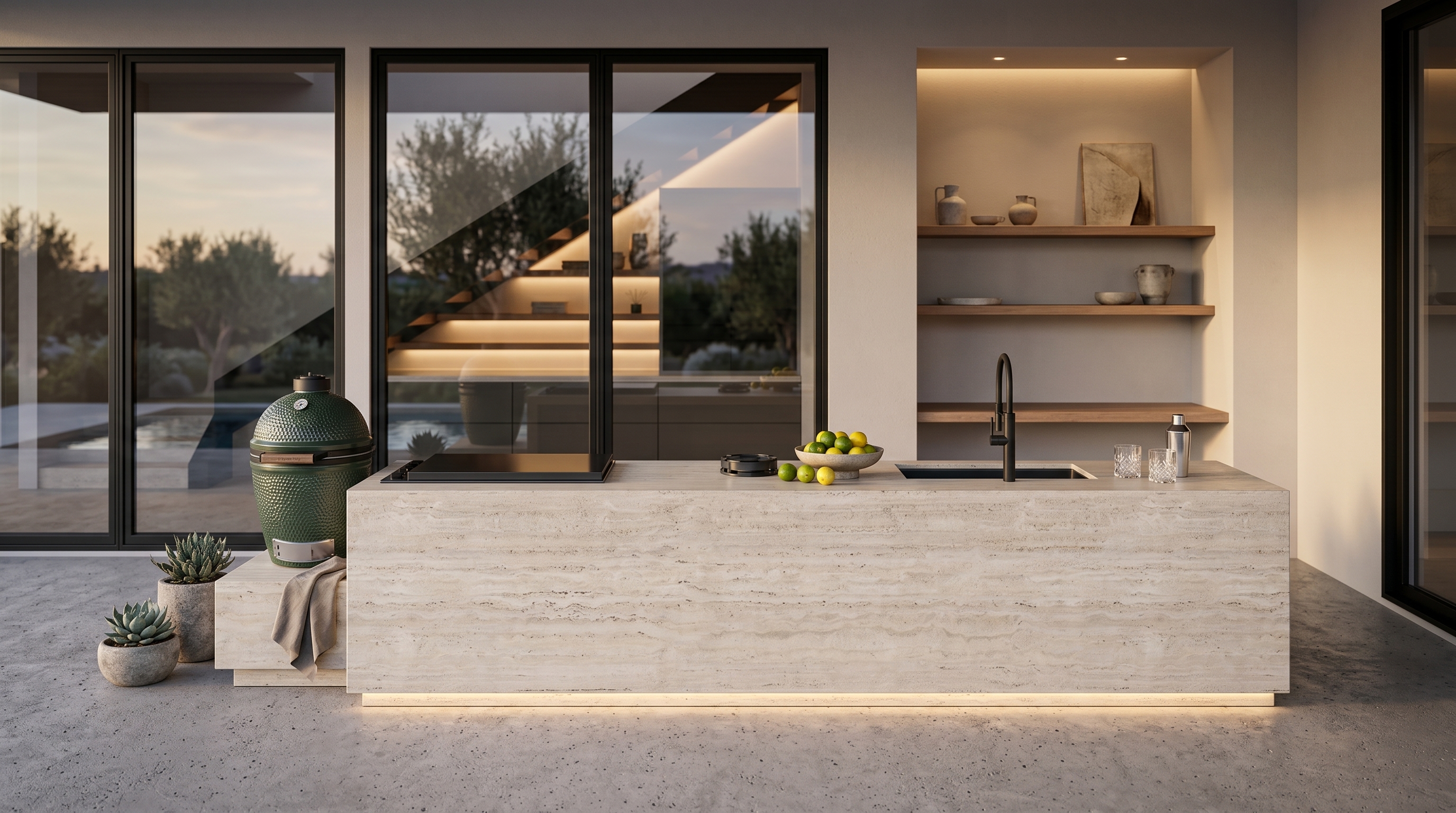
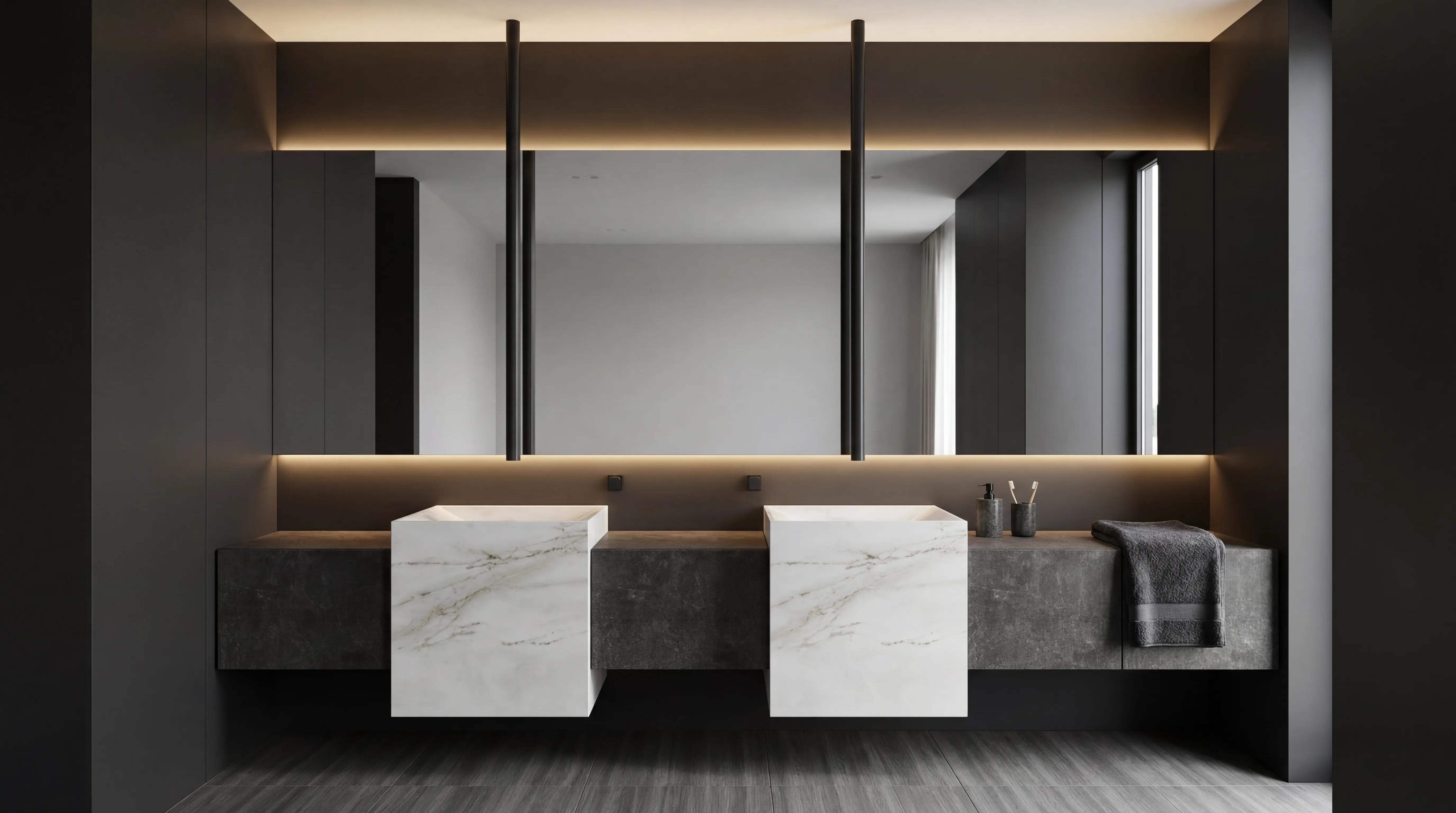
The trade has noticed. Homes & Gardens reported this year that designers are moving away from the can grid toward layered, decorative schemes. “More people are choosing small decorative fixtures and sconces instead of recessed cans for everyday lighting,” designer Micaela Quinton told the magazine. Elizabeth Valkovics, founder of Batten Court Design, put the principle plainly: “A well-lit kitchen is no longer about one big fixture. It’s about thoughtful layering.” The fixtures doing the work now — a pair of sconces over the range, a low pendant, an integrated strip warming the inside of a glass cabinet — are the ones you are meant to see.
Where Recessed Lighting Still Earns Its Place
None of this means ripping every can out of the ceiling. Recessed lighting is a fine tool when it is aimed, not sprayed. A single narrow-beam downlight can wash a piece of art or graze a stone wall; a tight pair can light an island with no visible fixture in the sightline. The shift is from coverage to intent — fewer holes, each one doing a specific job.
That last detail matters more than any fixture: put every layer on its own dimmer. The same room can read as a bright workroom at eight in the morning and a low, warm space at nine at night. A grid on a single switch can only ever be on or off.
The One Change Worth Making First
If you do nothing else, add a task layer and a dimmer before you add another ceiling can. Put under-cabinet or under-shelf light on the prep zones, make every circuit dimmable, and treat overhead downlights as accents you aim rather than a blanket you roll out. Plan it at the cabinetry stage, not after the drywall is up — the wiring for a front-mounted task light has to be concealed, and that decision is cheap before it becomes impossible. You can see how that integrated approach plays out across our kitchen work.
The brightest kitchen in the room is rarely the best one. Light is not a quantity you pour in from the ceiling; it is a set of decisions about where the eye should travel and where the hands actually work. Get those right and you will never miss the grid.
Book a Private Showroom Tour
If this changed how you are thinking about lighting your kitchen, the next step is not another article. Book a private showroom tour and spend an hour with our design team, one on one — walking a fully built kitchen and watching how the layers actually fall. Our studios run from Atlanta and Boston to Dallas, Chicago, and Los Angeles.