
Craft
Stop Matching Your Cabinets to Your Floors
Matching cabinets to floors feels safe, but it's the fastest way to make a kitchen look builder-grade. The designers' rule: contrast, don't match.
There is a moment in almost every kitchen project when someone holds a cabinet sample against a flooring plank and asks whether the two can be made to match. It is the most common request in the room, and it is the wrong one.
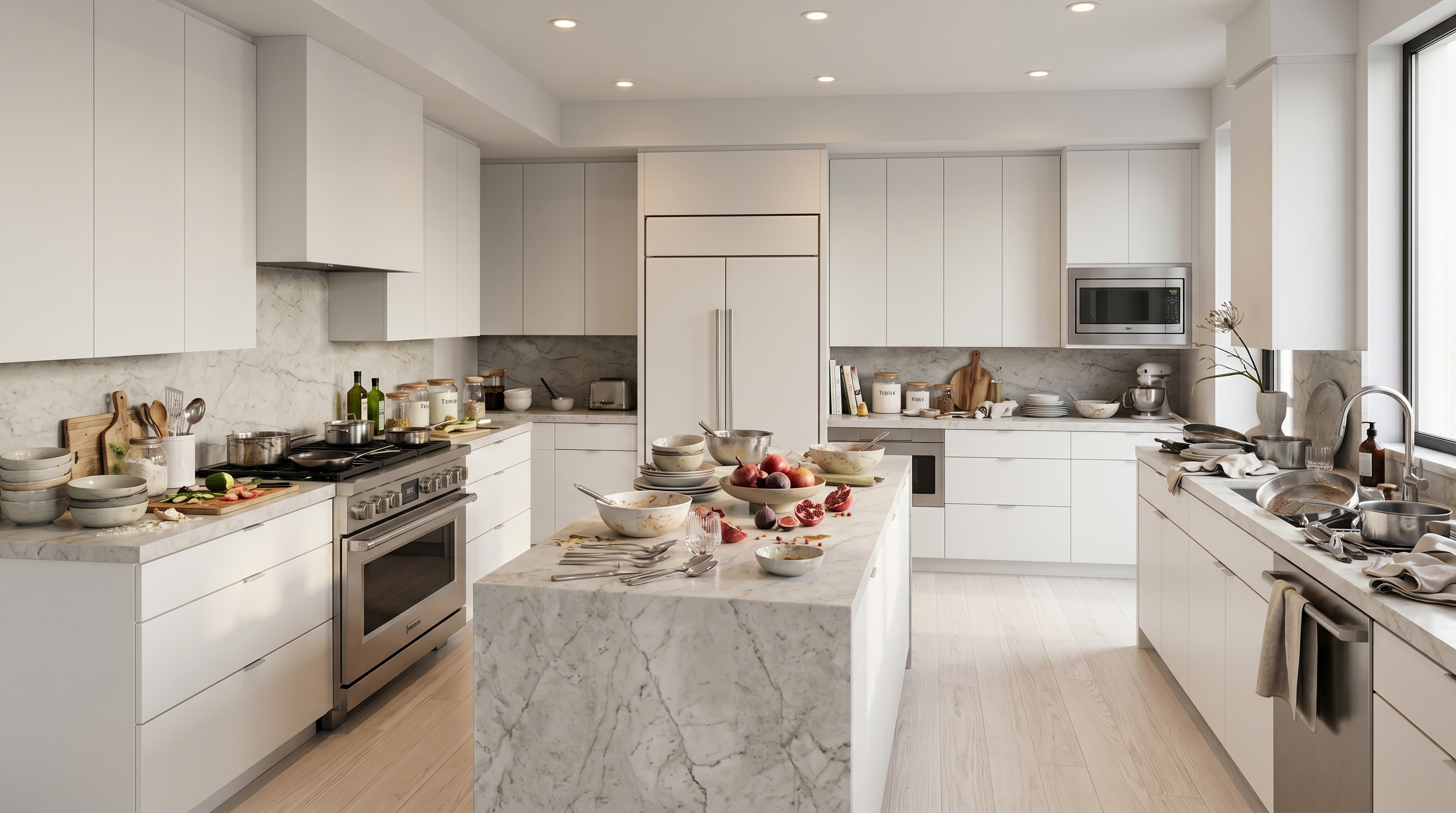
Matching cabinets to floors feels like the safe, coordinated choice. In practice it is the quickest way to make an expensive kitchen look builder-grade. When the cabinetry and the floor share the same value and the same undertone, the room loses its edges — everything melts into a single continuous brown, and the eye has nowhere to land.
The designers who work at the top of the trade abandoned the matching instinct a long time ago. Their rule is quieter and more useful: don't match, contrast — and make the contrast deliberate enough that no one could mistake it for a mistake.
Why matching cabinets to floors flattens a room
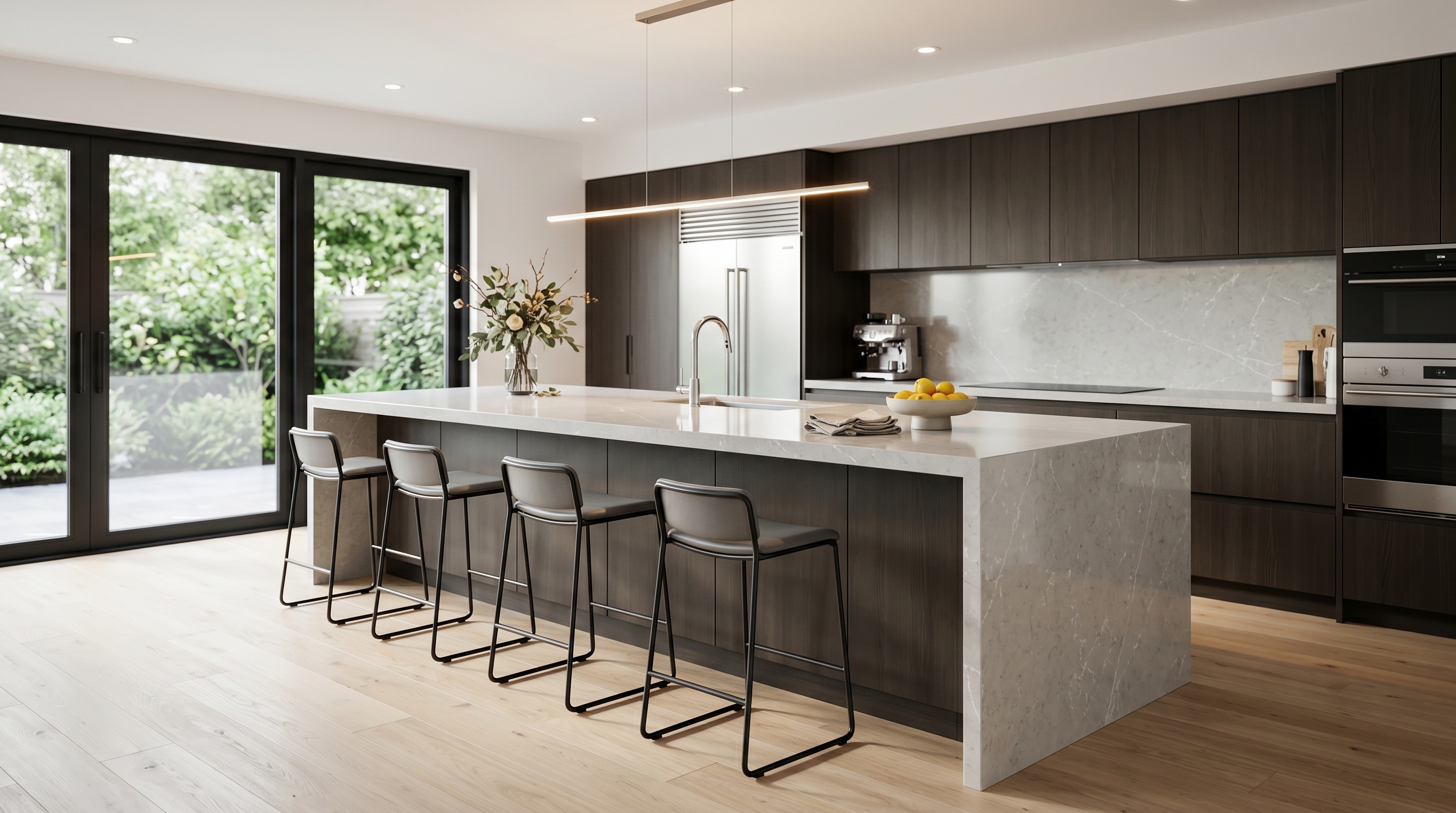
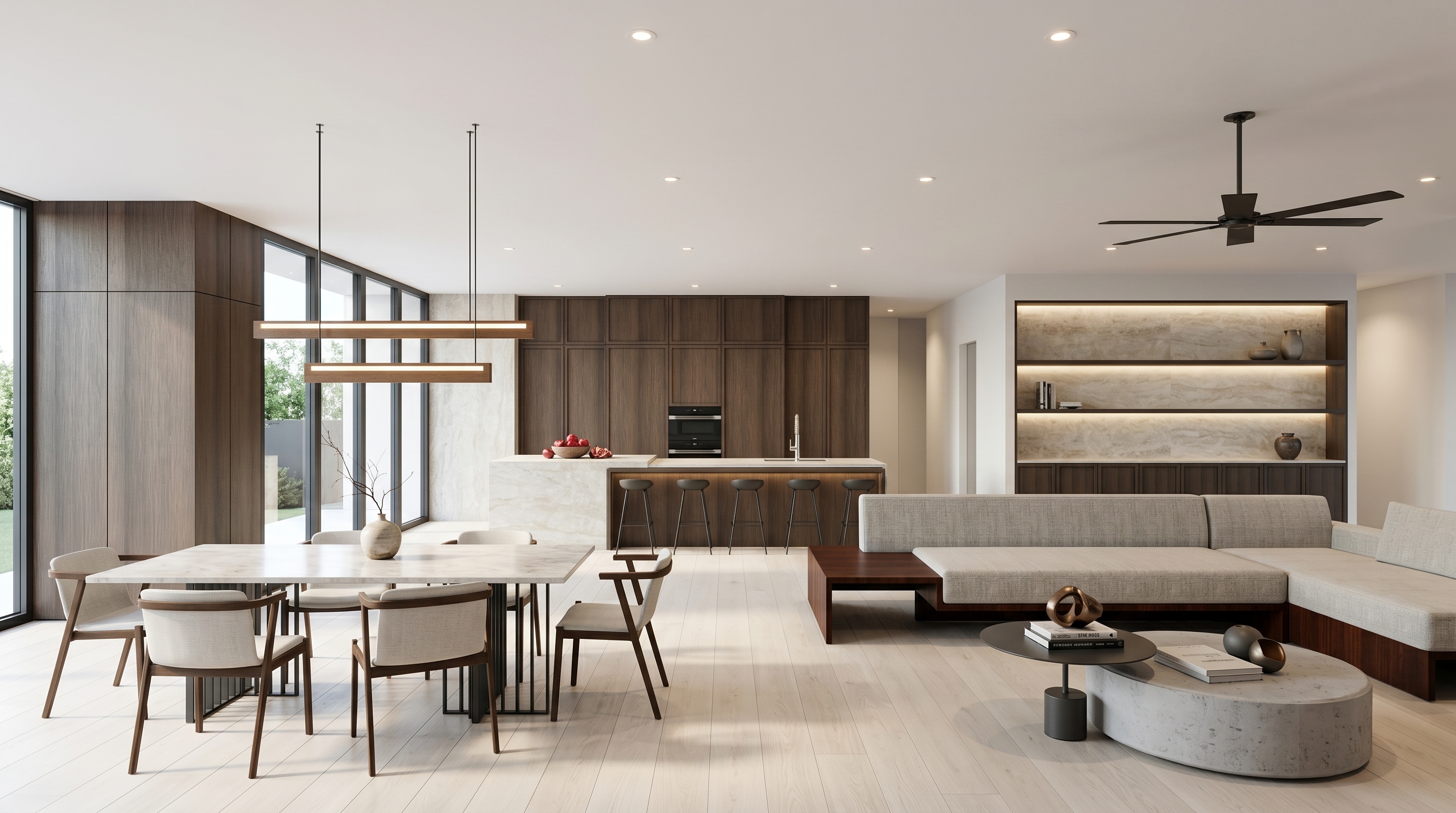
A kitchen reads as intentional when it has a clear structure of light and dark. The floor grounds the space, the cabinetry defines the walls, and the counters and backsplash mediate between them. Collapse the floor and the cabinets into the same tone and you erase two of those layers at once. What is left is a room that photographs as beige and feels, in person, strangely flat.
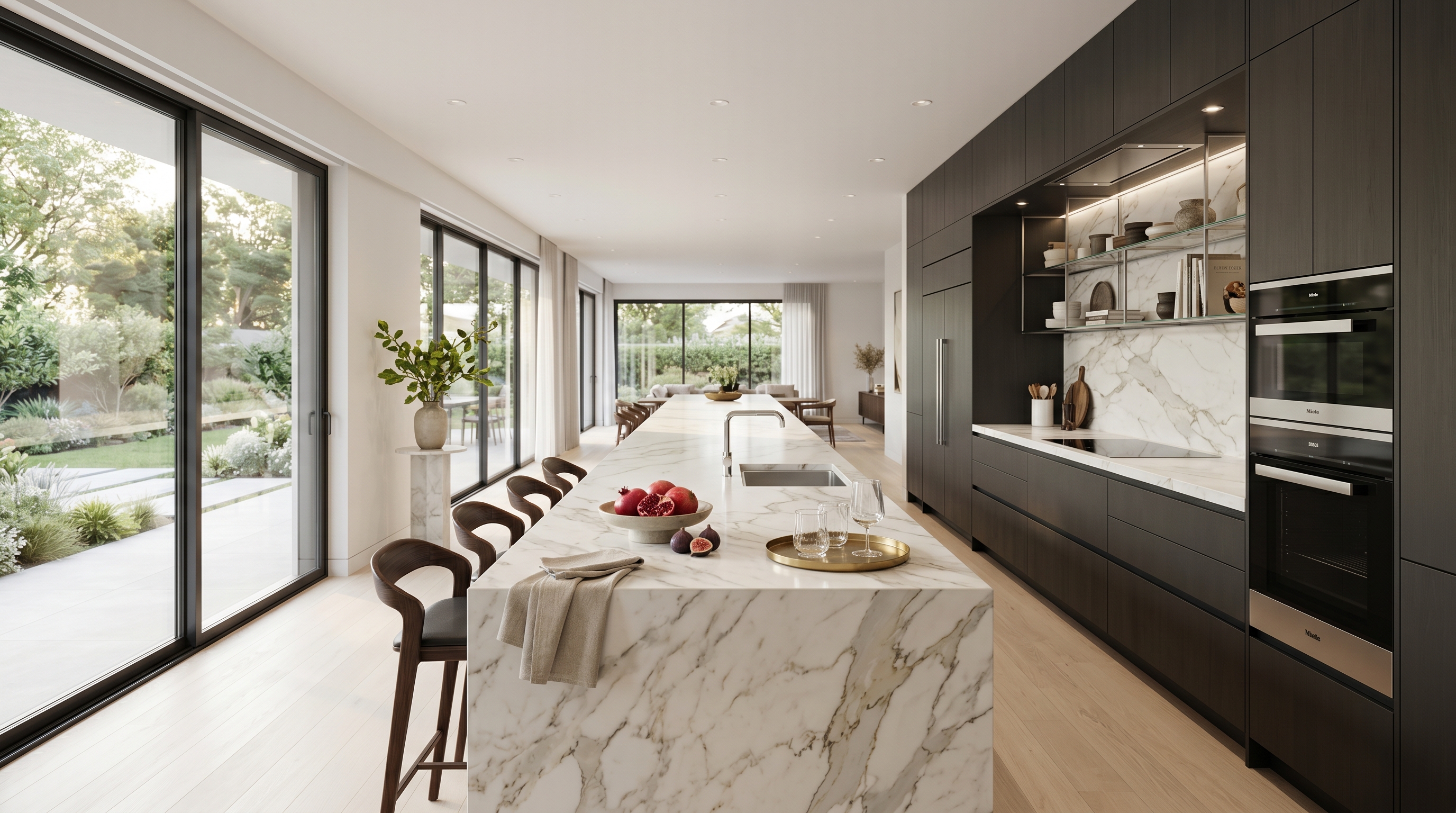
This is why the light-cabinet, dark-floor pairing has endured through every trend cycle. The weight at the bottom of the room anchors it, while lighter cabinetry keeps the upper half from closing in. Reverse it — dark cabinets over a paler floor — and you get the same effect from the opposite direction. Either works. What does not work is the middle, where everything settles into the same agreeable medium brown.
The near-miss is worse than an honest clash
The real trap is not bold contrast. It is the near-match: a floor and a cabinet that are almost the same tone, but not quite. Set two woods close in color yet different in grain and undertone, and the eye reads the gap as an error rather than a decision. A warm, red-leaning cabinet over a cool, grey-leaning floor does not harmonize; it argues.
Arizona designer Elizabeth Spengler puts the standard plainly in a survey of designers by the American Hardwood Information Center: "Just make sure there's enough contrast to show you mean it. Near-misses don't make it." The lesson is that undertone and value have to move together. Keep the undertones in one family — warm with warm, cool with cool — and open a real gap in value between the floor and the cabinets.
What the best kitchens actually do
Ask designers how they handle it and the answers converge. "We do our best not to match cabinets and floors," says Dallas designer Alison Gillespie, who favors pairing something like a hand-scraped oak floor with maple cabinets in an opaque finish. California designer Debbie Nassetta reduces it to a single move: "If you have dark cabinets, make the floor lighter. With light cabinets, go the other way around."
The through-line is confidence. As the American Hardwood Information Center summarizes it, consumers think everything has to match, but the pros mix — different species, different finishes, deliberate contrast. The kitchens that look considered are the ones that stopped trying to make every wood in the room agree.
What to do instead
Decide value before color. Choose whether the floor or the cabinetry will carry the visual weight, then commit to a clear step between them — a shade or two, not a whisper. Hold the undertones at the same temperature so the contrast reads as intentional rather than jarring. And let a third material — stone on the counter, a run of tile, a brushed metal — do the mediating, so the floor and cabinets never have to negotiate directly. In our kitchen work, that third layer is usually where a room stops looking coordinated and starts looking designed.
The point of a kitchen is not that everything agrees. It is that everything belongs. Matching asks the floor and the cabinets to disappear into each other; contrast lets each one do its job. Stop trying to make the wood match, and the room finally holds together.
Book a private showroom tour
If this changed how you are thinking about your floors and your cabinetry, the next step is not another article. Book a private showroom tour and spend an unhurried hour with our design team, one on one — at our Design District flagship in Dallas or any of our studios across the country. Bring your samples. We will show you what deliberate contrast looks like at full scale.