
Craft
Cabinet Hardware Is the Jewelry Your Kitchen Doesn't Need
The trade press keeps calling cabinet hardware the jewelry of the kitchen. The most refined kitchens wear none at all — and there is a hard number behind why.
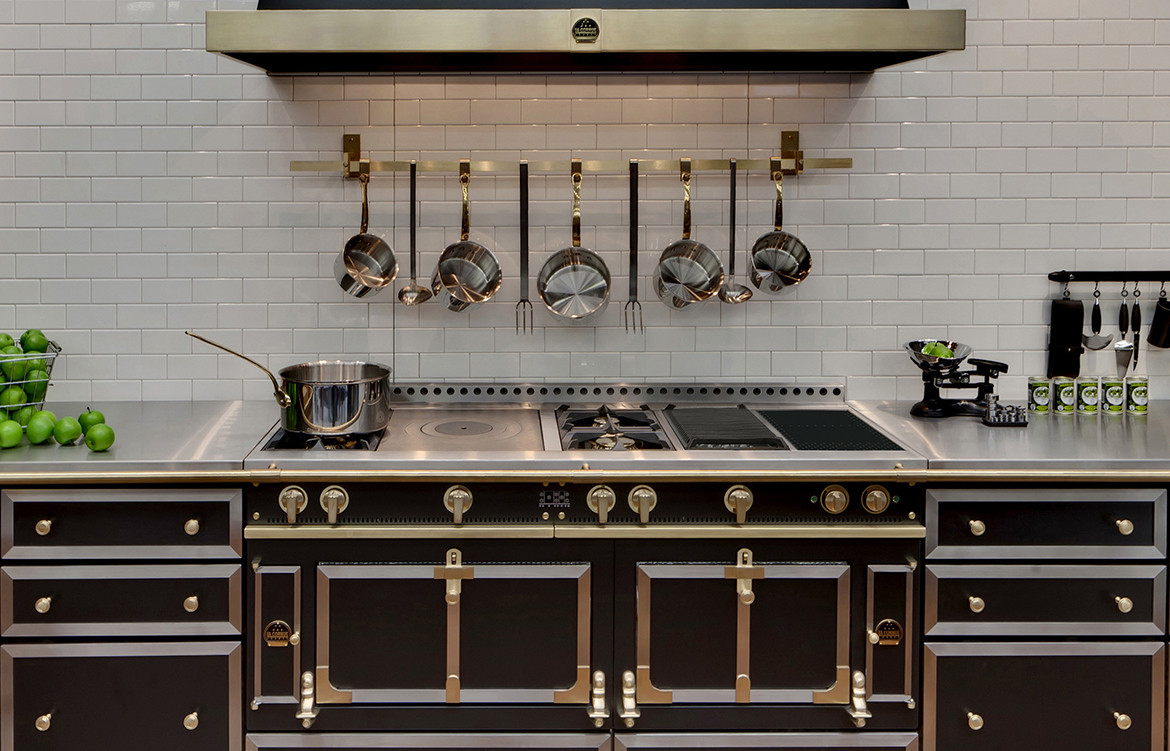
Open any kitchen trend roundup published this year and you will find the same sentence, repeated like scripture: hardware is the jewelry of the kitchen. In January, Homes & Gardens ran nine cabinet hardware trends for 2026 — knurled pulls, revived backplates, cremone bolts, oversized investment pieces — under the banner of one designer's line that hardware is "the jewelry of a space."
It is a lovely phrase. It is also a sales argument dressed as a design principle.
The most sophisticated kitchens being built right now are moving the opposite way. They are deleting the handle entirely. And the reason is not fashion — it is that a handle, however beautiful, is the one thing on a cabinet that exists only because the cabinet cannot open itself.
Jewelry is what you sell when the cabinet is finished
There is a reason the hardware conversation gets louder every January. Pulls and knobs are the easiest thing in a kitchen to photograph, to swap, and to sell. They arrive in a small box, they cost a fraction of the cabinetry, and they can be changed in an afternoon. An industry built on that math will always tell you the handle is where the personality lives.
But jewelry, by definition, is removable. Calling hardware the jewelry of the kitchen quietly concedes the point: it is the layer you add on top, and the layer you will eventually take off. That is a fine way to think about a $28 knob. It is a strange way to design the most permanent room in the house.
The best kitchens are quietly deleting the handle
Look at what high-end makers actually sell, not what the trend pieces recommend. The London kitchen studio Roundhouse told Livingetc in February that handleless designs now account for around 80 percent of the kitchens it sells — a figure it calls a long-term shift, not a passing look. The handle, in the rooms people are genuinely investing in, is already the minority choice.
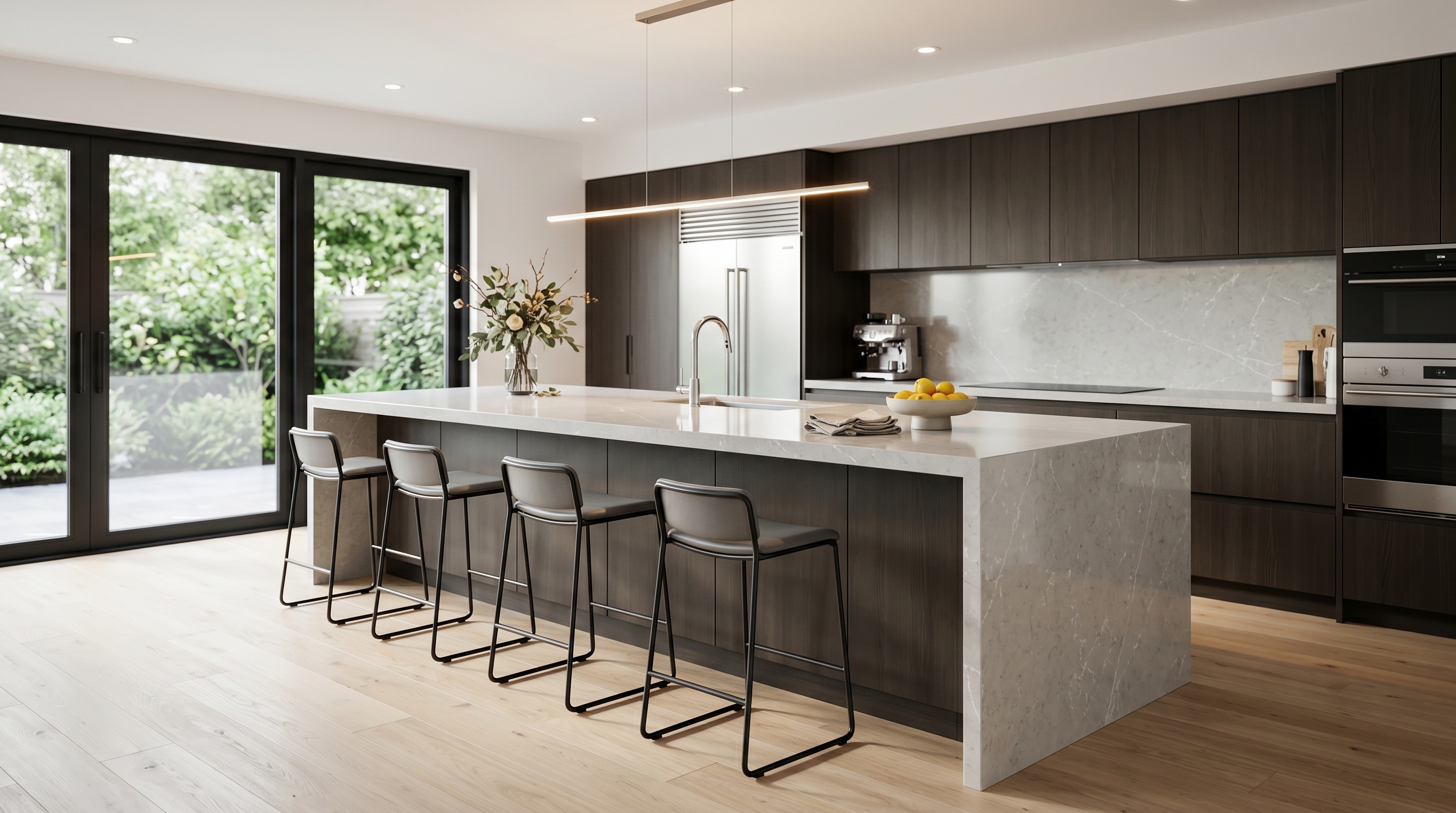
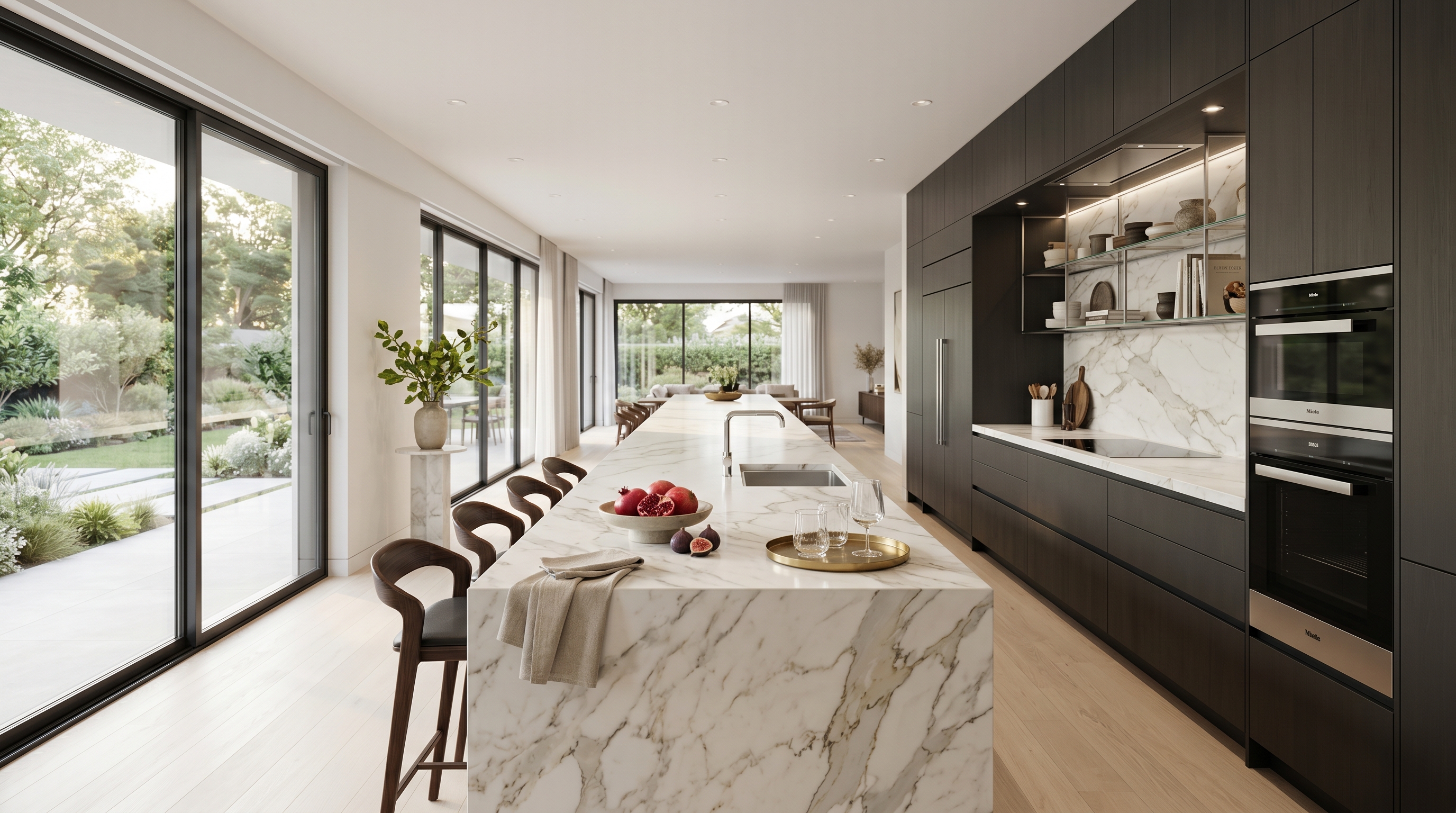
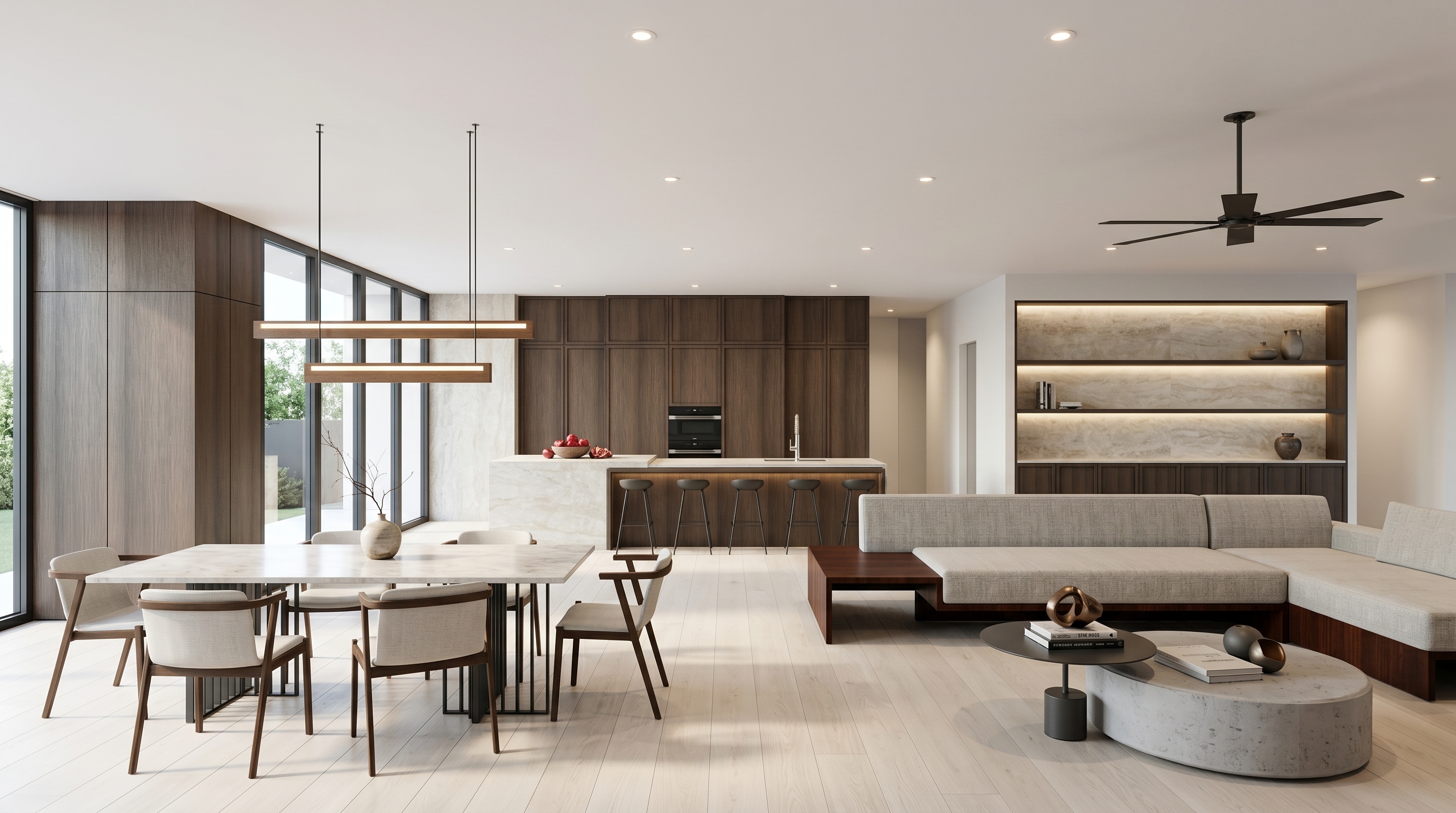
Handleless does not mean fussy or fragile. It means the grip is engineered into the cabinet instead of bolted onto it: a recessed rail that runs as a shadow line beneath the counter, a finger-pull routed into the top edge of a door, a touch-latch that opens at a press. Done properly — and this is the catch, because it demands precise alignment — the result is a wall of cabinetry that reads as architecture rather than furniture wearing accessories.
That is the real payoff. Strip the hardware and the eye has nothing to land on but the material: the grain of a German oak front, the depth of a matte lacquer, the honesty of a stone. The craftsmanship stops competing with the jewelry and becomes the whole point.
A handle is a snag, a smudge, and a weak point
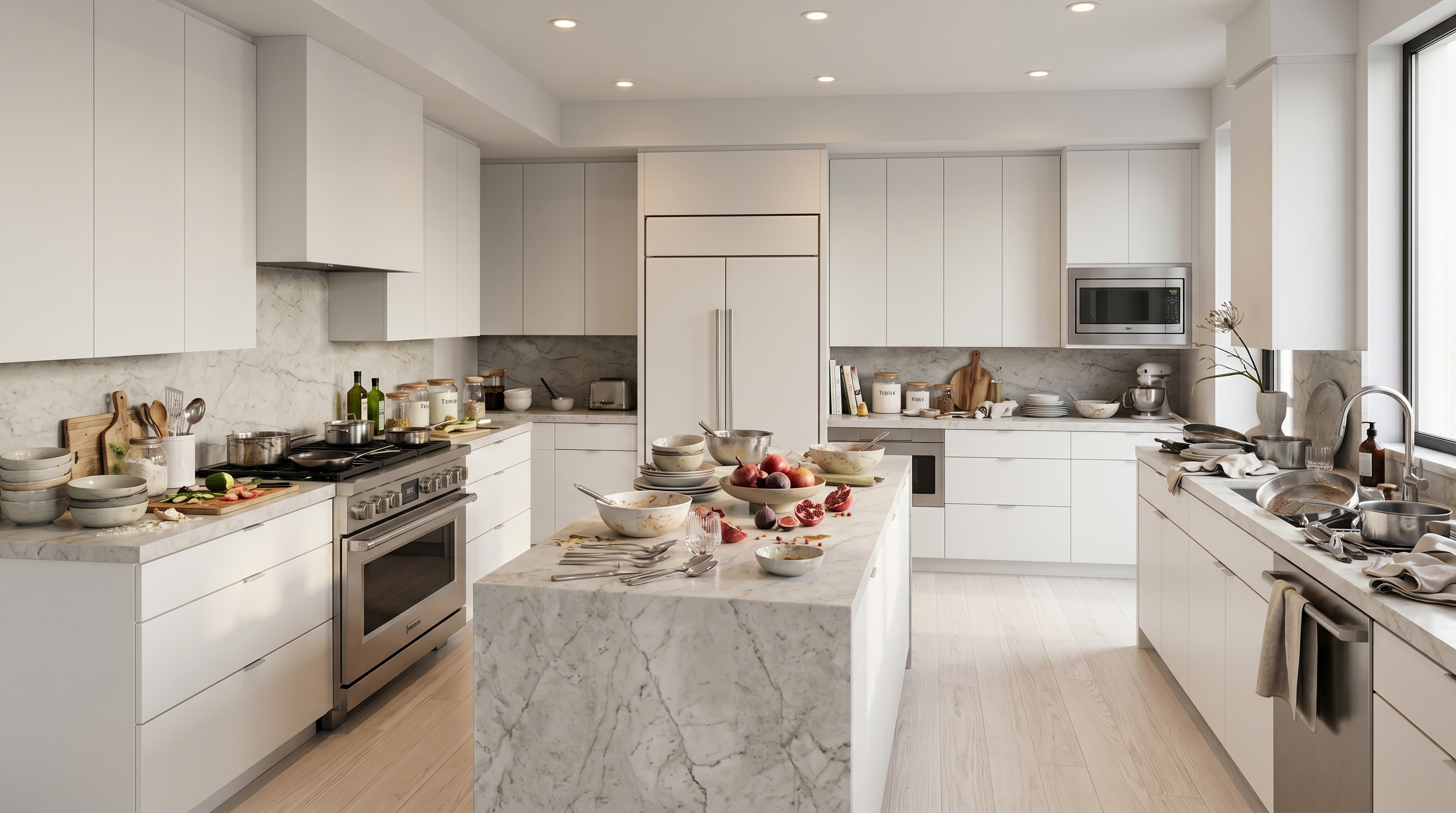
The functional case is quieter but harder to argue with. A handle is a protrusion, and protrusions catch — a hip, a pocket, a dog's leash, a child's sleeve. In a working kitchen they are also the crevice where grease and dust settle, the seam a cloth has to work around. Designers who build handleless kitchens cite exactly this: fewer places for grime to collect, fewer things to walk into, a surface that wipes clean in one pass.
And mechanically, the pull is the part that loosens. It is the screw that backs out, the finish that wears at the exact spot your fingers touch a dozen times a day, the detail that dates the kitchen the moment its particular shape falls out of favor. The most-handled object in the room is the one most likely to betray its age.
None of this makes hardware wrong everywhere. A traditional Shaker kitchen wants its knobs, and anyone with reduced grip strength is better served by something to actually pull. Honesty demands that much. But those are reasons to choose a handle deliberately — not to treat one as the mandatory finishing flourish on every job.
What to do instead
If you are planning a kitchen now, invert the usual order. Decide the cabinet first and let it tell you whether it needs hardware at all. For anything clean-lined or contemporary, specify an integrated grip — a routed edge-pull or a recessed rail — and put the money you would have spent on statement pulls into the front material, where it never goes out of style. If you do want hardware, keep it to the island or a single run and leave the rest quiet; contrast reads as intention, uniformity of ornament reads as a showroom.
And judge the work where it is hard to fake. Run your hand along a handleless door and feel whether the rail is continuous and the reveal is even. That alignment — not the weight of a brass pull — is the actual tell of a kitchen built to last. This is the logic behind every German-engineered BauTeam kitchen: the grip belongs to the cabinet, not on top of it.
Hardware is not the jewelry of the kitchen. It is the seam where the design admitted it needed help. The best rooms simply don't show it — and once you have seen a wall of cabinetry open at a touch, the row of matching pulls next door starts to look like what it is: an accessory the kitchen was never designed to need.
Book a private showroom tour
If this changed how you are thinking about your cabinetry, the next step isn't another article. Spend an hour with our design team, one on one, and see how a handleless kitchen actually feels under the hand — from our SoHo gallery to the Dallas Design District and seven other studios across the country. Book a private showroom tour.